Custom Streetwear, Casualwear & Denim Manufacturer•MOQ 50 pcs•Denim MOQ 100 pcs•7-Day Sample Available

How to Approve Jogger Rise, Seat, and Inseam Fit Before Low MOQ Production
Approve jogger rise, seat, and inseam fit before low MOQ production by checking movement, graded sizes, cuff interaction, and sample comments.

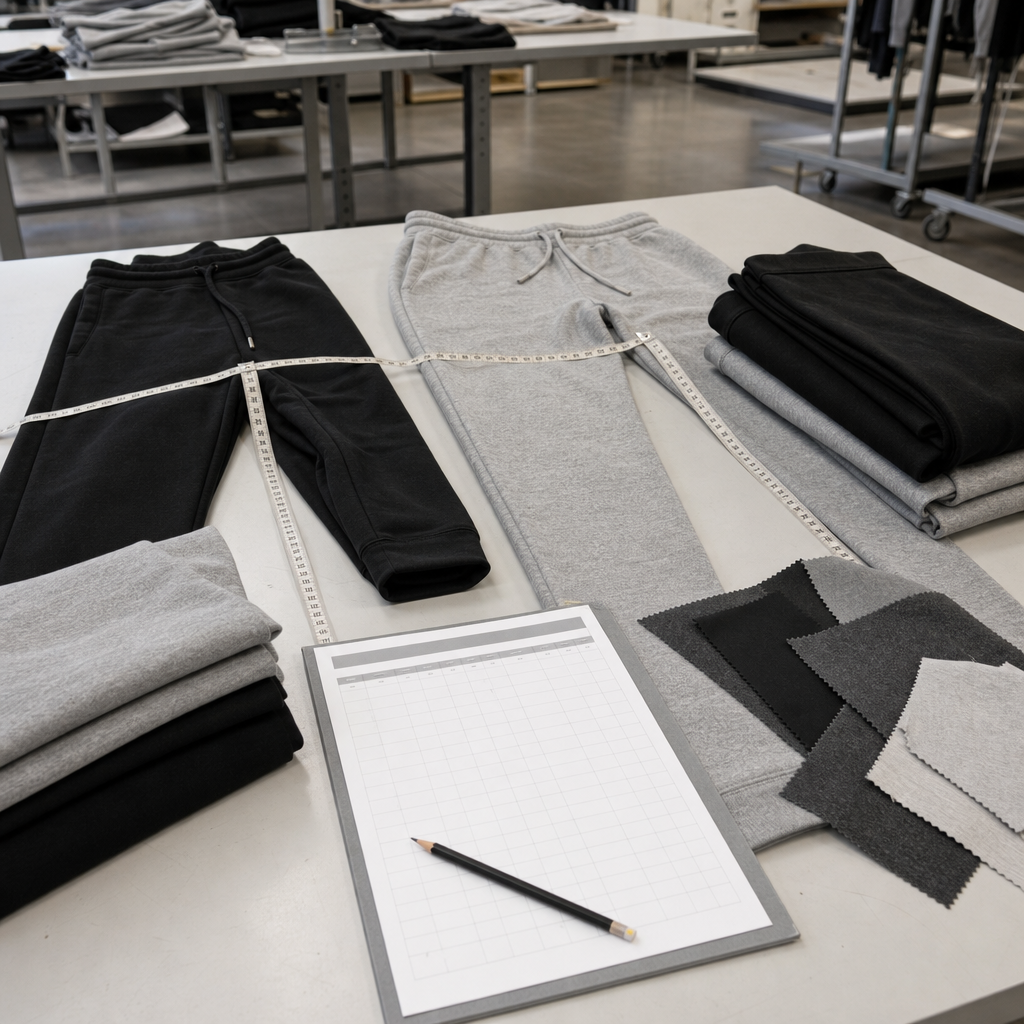
Jogger fit approval should happen before low MOQ bulk production because joggers can look simple on a table but feel wrong when the buyer checks rise, seat, thigh ease, inseam position, and cuff behavior on body. A sample can pass fabric and waistband review while still pulling at the front rise, feeling tight through the seat, twisting at the inseam, or stacking badly above the cuff.
For brands moving from sample comments into supplier selection, the custom joggers manufacturer page explains how jogger programs should connect fabric, fit, MOQ, labeling, and bulk planning before a quote is finalized.
Start With the Wearer Position, Not the Flat Measurement
Flat measurements matter, but jogger fit approval should start with how the garment sits on a person. Check front rise, back rise, waistband height, seat curve, thigh room, knee position, inseam line, and cuff placement while standing, sitting, walking, and bending. A low MOQ order is still a brand-facing product, so the fit cannot be approved only because the spec sheet numbers look close.
If the waistband changes the way the rise feels, review the sweatpants and jogger waistband construction guide. Elastic width, drawcord channel, tunnel height, and topstitching can all affect where the jogger sits and how much ease the wearer feels through the hip and seat.
Approve Rise Before Changing Leg Shape
Buyers often try to fix jogger fit by changing thigh width or leg taper first. That can help, but rise should be checked before leg shape because rise controls how the garment hangs from the waist. If the front rise is too short, the jogger can pull across the crotch even when the thigh has enough room. If the back rise is too low, the seat may feel exposed when the wearer sits.
Ask for sample comments that separate front rise, back rise, waist drop, crotch depth, and seat curve. Do not write a vague note such as “make fit better.” The factory needs to know whether the buyer wants more vertical rise, more seat room, a different crotch curve, or a changed waistband position.
Check Seat, Thigh, and Knee Ease Together
Jogger samples should be reviewed through the seat, high hip, thigh, knee, and calf as one connected fit zone. If the seat is tight, the inseam can pull forward. If the thigh is too narrow, the knee can drag upward when walking. If the knee is too wide, the jogger may look baggy even when the cuff opening is correct.
The related jogger cuff and leg-opening approval guide is useful after the rise and seat are stable. Cuffs, leg opening, and taper should support the approved body fit rather than hide unresolved fit problems.
Watch the Inseam Line and Cuff Stack
Inseam approval is not only about inseam length. Check whether the inseam hangs straight, rotates toward the front, twists toward the back, or pulls because the crotch curve and thigh width are fighting each other. Then review how the bottom leg stacks above the cuff. A jogger can have the correct inseam length but still look messy if the cuff opening, fabric weight, and lower-leg taper do not work together.
For adjacent rise and pocket fit context, compare the sample against the sweatpants pocket and rise approval checklist. Sweatpants and joggers are not the same product, but both depend on how rise, pocket bag position, and side seam balance behave during wear.
If rise, seat, inseam, and cuff stack need another grading pass, keep the decision tied to a low-MOQ fit approval path for jogger programs before confirming the order.
Review Graded Sizes Before Bulk Cutting
A medium sample can fit correctly while small, large, and extended sizes fail. Before bulk cutting, review the graded measurement table for waist, front rise, back rise, hip, thigh, knee, inseam, outseam, cuff opening, and total length. The grade should protect the intended fit, not simply add the same number to every point.
This step is especially important for low MOQ production because a small order still carries size-run risk. If the buyer only checks one sample size, the factory may not have enough feedback to protect fit across the full order. The sampling and MOQ process explains how sample approval should be tied to the buyer’s order size, fabric choice, and production readiness.
Send Clear Fit Approval Records
After the fitting, send comments that include photos, marked measurement points, requested spec changes, tolerance notes, and a decision for each open item. Separate approved details from details that need another sample. If the rise is approved but cuff stack is not, say so clearly. If the medium is approved but size grading still needs review, do not let bulk cutting start as if the whole size range is final.
For a live jogger project, share the target sample stage, size range, fabric, trim details, and fit comments through the StitchQuote inquiry page so the production discussion starts with the right technical context.
Questions Buyers Ask Before Jogger Fit Approval
Can jogger fit be approved from flat measurements only?
No. Flat measurements are necessary, but joggers should also be checked on body because rise, seat, inseam, and cuff stack can change during movement.
Should the buyer approve one sample size or the full size range?
The buyer can approve the sample size first, but the full size range should still be reviewed through a graded spec table before bulk cutting.
What fit comments are most useful for the factory?
The most useful comments name the exact area, measurement point, requested change, and approval status, such as front rise plus 1 cm, reduce cuff opening by 0.5 cm, or keep seat curve approved.
When should a second jogger sample be requested?
Request another sample when rise, seat, inseam twist, cuff stack, or size grading changes are large enough that the buyer cannot confidently approve the bulk fit from written comments alone.
Request a manufacturing quote
Share your product type, quantity range, and destination. We usually reply within one business day.