Custom Streetwear, Casualwear & Denim Manufacturer•MOQ 50 pcs•Denim MOQ 100 pcs•7-Day Sample Available
Sewing Thread Color Matching for Low MOQ Apparel: How Buyers Avoid Visible Shade Mistakes
Sewing thread color matching helps low MOQ apparel buyers prevent visible topstitch shade mistakes, contrast errors, and late rework before garments ship.

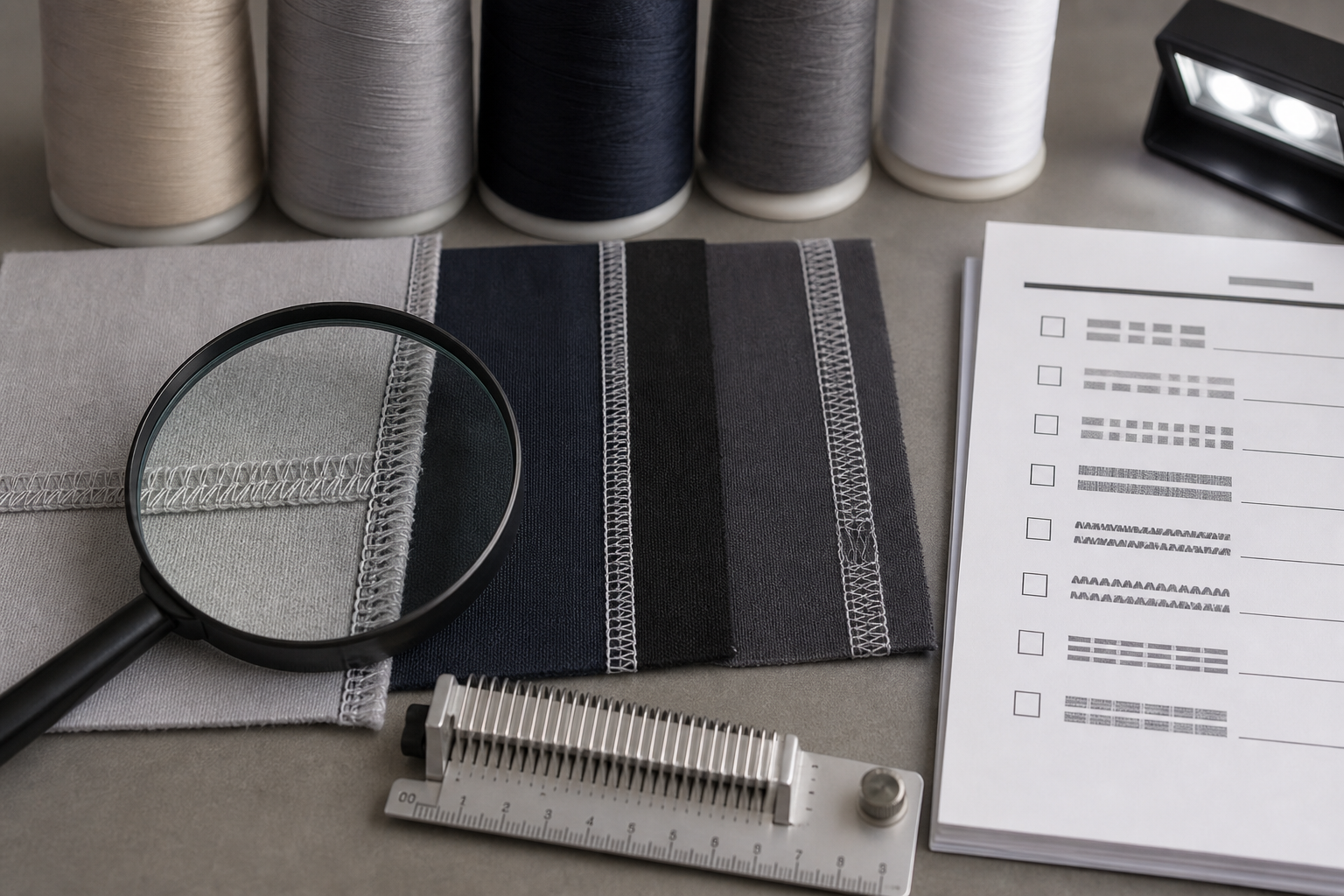
Sewing thread color matching can change the whole appearance of low MOQ apparel, especially when topstitching, coverstitching, buttonholes, bartacks, labels, and hems are visible on the outside of the garment. A thread that looks close on a cone can look wrong once it is sewn into fabric, pressed, photographed, and packed.
For a private label clothing manufacturer, thread approval should be handled before bulk sewing starts. It is cheaper and cleaner to approve thread shade on the sample than to debate whether visible stitching is acceptable after the production line has finished.
Decide Whether Thread Should Match or Contrast
The first decision is design intent. Some garments need thread to disappear into the fabric; others use contrast stitching as a design feature. Buyers should state whether the thread must match the shell, match rib, match pocketing, match labels, or intentionally contrast on specific seams.
This decision should be written into the bill of materials or sample comments, not left to the sewing room. The private label clothing bill of materials guide explains why trims and materials need clear approval records before low MOQ production.
Check Thread on the Real Fabric
Thread shade should be checked against the approved bulk fabric or a confirmed fabric cutting, not only against a digital color reference. Fabric texture, dye lot, brushing, wash effect, and lighting can make the same thread look warmer, cooler, darker, or brighter than expected.
Use the fabric shade band approval guide when the fabric itself has lot variation. If fabric shade is not controlled first, the factory may choose a thread that matches one panel but looks wrong on another shade band.
Approve Topstitching and Hidden Thread Separately
Visible topstitching usually needs a stricter color decision than hidden joining seams. Buyers should identify which thread is visible from the outside, which thread is inside only, and which operations need special attention, such as buttonholes, bartacks, coverstitch hems, waistband joins, pocket edges, plackets, labels, and contrast panels.
The stitch density and thread tension guide is useful because thread color approval should not ignore sewing quality. Even a correct shade can look poor if tension, stitch density, or needle choice creates puckering, skipped stitches, or visible damage.
Review Thread After Wash, Pressing, and Photography
Some thread and fabric combinations look acceptable before finishing but stand out after washing, garment dyeing, pressing, or product photography. Buyers should review the approved sample in normal light and, when relevant, under the lighting used for product photos. The goal is not perfect laboratory color matching; it is a practical buyer decision on whether the finished garment looks intentional and consistent.
If the garment uses wash effects or color-sensitive fabric, connect this review with the print wash test before bulk production approach: test the finished effect before the whole order is sewn, decorated, and packed.
Control Thread Changes During Low MOQ Production
Low MOQ production can still require thread changes when a shade is unavailable, a cone runs short, or one colorway needs a different match. The factory should not substitute thread shade silently. Buyers should ask for a photo or sample confirmation when thread changes affect visible stitching.
This is also a final inspection issue. The pre-shipment inspection guide shows how final release checks should compare bulk goods against the approved sample, BOM, and written approval comments.
Document the Release Standard
The thread approval record should include the thread color name or code when available, the garment colorway, visible stitch locations, approved sample photos, any contrast-stitch rule, and the decision process for substitutions. If the buyer accepts slight variation, define where it is acceptable and where it is not.
For new private label or low MOQ styles, send fabric, color, decoration, and visible-stitching expectations through the StitchQuote inquiry page. Clear thread approval notes help the factory choose materials, sew samples, and prevent late shade disputes.
Questions Buyers Ask About Sewing Thread Color Matching
Should sewing thread match the fabric exactly?
Not always. Some styles need a close match, while others intentionally use contrast stitching. The buyer should approve the design intent and visible stitch locations before bulk sewing.
Can thread color be approved from a digital swatch?
A digital swatch is not enough for final approval. Thread should be checked on the real fabric or approved sample because texture, lighting, and finishing can change the visual result.
What happens if the factory must substitute thread?
Visible thread substitutions should be confirmed before sewing continues. The buyer can approve a replacement shade, request a sample photo, or hold the operation until a closer match is available.
Which thread areas need the strictest check?
Topstitching, buttonholes, bartacks, hems, labels, pocket edges, plackets, waistband joins, and contrast panels usually need the closest review because customers can see them immediately.
Request a manufacturing quote
Share your product type, quantity range, and destination. We usually reply within one business day.