Custom Streetwear, Casualwear & Denim Manufacturer•MOQ 50 pcs•Denim MOQ 100 pcs•7-Day Sample Available
Stripe Matching and Panel Alignment: How Buyers Approve Cut-and-Sew Apparel Before Bulk
Stripe matching and panel alignment help cut-and-sew apparel buyers prevent crooked seams, mismatched side panels, and visible quality issues before bulk.

Stripe matching and panel alignment should be approved before cut-and-sew apparel moves into bulk because small cutting or sewing shifts become obvious when a garment has stripes, ribs, panels, color blocks, or directional texture. A basic silhouette can look low quality if the side seams, sleeves, pockets, plackets, or hems do not line up in a way the buyer intended.
For a custom streetwear manufacturer, alignment is part of the design standard. The buyer should decide which lines must match, which areas can tolerate small movement, and where the factory should prioritize fit or sewing strength over perfect visual alignment.
Define the Match Points Before Cutting
The buyer should name the visible match points before fabric is cut. Common points include side seams, shoulder seams, sleeve stripes, pocket edges, plackets, cuffs, hems, rib joins, yokes, and front-to-back panel transitions. Without named match points, the factory may focus on general sewing quality while the buyer expects a more precise visual standard.
The cut-and-sew tech pack guide is the best place to record those match points. Drawings, photos, and callouts help prevent vague instructions such as make stripes aligned from being interpreted differently by sampling, cutting, and sewing teams.
Check Fabric Repeat, Grain, and Relaxation
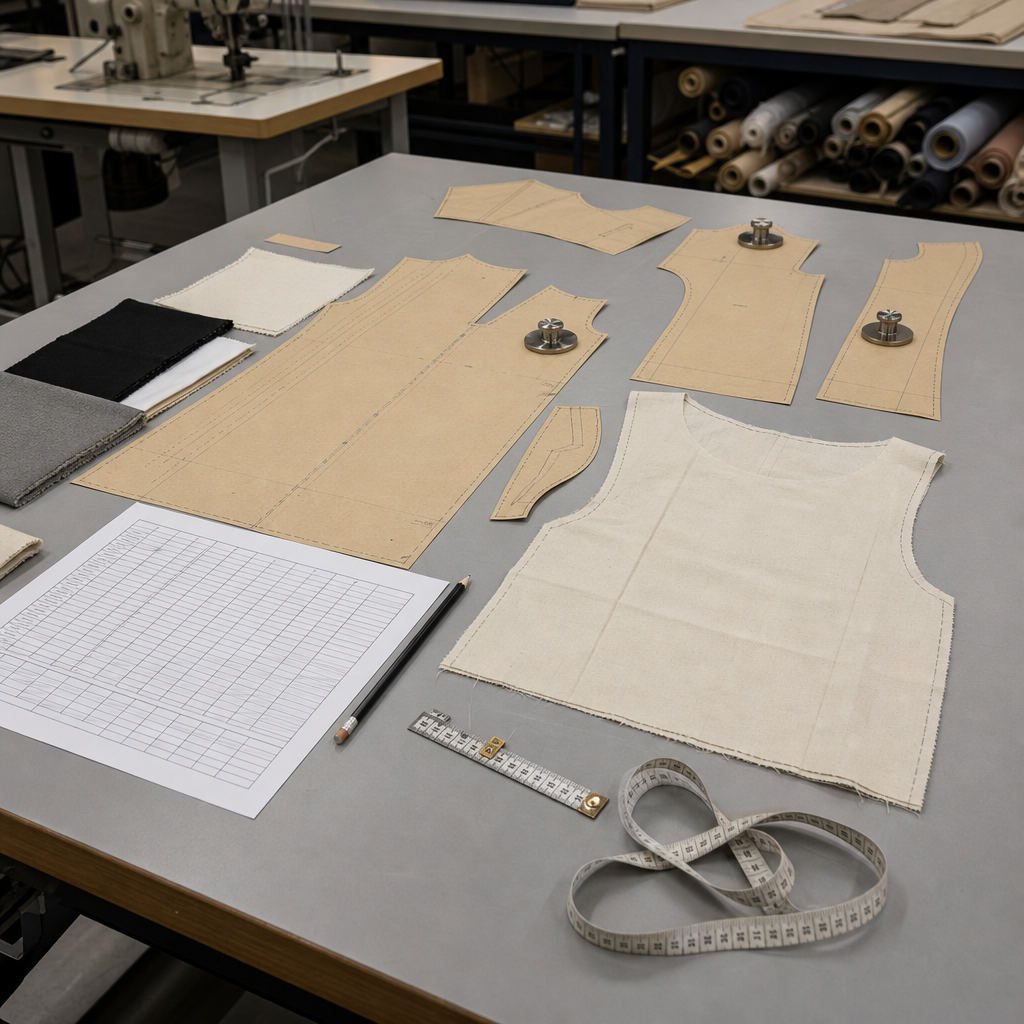
Stripes and panels depend on fabric repeat and grain direction. If the fabric relaxes unevenly, shifts during layering, or is cut off grain, the garment may twist or the stripes may drift even when sewing is careful. Buyers should ask how the factory will control fabric relaxation, marker placement, and cutting direction before bulk.
Use the fabric relaxation and cutting direction guide when alignment problems appear across several garments. A repeated mismatch may be a cutting-room issue rather than a sewing-room issue.
Separate Acceptable Variation From Defects
Not every line can or should match perfectly. Curved armholes, shaped side seams, stretch fabrics, rib trims, darts, and garment wash can create natural movement. Buyers should decide what is critical, what is preferred, and what is acceptable before approving the sample.
For a low MOQ clothing manufacturer, this decision keeps inspection practical. A small first run can still have a clear standard without forcing impossible alignment across curved or high-stretch areas.
Inspect Sewing Tension and Seam Handling
Panel alignment can change during sewing if one layer is stretched, if feed is uneven, if seam allowance is inconsistent, or if topstitching pulls the seam. Inspect the inside and outside of the sample, then check whether the alignment issue sits at one seam operation or repeats across multiple panels.
The cut and sew seam construction checklist helps buyers connect alignment problems with seam type, stitch density, thread tension, and operator handling instead of treating every mismatch as a cutting error.
Review After Wash, Pressing, and Packing
Some alignment issues appear only after washing, pressing, or folding. Rib panels may recover differently, striped jersey can skew, pocket panels can pull, and heat or steam can flatten one area more than another. The approved sample should be reviewed in the same finish state expected for bulk.
If the product includes prints or wash-sensitive decoration, connect this with the print wash test before bulk production. Decoration, wash, and panel alignment all need to survive the finish process customers will actually see.
Document the Correction Path
When alignment fails, the correction may involve fabric relaxation, marker planning, panel notches, cutting control, sewing sequence, seam allowance handling, or pressing. Buyers should ask for a specific correction and a corrected sample photo before bulk if the mismatch affects the design intent.
Send stripe, panel, rib, or color-blocking expectations through the StitchQuote inquiry page with reference photos and any required match points. Clear alignment notes help the production team quote, sample, and inspect the garment against a standard that can be repeated.
Questions Buyers Ask About Stripe Matching Apparel
Can a factory guarantee perfect stripe matching?
Buyers should be cautious with absolute guarantees. Some straight seams can be controlled closely, but curved seams, stretch fabrics, wash effects, and shaped panels may need realistic tolerances agreed before bulk.
Where should stripe matching be checked first?
Start with the most visible customer-facing points: side seams, front placket, shoulder line, sleeve joins, pocket edges, cuffs, hems, and any color-block transition that defines the design.
Is stripe mismatch usually a cutting issue?
Sometimes, but not always. It can come from fabric relaxation, marker placement, cutting direction, sewing feed, seam allowance, thread tension, pressing, or wash movement.
What should buyers put in the tech pack?
Include photos or drawings of required match points, acceptable variation, priority areas, fabric repeat direction, panel orientation, inspection notes, and any areas where perfect matching is not expected.
Request a manufacturing quote
Share your product type, quantity range, and destination. We usually reply within one business day.