Custom Streetwear, Casualwear & Denim Manufacturer•MOQ 50 pcs•Denim MOQ 100 pcs•7-Day Sample Available
How to Approve Cut and Sew Seam Construction Before Low MOQ Bulk Production
Approve cut and sew seam construction, stitch type, stress points, fabric behavior, and finishing before low MOQ bulk production starts.

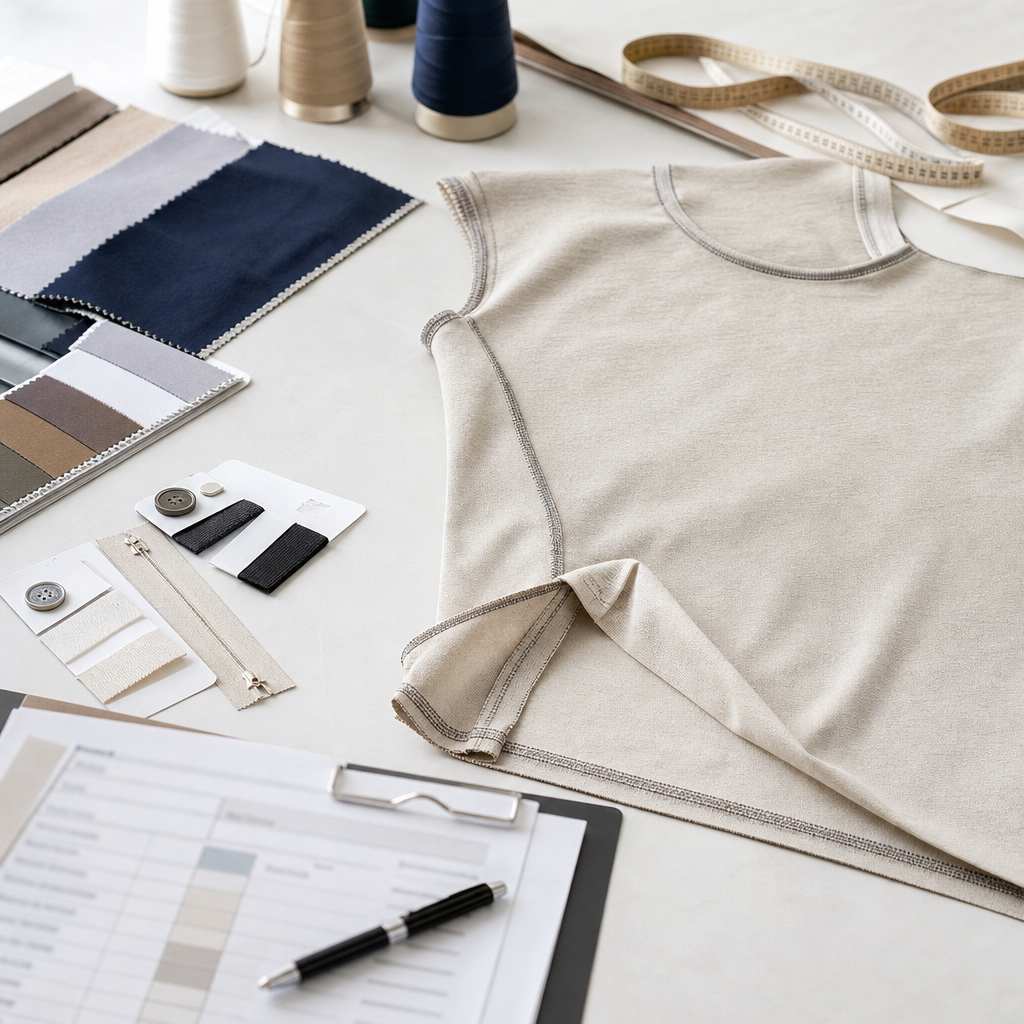
Cut and sew seam construction should be approved before bulk because the seam route affects fit, durability, comfort, finishing, and production speed. A custom pattern can be correct on paper but still create problems if the stitch type, seam allowance, stress points, or finishing method are not suitable for the fabric and order quantity.
For low MOQ cut-and-sew production, quality checks should focus on the decisions that can change the garment in bulk: fabric behavior, sewing route, seam bulk, stretch recovery, stress-point reinforcement, label placement, wash response, and inspection records.
Factory buyer decision table
Updated July 23, 2026: Seam construction approval should read like a bulk sewing standard, not a style note. The buyer should know which seams affect appearance, which affect strength, and which need a machine or operator route that must be stable before cutting starts.
| Approval point | Factory-side check | Procurement risk |
|---|---|---|
| Main seam route | Seam allowance, stitch type, topstitching, thread tension, and inside finish | A clean sample becomes slow or inconsistent when the operation route is not frozen |
| Stress points | Shoulder, crotch, pocket opening, waistband, side seam, and zipper endpoints by garment type | Durability failures appear after wear even though the flat sample looked acceptable |
| Fabric compatibility | Stretch, recovery, seam bulk, puckering, seam slippage, and wash response | The same construction is copied across fabrics that need different handling |
For commercial routing, connect seam approval to the cut and sew manufacturer page, the broader custom clothing manufacturer workflow, and sampling and MOQ. Send construction photos, fabric details, and target quantity through contact when the sample comments are ready.
Start From Pattern and Fabric Behavior
Seam construction starts with the pattern, but it cannot be approved from the pattern alone. A heavyweight jersey, french terry, woven cotton, nylon blend, denim, and stretch fabric can each need a different sewing route. The same seam can feel smooth on one fabric and bulky or unstable on another.
Before reviewing seam construction, compare the sample with the cut and sew pattern approval guide. Pattern comments and seam comments should work together instead of contradicting each other.
Review Stitch Type, Seam Route, and Finish
Check the main seam route, stitch type, seam allowance, topstitching, coverstitching, overlock quality, thread color, thread tension, and inside finishing. The goal is not to specify every sewing operation from scratch, but buyers should approve the visible and functional decisions that affect the final garment.
If a style has many panels, trims, pockets, zippers, or decorations, review the article on what raises MOQ in cut and sew streetwear before widening the first drop.
Check Stress Points Before Bulk
Stress points depend on product category. For tops, check shoulder seams, neck opening, sleeve attachment, hem, and label areas. For bottoms, check waistband attachment, pocket opening, crotch seam, side seam, inseam, and leg opening. For woven styles, seam strength and seam slippage risk need extra attention.
The seam slippage test guide is useful when the fabric or seam route may spread under tension.
When seam construction is part of the product identity, keep the style connected to a low-MOQ construction approval route before treating the style like a simple blank-based order.
Compare Cut and Sew With Blank-Based Production
If the brand only needs a fast decorated item, a blank-based route can reduce development work. Cut and sew is stronger when the garment body, seam route, measurements, fabric, trims, and finishing need to match a custom product direction. Review cut and sew versus blanks when deciding how much construction control the project really needs.
Wash, Measure, and Write Actionable Comments
Before approval, wash or finish the sample according to the intended route, then check seam puckering, twisting, thread tension, measurement changes, and comfort. Sample comments should be concrete: adjust seam allowance, reduce seam bulk, reinforce pocket opening, change thread color, check coverstitch tension, or confirm inside finishing.
For broader timing and quantity planning, use the sampling and MOQ guide. For streetwear projects that need custom construction, fabric, trims, and sample review, compare StitchQuote’s custom streetwear manufacturing workflow.
For cut-and-sew development that needs pattern control, construction records, and sample-first approval, review cut and sew manufacturer before sending the next tech pack or reference sample.
Frequently Asked Questions
Do I need to specify every stitch in the tech pack?
Not always. But visible seams, stress points, special finishing, and any construction detail that affects fit or durability should be reviewed before bulk.
Can seam construction change MOQ?
Yes. Complex seam routes, many panels, special machines, or difficult finishing can increase production time and affect practical MOQ.
What is the biggest seam approval risk?
The common risk is approving fit only, then discovering seam bulk, twisting, or weak stress points after wash or during bulk sewing.
Start a Cut and Sew Project
Send your cut-and-sew references, target fabric, fit direction, construction details, size range, trims, branding needs, and order quantity through the StitchQuote inquiry form. StitchQuote can help identify which seam and sample details should be locked before bulk pricing.
[…] stitch type, stress-point, and seam finishing checks, review how to approve cut and sew seam construction before low moq bulk production before approving cut-and-sew bulk […]
[…] stitch type, stress-point, and seam finishing checks, review how to approve cut and sew seam construction before low moq bulk production before approving cut-and-sew bulk […]
[…] stitch type, stress-point, and seam finishing checks, review how to approve cut and sew seam construction before low moq bulk production before approving cut-and-sew bulk […]
[…] cut-and-sew seam construction guide is useful when buyers need to connect stitch quality with seam type, seam allowance, reinforcement, […]
[…] cut and sew seam construction checklist helps buyers identify which seams, machines, thread choices, and stress points deserve approval […]