Custom Streetwear, Casualwear & Denim Manufacturer•MOQ 50 pcs•Denim MOQ 100 pcs•7-Day Sample Available
T-Shirt Neck Rib Approval Checklist for Premium Basics Production
Approve T-shirt neck rib quality before bulk production, including rib fabric, recovery, neck opening, seam finish, wash testing, and QC notes.

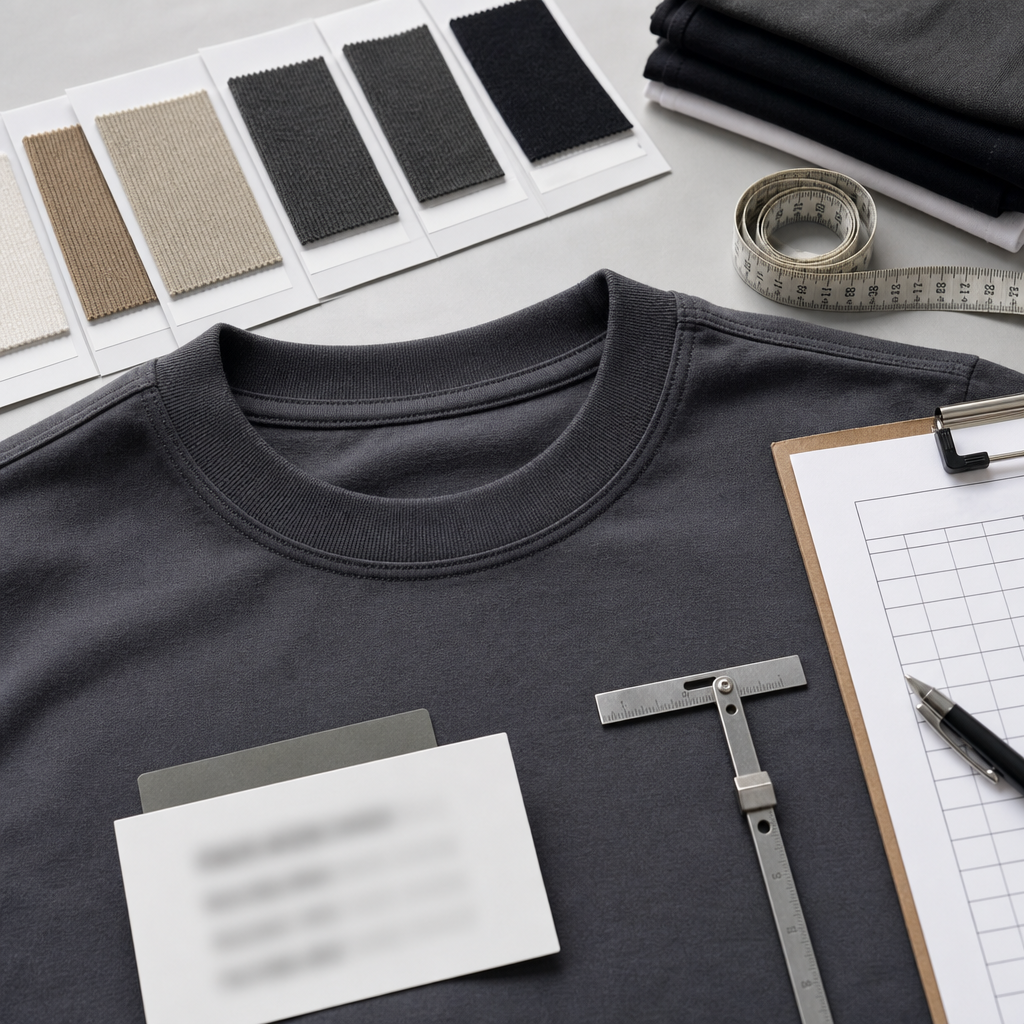
T-shirt neck rib quality is one of the quickest ways buyers judge whether a premium basics product feels controlled or cheap. A collar can look acceptable in a flat sample photo, then become loose, wavy, twisted, or stretched after fitting and washing. For heavyweight T-shirts, boxy fits, and private label basics, the neck rib needs to be approved as a construction detail, not treated as a generic trim.
For T-shirt-specific quoting and production planning, review our custom T-shirt manufacturer page.
This checklist helps apparel buyers prepare a more useful T-shirt sample brief before bulk production. It is written for brands working through sample-first development, low MOQ testing, or premium basics programs where small construction details affect perceived value.
For premium basics where GSM, neck rib, or side-seam balance can shift after washing, use how to check t-shirt fabric shrinkage before premium basics production to confirm fabric shrinkage checks before bulk T-shirt production.
Why Neck Rib Deserves Its Own Approval Step
The collar sits close to the face, so small problems are easy to notice. A stretched neckline can make a new T-shirt look worn. A rib that is too tight can distort the front body. A rib that is too thin can look weak next to heavyweight fabric. A rib that does not recover after washing can make the product feel unstable even when the body fabric is good.
If you are developing T-shirts with a custom streetwear manufacturer or a casualwear manufacturer, the neck rib should be reviewed alongside fit, fabric weight, shrinkage, print placement, and size grading. It is a small part, but it carries a large share of first-wear quality perception.
Match Rib Fabric to the Body Fabric
The rib does not need to be identical to the body fabric, but it must work with it. Heavy jersey usually needs a rib that has enough weight and recovery to hold the neckline. Softer lightweight fabrics may need a cleaner, less bulky rib. Washed or garment-dyed programs need extra attention because rib and body fabric may react differently during washing or dyeing.
When reviewing the sample, ask the supplier to identify:
- rib composition and structure, such as 1×1 or 2×2 rib;
- rib weight or handfeel relative to the body fabric;
- stretch and recovery after pulling by hand;
- color match under normal light, not only in a digital photo;
- whether the same rib is available for all planned colors.
For small production runs, avoid approving a rib only because it is available quickly. A rib that is easy to source but wrong for the garment can create more revision cost than it saves.
Define the Neck Opening and Rib Width
Neck opening and rib width should be measured and written into the sample notes. A collar that looks correct on a size medium can change across the size range if the opening, rib width, and grading are not controlled. Buyers should check the relaxed neck opening, rib width, front drop, back neck shape, shoulder seam position, and how the collar sits when worn.
This is especially important for boxy and oversized T-shirts. A wider body and dropped shoulder can make a standard neck opening look smaller or more structured than expected. If you are still deciding fit direction, compare the neck rib decision with the fit logic in boxy T-shirt vs standard oversized T-shirt.
Check Recovery Before and After Washing
Rib recovery cannot be judged from a single flat-lay photo. Stretch the collar gently, let it relax, and check whether it returns to shape. Then review the same area after washing the sample according to the intended care method. The collar should not become rippled, stretched out, twisted, or visually thinner than the body fabric.
For heavyweight tees, connect neck rib review to the same wash testing used for the body. The article on heavyweight T-shirt shrinkage testing explains why buyers should review measurements before and after washing rather than approving a sample only from its first fitting.
Review Seam Construction and Stitch Quality
The collar can fail because the seam construction is vague. Buyers should review the joining seam, topstitching, coverstitch, seam allowance, and whether the collar edge lays flat. If the sample uses a back neck tape, that tape should also be checked for width, handfeel, color, and whether it creates stiffness or irritation.
Common issues include uneven rib tension, puckering at the shoulder seam, twisting around the back neck, loose thread ends, and bulky seam intersections. These are not only aesthetic issues. They can affect comfort and repeatability during bulk sewing.
Do Not Ignore Decoration and Label Placement
Prints, embroidery, woven labels, heat transfers, and back neck tape can all interact with the collar area. A front graphic placed too high can make the collar look crowded. A thick inside label can make the back neck uncomfortable. Embroidery near the collar can pull on the fabric if the stabilizer and stitch density are not planned correctly.
When the design includes heavy decoration, review the collar after decoration, not only on a blank sample. That gives a more realistic view of how the product will feel and photograph in its final state.
Put Neck Rib Notes Into the Tech Pack
The neck rib section of a T-shirt tech pack does not need to be complicated, but it should be specific. Include:
- rib structure, composition, color, and approved swatch;
- rib width and neck opening measurement;
- construction method and visible stitch details;
- back neck tape details if used;
- pre-wash and post-wash review notes;
- acceptable appearance notes, such as no twisting, no severe waviness, and clean shoulder joins;
- sample approval photos from front, back, flat, and worn views.
These notes help the supplier quote more accurately and help QC compare bulk production against the approved sample. For broader material checks, pair this with fabric testing for small production runs and the sample workflow on sampling and MOQ.
Practical StitchQuote Note
When StitchQuote reviews a premium basics or streetwear T-shirt project, collar rib approval is handled together with body fabric, pattern shape, shrinkage, and decoration placement. The strongest sample approvals are not the ones with the longest notes. They are the ones where the buyer makes the critical details measurable enough for sampling, production, and inspection to follow the same standard.
FAQ
What makes a T-shirt neck rib look premium?
A premium-looking neck rib usually has clean recovery, balanced width, smooth seam construction, good color match, and no obvious twisting or waviness after washing. It should fit the body fabric and fit direction rather than look like a generic trim.
Should heavyweight T-shirts use thicker neck rib?
Often they need a rib that feels strong enough for the body fabric, but thicker is not automatically better. The rib should be tested for comfort, recovery, seam bulk, and post-wash appearance.
When should the neck rib be approved?
Approve the neck rib after reviewing the physical sample, checking fit on body, and washing the sample when shrinkage or recovery is a concern. Do not approve it only from a trim card or digital photo.
Can the same neck rib be used across all T-shirt colors?
Sometimes, but buyers should confirm availability, color matching, and fabric behavior for each planned color. A rib that works well in one color may not match or recover the same way in another fabric lot.
[…] the T-shirt neck rib approval checklist if the collar becomes loose, wavy, tight, or uneven after wash. If the side seam rotates, compare […]