Custom Streetwear, Casualwear & Denim Manufacturer•MOQ 50 pcs•Denim MOQ 100 pcs•7-Day Sample Available
How to Check Zipper Quality Before Low MOQ Jackets and Pants Production
A practical trim approval guide for checking garment zipper quality, placement, smooth operation, wash behavior, and QC notes before bulk.

Garment zipper quality is one of the trim details that can make a low MOQ jacket, pant, overshirt, or utility style feel either finished or unreliable. A sample can look correct in photos, but if the zipper drags, catches, waves, breaks after washing, or sits unevenly in the garment, the buyer has a production issue that is expensive to fix late.
For private label and cut-and-sew buyers, zipper approval should cover more than color and length. The buyer should review function, placement, seam attachment, fabric compatibility, wash behavior, and the final approval record before bulk production starts.
When denim hardware is part of the same approval round, use how to approve jeans buttons, rivets, and zippers before low moq denim production to check button, rivet, zipper, and trim sign-off before bulk denim production.
Why Zipper Approval Matters
Zippers are functional trims. They are touched repeatedly, pulled under tension, washed with the garment, and often placed near high-stress areas such as front openings, pockets, waistbands, cuffs, and side seams. A weak zipper can make an otherwise good garment feel poorly made.
StitchQuote’s article on cut-and-sew pattern approval before low MOQ production is relevant because zipper placement often depends on pattern shape, seam position, pocket construction, and fabric behavior. Zipper quality is a trim issue and a construction issue at the same time.
Start With the Correct Zipper Type
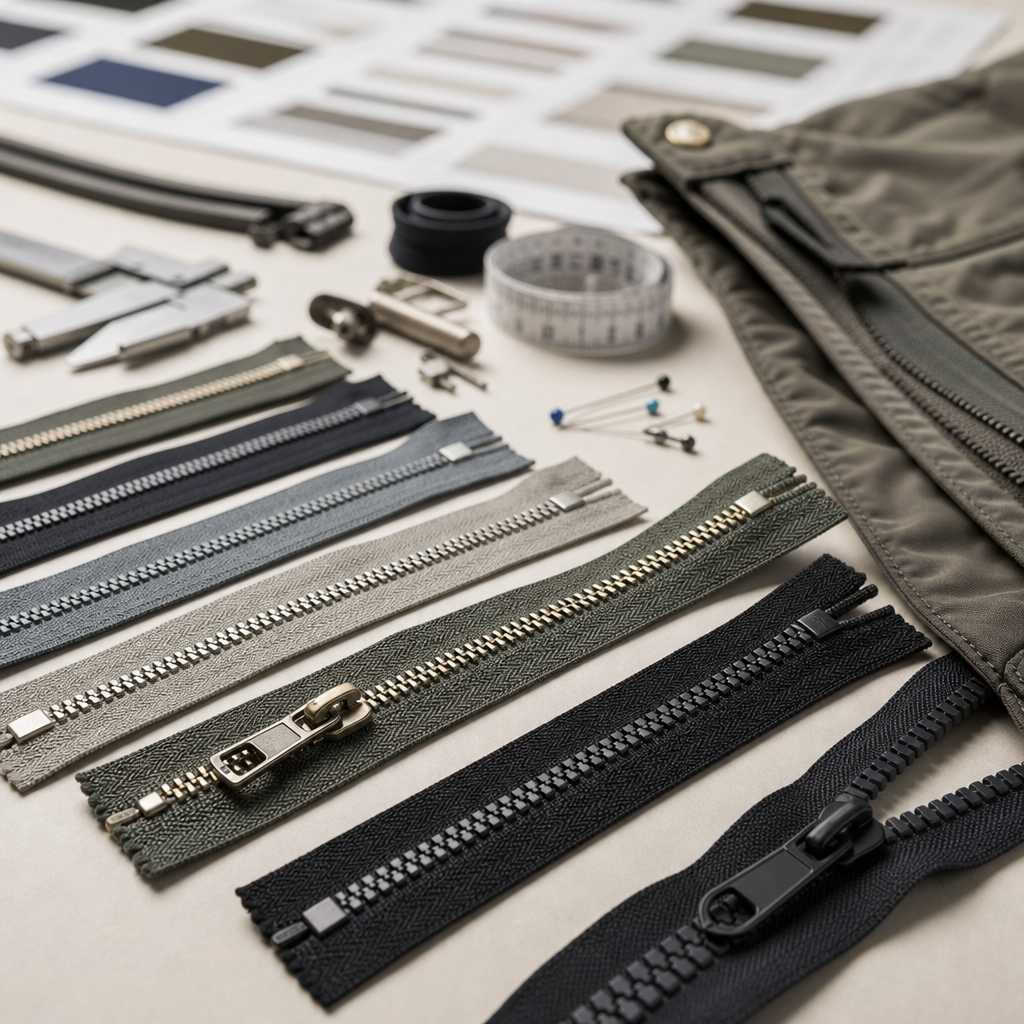
Buyers should confirm whether the style needs a coil zipper, metal zipper, molded plastic zipper, invisible zipper, two-way zipper, or specialty zipper. The correct choice depends on fabric weight, garment use, aesthetic, wash route, price point, and stress level.
A lightweight overshirt pocket does not need the same zipper as a heavyweight utility pant or washed jacket. A metal zipper may look premium but can create weight, wash, and color-change considerations. A molded plastic zipper may be practical but may not match the buyer’s intended styling.
Check Tape, Teeth, Slider, Puller, and Stops
A zipper should be reviewed as a set of parts. The tape should sit flat and match the garment well enough for the design. Teeth should be even and secure. The slider should move smoothly without catching. The puller should feel appropriate for the product and should not detach easily. Top and bottom stops should be secure.
Do not approve only a loose trim sample if the zipper will be used in a garment with thick seams, lining, padding, wash treatment, or curved placement. The zipper needs to be checked on the actual sample.
Confirm Length and Placement
Zipper length affects function and appearance. A front zipper that is too long can distort the hem or neckline. A pocket zipper that is too short may be inconvenient. A zipper that is too close to a seam, fold, or pocket edge may become hard to operate or may create stress during wear.
Measure zipper length on the sample and record reference points. If the zipper affects garment measurements, connect the trim review with garment measurement tolerances for small batch clothing orders.
Test Smooth Operation on the Real Sample
Open and close the zipper several times while the garment is laid flat and while the fabric is under light natural tension. Check whether the slider catches at seam joins, pocket openings, lining edges, waistband folds, or bulky fabric areas.
A zipper that works in a loose trim card can still fail on a garment if the sewing tension, seam allowance, lining, or fabric thickness is not suitable. Buyers should take short notes on where the zipper catches and when it happens.
Inspect Sewing and Puckering
Zipper tape should be attached cleanly. Look for puckering, twisting, uneven topstitching, loose thread, crooked placement, and fabric pulling near the tape. Thin fabrics can ripple beside zipper tape, while heavy fabrics can create bulky edges that affect slider movement.
If labels, hangtags, or care labels are also being reviewed, keep the trim package organized. StitchQuote’s guide to private label clothing label and hangtag approval is useful for keeping trim approvals specific rather than scattered across vague sample comments.
Review Pocket and Stress Areas
Pocket zippers and side-entry zippers need extra attention because they are pulled at an angle during use. Check whether the pocket opening is comfortable, whether the zipper end is reinforced, and whether fabric around the opening strains when the zipper is used.
For pants, review fly zipper function, waistband relationship, pocket zip position, and whether the zipper changes the garment’s fit or comfort. For jackets and overshirts, review front opening balance, hem alignment, sleeve zips if used, and lining clearance.
Check Wash and Finish Effects
Washing can change zipper behavior. Metal finishes can dull, fabric around the tape can shrink, softeners can affect hand feel, and heavy wash processes can stress the zipper. Buyers should review the zipper after the intended wash route when the garment will be washed or garment dyed.
For broader fabric and wash risk, StitchQuote’s guide to fabric testing for small production runs explains why shrinkage, rubbing, colorfastness, and trim behavior should be reviewed together.
Create a Zipper Approval Record
A useful approval record should include zipper type, length, tape color, teeth color, slider and puller style, placement, sample date, wash status, operation comments, and photos of any issue areas. If a substitute zipper is allowed for bulk, the buyer should approve the substitute clearly before production.
Vague comments like “zipper approved” do not protect the buyer. The factory needs to know which zipper, which placement, which sample, and which functional standard are approved.
Questions to Ask Before Bulk
- Is the zipper type suitable for the fabric weight and garment use?
- Does the slider move smoothly on the actual sample?
- Are zipper length and placement recorded with reference points?
- Does the zipper tape create puckering, twisting, or seam distortion?
- Are pocket and stress areas reinforced where needed?
- Has the zipper been reviewed after the intended wash or finishing route?
- Will the same zipper specification be used for bulk and reorders?
StitchQuote Note
For private label clothing production, low MOQ apparel production, and sampling and MOQ projects, StitchQuote treats zipper approval as part of trim, pattern, and construction review. The buyer should approve function, placement, wash behavior, and documentation before bulk.
FAQ
What is the most common zipper problem in apparel samples?
Common problems include rough slider movement, wrong length, tape puckering, weak stops, poor placement, bulky seam joins, and zipper behavior changing after wash or finishing.
Should buyers approve zipper trims before or after the sample?
Both matter. A loose zipper trim can confirm type and color, but final approval should happen on the real garment sample because placement, sewing, fabric thickness, and wash behavior affect function.
Can low MOQ buyers request a zipper change after sampling?
Yes, but changes should be made before bulk approval. A zipper change can affect cost, lead time, placement, sewing, and measurements, so the revised sample or trim standard should be recorded clearly.