Custom Streetwear, Casualwear & Denim Manufacturer•MOQ 50 pcs•Denim MOQ 100 pcs•7-Day Sample Available
Cut-and-Sew Pattern Approval Checklist Before Low MOQ Production
Approve cut-and-sew patterns before low MOQ production by checking fit blocks, points of measure, seam placement, grading, fabric behavior, trims, and sample notes.

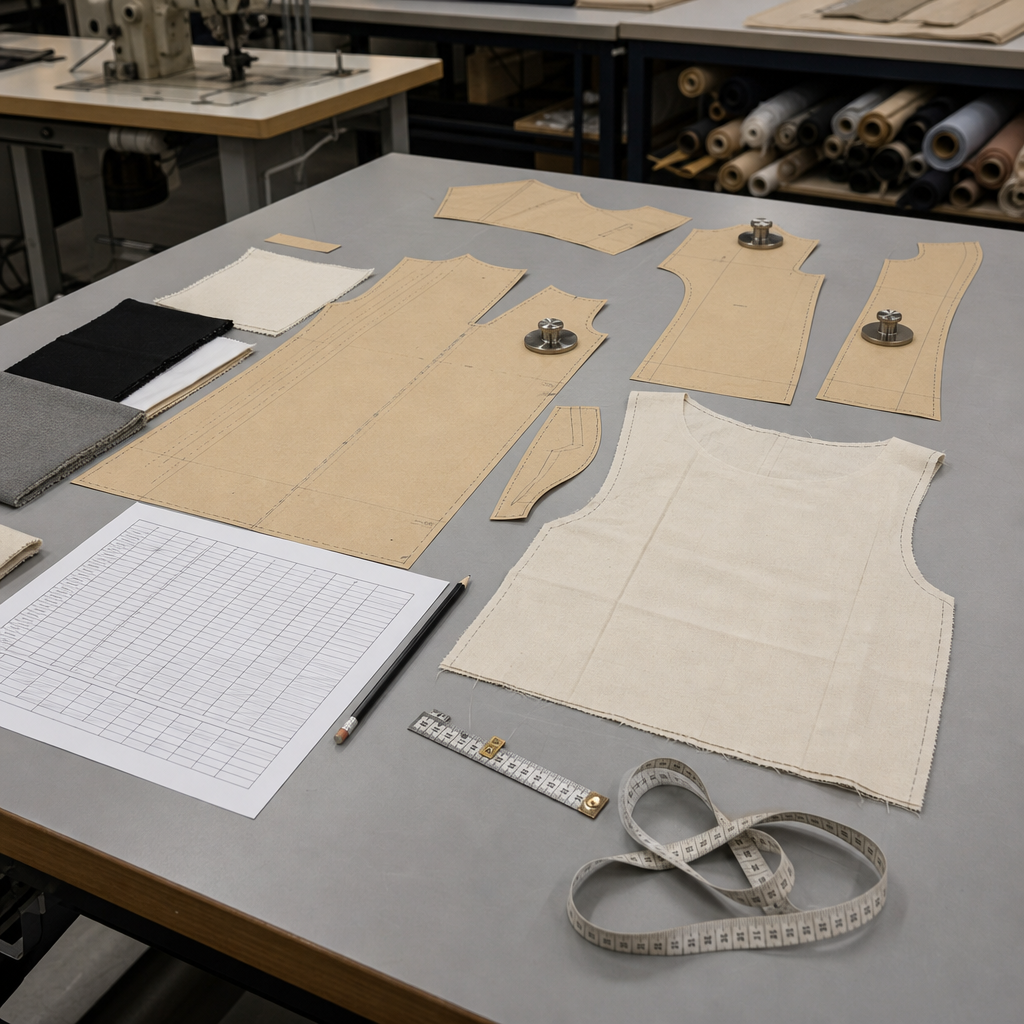
Cut-and-sew pattern approval should happen before a buyer treats a sample as ready for low MOQ production. A custom garment is not only a sketch with fabric and branding. It is a set of pattern pieces, seam placements, measurements, construction methods, fabric behavior, and grading choices that must work together in bulk.
This checklist is for apparel buyers moving beyond decorated blanks into custom cut-and-sew production. It explains what to approve before the factory cuts bulk fabric, especially when the first order needs to stay lean and avoid unnecessary sample revisions.
For stitch type, stress-point, and seam finishing checks, review how to approve cut and sew seam construction before low moq bulk production before approving cut-and-sew bulk production.
For cut-and-sew development that needs pattern control, construction records, and sample-first approval, review cut and sew production partner before sending the next tech pack or reference sample.
Why Pattern Approval Matters More in Cut-and-Sew
With decorated blanks, the garment fit and construction are mostly predetermined. With cut-and-sew, the buyer has more control, but also more responsibility. Body width, shoulder slope, sleeve shape, collar shape, rise, panel seams, pocket placement, and hem behavior all depend on pattern decisions.
The article on cut-and-sew versus blanks for streetwear brands explains the sourcing tradeoff. Once a buyer chooses cut-and-sew, the next risk is sample approval: approving a nice-looking sample without enough pattern detail to repeat it reliably.
Start With the Fit Block
A fit block is the starting shape behind the garment. It may be a standard factory block, a modified brand block, or a new pattern developed from references. Buyers should know which one is being used because it affects time, cost, and sample predictability.
If the project uses a factory block, confirm what will be modified. If the project uses a reference garment, explain what should be copied and what should change. If the project uses a new pattern, expect more sample development time. A clear fit-block decision helps a custom streetwear manufacturer or private label clothing manufacturer quote the work more responsibly.
Define the Critical Points of Measure
Every cut-and-sew sample should have critical points of measure. These are the measurements that protect the garment’s fit and silhouette. For a T-shirt, they may include chest, shoulder, body length, sleeve length, sleeve opening, neck width, and hem width. For a hoodie, they may include chest, sweep, shoulder, sleeve, cuff, hood opening, body length, and pocket placement. For pants, they may include waist, rise, hip, thigh, inseam, and leg opening.
Each point should define where and how to measure. If the buyer and factory measure from different positions, the same sample can appear to pass or fail depending on who checks it. Use written measurement notes and simple diagrams when possible. The guide to garment measurement tolerances is useful when setting realistic pass/fail expectations for small production runs.
Review Seam and Panel Placement
Pattern approval is not only about overall width and length. Seam placement changes the look and comfort of the garment. Side seams, shoulder seams, sleeve seams, yoke seams, pocket openings, crotch seams, and panel breaks should be reviewed before bulk production.
For streetwear, small seam shifts can change the whole silhouette. A dropped shoulder can look intentional or sloppy depending on angle and sleeve shape. A pocket can sit too high, too low, or too close to a seam. A panel line can interfere with embroidery or print placement. Buyers should mark these issues on sample photos, not only describe them in text.
Check Fabric Behavior Against the Pattern
A pattern that works in one fabric may not work in another. Heavy fleece, french terry, jersey, rib, twill, denim, and woven shirting all behave differently. Stretch, recovery, shrinkage, drape, and seam bulk affect how the pattern wears and how easy it is to sew consistently.
Before approving the pattern, review it in the intended production fabric or a close substitute. If the first sample uses substitute fabric, clearly state which fit comments are final and which need confirmation in the bulk fabric. The article on fabric testing for small production runs gives a practical framework for checking fabric risks before bulk.
Connect Pattern Approval to Trims and Artwork
Trims and artwork can expose pattern problems. A neck label may sit wrong if the back neck shape changes. A front print may look too high if the body length changes. Embroidery can pull fabric if it crosses a seam or lands on a tight panel. A zipper can distort the front if the pattern and seam allowance are not prepared for it.
Buyers should approve artwork placement, label placement, pocket placement, drawcord exits, zipper length, rib width, and trim positions together with the pattern. This avoids the common problem where the fit is approved first and decoration issues appear only after the next sample.
Do Not Skip Grading Logic
Pattern approval should include grading logic across sizes. A medium sample may look correct, but the extra-small or XXL can lose the intended silhouette if grading is too mechanical. Oversized streetwear, cropped fits, wide-leg pants, boxy tees, and structured hoodies all need grading decisions that protect the design.
For low MOQ orders, buyers often want to move quickly after one sample. That can work only if the size range and grading assumptions are clear. If the first order has a tight budget, decide which sizes need extra review before bulk and which measurements are most critical to the fit. This belongs in the broader low MOQ clothing manufacturing plan.
Prepare Sample Approval Notes the Factory Can Follow
Useful pattern approval notes are specific enough for action. Instead of writing “make it fit better,” write what changed and why. For example: increase chest by a defined amount, lower pocket placement, reduce sleeve opening, adjust shoulder slope, shorten body length, or move artwork down after the body change.
Before final approval, prepare a sample file with:
- approved sample photos from front, back, side, and detail views;
- points of measure and tolerance notes;
- fit comments explaining the intended silhouette;
- fabric, rib, trim, and artwork references;
- grading assumptions for the full size range;
- open issues that must be corrected before bulk;
- buyer approval date and sample version.
If the project is still at the quote stage, use the checklist in what buyers should finalize before asking for a sample quote. Better inputs reduce vague sampling and help the manufacturer price the work more accurately.
Use the Sample Process to Confirm, Not Guess
Sampling is where the pattern becomes real. The first sample may confirm the direction, but it may not be ready for production. Buyers should expect to review fit, measurements, construction, trim placement, artwork placement, and fabric behavior before approving bulk. The goal is not endless sampling. The goal is to avoid using bulk production as the place where the pattern is still being solved.
Connect pattern approval to sampling and MOQ planning. A strong sample approval process makes low MOQ production safer because the factory has a clearer production standard and the buyer has fewer late-stage surprises.
Practical StitchQuote Note
When StitchQuote reviews a cut-and-sew project, pattern approval is treated as the bridge between design intent and production control. Fit block, measurements, seam placement, grading, fabric behavior, trim position, and artwork placement are reviewed together. That is how a custom garment becomes repeatable enough for production instead of remaining a promising sample.
FAQ
What should buyers approve before cut-and-sew production?
Buyers should approve the fit block, points of measure, seam placement, panel details, construction method, fabric behavior, trim placement, artwork placement, grading logic, and final sample notes before bulk production.
Is one cut-and-sew sample enough before bulk?
Sometimes, but only when the pattern, fabric, measurements, trims, artwork, and grading are already clear. New silhouettes or new fabrics often need more than one sample before production approval.
How is pattern approval different from tech pack approval?
The tech pack documents the intended product. Pattern approval confirms that the actual pattern and sample match that intent and can be repeated in production.
Why does fabric matter for pattern approval?
Fabric changes drape, stretch, shrinkage, seam bulk, and how the garment sits on body. A pattern approved in the wrong fabric may not work the same way in production fabric.
[…] reviewing seam construction, compare the sample with the cut and sew pattern approval guide. Pattern comments and seam comments should work together instead of contradicting each […]
[…] article on cut-and-sew pattern approval before low MOQ production is relevant because zipper placement often depends on pattern shape, seam position, pocket […]
[…] cut-and-sew pattern approval guide explains how buyers can review pattern readiness before production. For broader development […]
[…] any style-specific points. If the project includes a new shape, connect the tech pack to the later cut and sew pattern approval stage so sample comments can be translated into pattern changes, not just loose fit […]