Custom Streetwear, Casualwear & Denim Manufacturer•MOQ 50 pcs•Denim MOQ 100 pcs•7-Day Sample Available

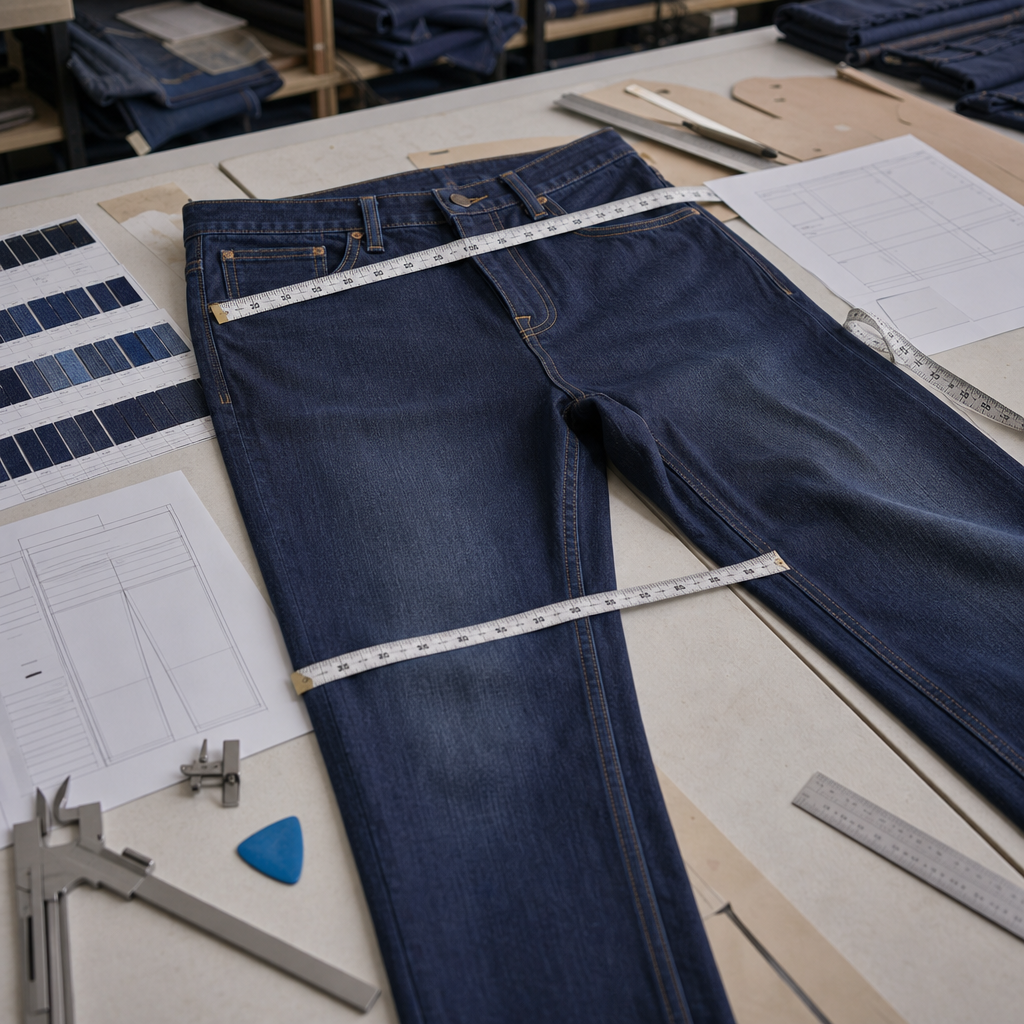
Jeans Fit Tolerance Checklist Before Custom Denim Production
Set jeans fit tolerance before custom denim production, including waist, rise, hip, thigh, inseam, leg opening, wash shrinkage, grading, and PP sample checks.

Jeans fit tolerance should be agreed before custom denim production begins. Denim is less forgiving than many cut-and-sew products because fabric weight, washing, seam construction, waistband behavior, and grading all affect the final fit. A pair of jeans can match the design direction and still fail commercially if the waist, rise, hip, thigh, inseam, or leg opening shifts outside the buyer’s expectation.
For denim-specific quoting and production planning, review our custom jeans manufacturer page.
This checklist gives denim buyers a practical way to review measurements and fit notes before approving a PP sample or moving into low MOQ production. It is not about forcing every factory to follow one universal tolerance. It is about making the approval standard clear enough that sample, bulk, and inspection teams are checking the same thing.
For denim wash, leg twist, pocket placement, or fit tolerance decisions, use how to approve jeans after-wash measurements before low moq production to confirm after-wash measurement approval before bulk jeans production.
Why Jeans Tolerances Are Harder Than Basic Garments
Jeans are affected by construction and wash. Raw, rinsed, enzyme washed, stone washed, acid washed, coated, and garment-dyed denim can all behave differently. Seams may tighten after washing. Waistbands can grow during wear. Twill fabric can skew. Heavy denim can make small fit issues feel more obvious on body.
That is why a denim buyer should review fit tolerance with a custom denim manufacturer before bulk production. The buyer needs to know which measurements are critical to the silhouette and which tolerances are realistic for the fabric, wash, and production method.
Identify the Critical Points of Measure
A jeans spec should include more than waist and inseam. At minimum, review:
- waist relaxed and extended if stretch is involved;
- front rise and back rise;
- hip at the agreed point below waistband;
- thigh at a defined distance from crotch;
- knee if the silhouette depends on taper or flare;
- leg opening;
- inseam and outseam;
- waistband height and pocket placement when these affect fit perception.
Every point of measure should say exactly where to measure. If one person measures the thigh below the crotch and another measures lower on the leg, both can report different numbers while believing they followed the spec. Clear measurement diagrams reduce this problem.
Separate Fit Tolerance From Appearance Comments
Measurement tolerance and fit comments are related, but they are not the same. A pair of jeans may be inside measurement tolerance and still look wrong if the seat collapses, the front rise pulls, or the leg twist is too visible. The approval notes should include both numeric checks and wearer-facing comments.
For example, do not only write “thigh within tolerance.” Add whether the thigh should feel relaxed, slim, straight, stacked, or loose. Do the same for seat, rise, knee, and leg opening. The more specific the silhouette, the more important this becomes.
Review Pre-Wash and Post-Wash Measurements
Many denim fit problems are really wash-control problems. The sample can look right before washing and change after wash, rinse, dry, or finishing. Buyers should decide whether the approved spec is based on pre-wash measurements, post-wash measurements, or both.
For most buyer approvals, the final customer-facing garment matters most. Still, pre-wash measurements can help the factory control cutting and production before the wash process. If the wash is a major part of the look, review this together with denim wash approval rather than treating measurement and wash as separate decisions.
Use the PP Sample to Confirm Fit, Not Redesign the Product
The PP sample should confirm that the approved details can be produced consistently. It should not become the first serious fit review. By the PP stage, the buyer should already understand the target silhouette, key measurements, wash behavior, hardware placement, and construction method.
Use the PP sample to check:
- whether all critical points of measure match the agreed spec and tolerance;
- whether the waistband sits correctly after buttoning and moving;
- whether rise, seat, thigh, knee, and leg opening create the intended silhouette;
- whether inseam and outseam remain balanced after wash;
- whether pocket placement, yoke shape, and back rise support the fit;
- whether visible twisting, puckering, or seam torque is acceptable for the wash and fabric.
The existing guide on what to check in a denim PP sample can be used with this tolerance checklist when preparing final approval notes.
Grade the Fit Across Sizes
A good sample size does not guarantee a good size range. Jeans grading should protect the intended silhouette across smaller and larger sizes. The waist, hip, thigh, rise, knee, and leg opening should not scale mechanically if that scaling damages the fit.
For low MOQ denim programs, it is tempting to keep the grading conversation short. That can create problems later because each size may have low unit depth, making returns or replacements more painful. If you are planning a smaller first order, connect fit tolerance to the broader low MOQ production plan and agree which sizes need the most careful review.
Write Tolerance Notes That QC Can Actually Use
QC needs practical instructions. Instead of saying “fit must be good,” write which measurements are critical, what range is acceptable, which points should be measured flat, and which visible issues require review. If a tolerance is tighter than normal for the fabric and wash, that should be discussed before production starts.
Useful tolerance notes include:
- which points of measure are critical and which are secondary;
- whether tolerance applies before or after wash;
- how many samples should be checked during bulk inspection;
- which visible fit issues should trigger a review even if measurements are close;
- approved sample photos and measurement diagrams.
For general measurement logic, the article on garment measurement tolerances for small batch clothing orders explains why buyers should define realistic inspection standards rather than expect every garment to match a sample perfectly.
Prepare Fit Tolerance Before Asking for Final Pricing
Fit tolerance can affect price, sampling time, wash control, and inspection workload. A buyer asking for custom jeans should provide the manufacturer with style references, target fit, fabric direction, wash direction, size range, points of measure, and approved sample comments. This makes the quote more grounded than a request based only on photos.
If the project is still early, use sampling and MOQ planning to decide which denim decisions must be locked first and which can wait until after the first sample.
Practical StitchQuote Note
StitchQuote treats jeans fit tolerance as a production-control issue, not only a size chart issue. For denim projects, measurement specs, wash approval, PP sample review, and wearer-facing fit comments should be connected. That gives the buyer a clearer basis for approving bulk production and gives QC a more useful standard than a generic “same as sample” instruction.
FAQ
What measurements matter most for jeans fit tolerance?
Waist, front rise, back rise, hip, thigh, knee, inseam, outseam, and leg opening are usually the core checks. Pocket placement, yoke shape, waistband height, and wash behavior can also affect fit perception.
Should jeans be measured before or after washing?
Buyers should clarify this before approval. Final customer-facing fit usually depends on post-wash measurements, but pre-wash measurements can help the factory control cutting and wash shrinkage.
Is one approved jeans sample enough for production?
One approved sample can be enough only if the buyer also provides clear points of measure, tolerance notes, size grading, wash approval, and PP sample checks. A sample without written standards leaves too much open to interpretation.
How tight should jeans tolerances be?
The tolerance should match the fabric, wash, construction, and target fit. Overly tight tolerances may be unrealistic for some denim washes, while vague tolerances create buyer risk. Agree the critical measurements before production starts.
[…] approving pockets, confirm the core fit measurements. The guide to jeans fit tolerance explains why waist, rise, hip, thigh, inseam, and leg opening should be controlled before final […]
[…] denim and other structured bottoms, StitchQuote’s jeans fit tolerance checklist shows how measurements, wash shrinkage, grading, and PP sample review can affect seam […]
[…] the jeans fit tolerance checklist to decide which points are critical for the fit. Skinny, straight, loose, baggy, and flare jeans do […]
[…] A jean can measure correctly before wash and feel different after wash. StitchQuote’s jeans fit tolerance checklist is useful when buyers need to connect measurements, grading, wash shrinkage, and PP sample […]
[…] the jeans fit tolerance checklist together with wash standards. A good reorder file should include both shade approval and post-wash […]