Custom Streetwear, Casualwear & Denim Manufacturer•MOQ 50 pcs•Denim MOQ 100 pcs•7-Day Sample Available
How to Check Seam Slippage Risk Before Low MOQ Woven Apparel Production
A practical woven apparel sample approval guide for checking seam slippage, fabric stress points, stitch type, seam allowance, wash behavior, and QC notes.

Seam slippage risk is a common reason woven garments fail after sample approval. The seam may look clean when the garment is new, but yarns can pull away from the stitch line under tension, creating an open seam, stressed fabric, or a weak area that looks worse after wash and wear.
For low MOQ woven apparel, buyers should check seam slippage before bulk production because the correction may involve fabric choice, seam allowance, stitch type, pattern tension, or fit adjustment. Waiting until bulk inspection is usually too late.
For stitch type, stress-point, and seam finishing checks, review how to approve cut and sew seam construction before low moq bulk production before approving cut-and-sew bulk production.
What Seam Slippage Looks Like
Seam slippage is not simply a broken stitch. It often appears as fabric yarns moving away from the seam under stress. The seam may spread open, the stitch line may look strained, or the fabric beside the seam may show gaps. This can happen even when the sewing thread itself is strong.
Common risk areas include side seams, seat seams, armholes, pocket openings, center back seams, sleeve seams, and tight areas around hip, thigh, shoulder, or elbow. Any area that receives body movement or pulling should be reviewed carefully.
Start With Fabric Structure
Some woven fabrics are more vulnerable than others. Loose weaves, smooth yarns, lightweight fabrics, slippery fibers, open constructions, and certain stretch wovens can slip more easily at seams. A fabric may feel premium in the hand but still need stronger construction planning.
StitchQuote’s guide to fabric testing for small production runs is relevant because seam slippage should be considered alongside shrinkage, colorfastness, rubbing, pilling, and wash behavior.
Connect Slippage to Fit Tension
A seam that passes on a loose sample may fail when the garment is fitted closer to the body. Tight hip, thigh, seat, shoulder, or sleeve areas create stress that can expose weak fabric or construction. Buyers should review seam slippage risk together with fit, not as an isolated sewing issue.
For denim and other structured bottoms, StitchQuote’s jeans fit tolerance checklist shows how measurements, wash shrinkage, grading, and PP sample review can affect seam stress.
Check Seam Allowance and Stitch Type
Seam allowance gives fabric room to hold under tension. If the seam allowance is too narrow for the fabric, the seam may open more easily. Stitch density, stitch type, needle size, thread choice, and seam finish can also affect durability.
Buyers do not need to specify every technical sewing parameter, but they should ask whether the current construction is suitable for the fabric and stress points. A useful revision request names the problem area and asks the factory to review seam allowance, stitch type, seam finish, and fabric suitability.
Inspect Real Garment Stress Points
A flat seam sample is useful, but the real garment matters more. Check the sample at the areas that will receive stress during wear. For pants, inspect seat, side seams, crotch, pocket openings, and thigh. For overshirts and jackets, inspect armholes, shoulder seams, side seams, cuffs, and pocket areas.
Cut-and-sew styles often combine fit, seam placement, trims, and fabric behavior. StitchQuote’s article on cut-and-sew pattern approval before low MOQ production is a useful reference when seam stress comes from both pattern shape and construction.
Do a Light Tension Review
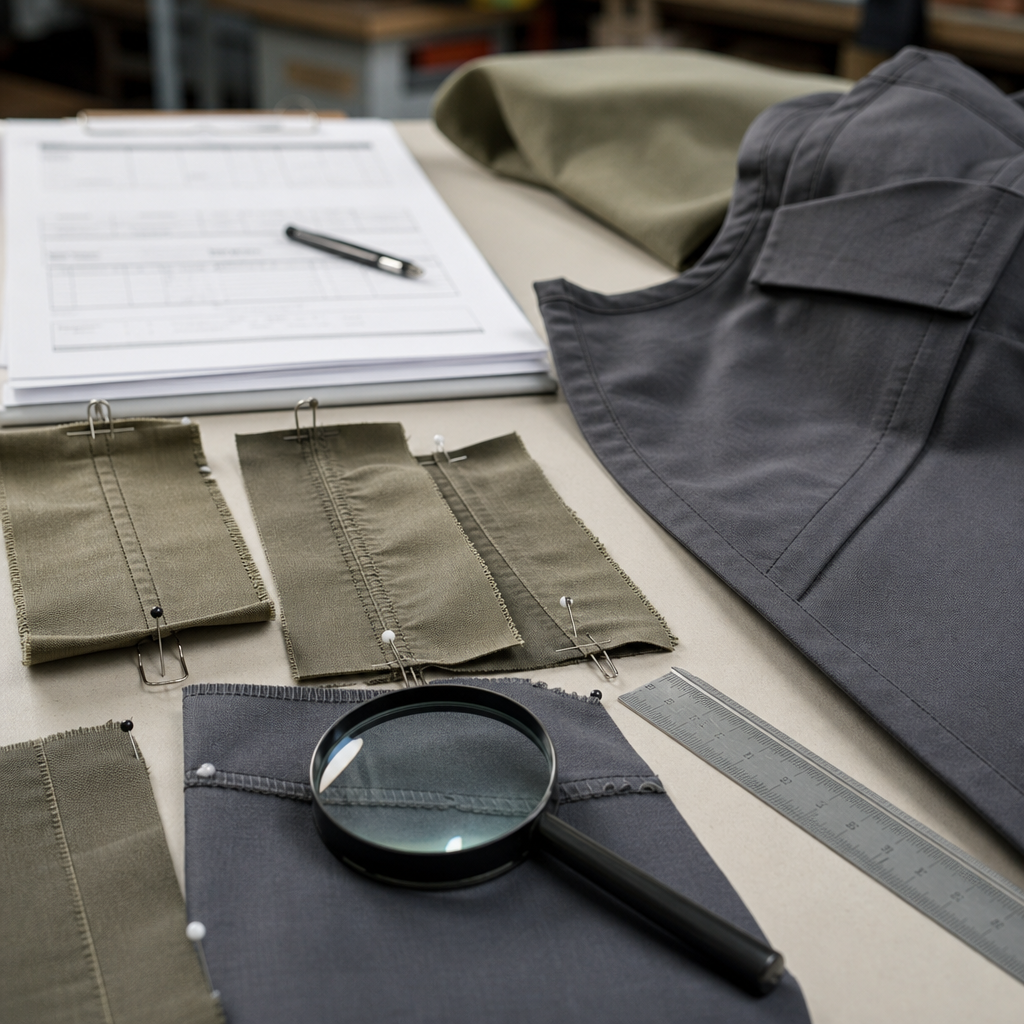
During sample review, apply light controlled tension to high-risk seam areas and inspect whether yarns separate near the stitch line. Do not pull aggressively enough to damage a normal garment. The purpose is to detect obvious risk and compare the sample with the intended product use.
If the garment is meant for active movement, oversized styling, or tight fit, the stress review should match that reality. A woven trouser, cropped overshirt, or casual jacket may each need a different tolerance.
Review After Washing
Washing can expose seam slippage risk. Shrinkage may tighten the garment, finishing may soften the fabric, and yarn movement may become more visible. Buyers should inspect the same stress points after wash and compare them with the unwashed sample.
Measurement changes matter too. StitchQuote’s guide to garment measurement tolerances for small batch clothing orders can help buyers record fit and measurement changes that increase seam stress.
Write a Specific Revision Request
A vague note like “seam looks weak” is hard for a factory to act on. A better note says where the slippage appears, when it appears, and what should be reviewed. For example: “After light tension, side seam opens near the hip on washed sample. Please review fabric suitability, seam allowance, stitch density, and whether the hip measurement needs adjustment.”
This gives the factory a practical path: fabric, pattern, and sewing can all be checked against the same problem.
Create an Approval Record
A useful seam slippage approval record should include fabric reference, garment size, sample date, stress points checked, wash status, photos, seam comments, and correction notes. If a buyer accepts a delicate woven fabric with limited stress tolerance, that decision should be documented before bulk.
For low MOQ production, this record prevents the same issue from becoming a dispute during bulk inspection or reorders.
Checklist Before Bulk
- High-stress seam areas have been identified on the actual garment.
- Fabric weave and hand feel are suitable for the intended fit and use.
- Seam allowance, stitch type, and seam finish have been reviewed where risk appears.
- The sample has been checked with light controlled tension.
- Washed and unwashed samples are compared when washing is part of the final process.
- Fit tension and measurement tolerance are reviewed together with seam strength.
- Correction notes are specific enough for factory action.
StitchQuote Note
For private label clothing production, low MOQ apparel production, and sampling and MOQ projects, StitchQuote treats seam slippage as a fabric, pattern, and construction approval issue. Buyers should review real garment stress points before bulk, especially on woven pants, overshirts, jackets, and fitted casualwear.
FAQ
Is seam slippage caused by weak sewing thread?
Not always. Seam slippage often happens when fabric yarns move away from the stitch line. Thread strength matters, but fabric structure, seam allowance, stitch type, fit tension, and wash behavior can all be part of the cause.
Which garments have higher seam slippage risk?
Lightweight woven garments, loose-weave fabrics, smooth fibers, stretch wovens, fitted pants, overshirts, jackets, and pocket-heavy styles can have higher risk, especially at stress points.
Can low MOQ buyers test seam slippage without a lab?
They can do a practical sample review by checking high-stress seams under light tension before and after wash. For higher-risk fabrics or larger programs, formal testing may be worth adding before bulk approval.
[…] seam slippage test guide is useful when the fabric or seam route may spread under […]