Custom Streetwear, Casualwear & Denim Manufacturer•MOQ 50 pcs•Denim MOQ 100 pcs•7-Day Sample Available

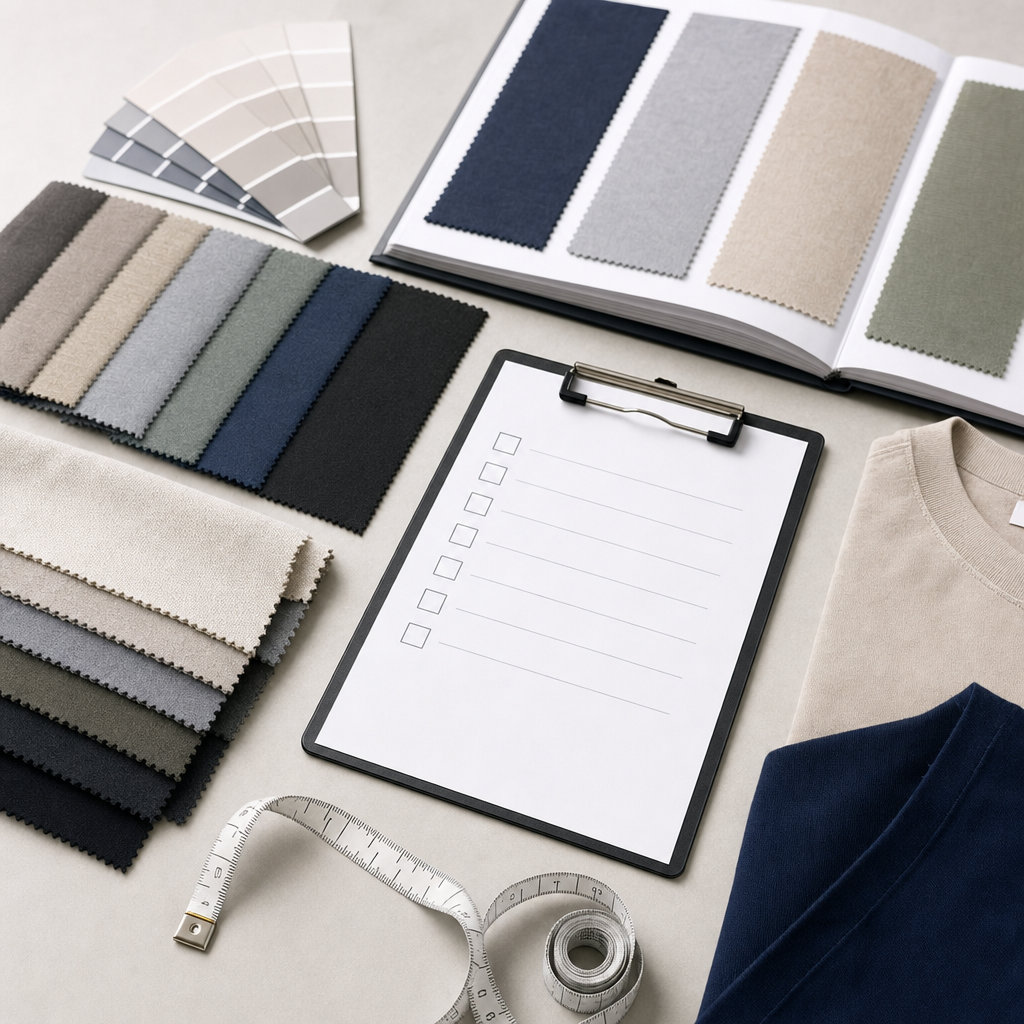
Lab Dip Approval Checklist for Low MOQ Apparel Production
Review apparel lab dips before low MOQ production by checking color standards, fabric behavior, lighting, trims, approval comments, and bulk shade risk.

Lab dip approval for apparel is the step where a buyer reviews fabric color before bulk production. It sounds simple, but color approval can create real production risk when the buyer relies on a screen image, approves a swatch under poor lighting, or forgets to compare body fabric against rib, drawcords, zippers, labels, and trims.
This checklist is written for low MOQ apparel buyers, startup brands, and private label teams that need custom color control without adding avoidable sample rounds. The goal is not to make color approval complicated. The goal is to make the approval clear enough that sampling, bulk fabric, trim sourcing, and QC all follow the same color standard.
When fleece weight, rib recovery, or matching-set consistency depends on wash results, use how to test fleece hoodie shrinkage before low moq bulk production to confirm shrinkage checks before bulk hoodie production.
For premium basics where GSM, neck rib, or side-seam balance can shift after washing, use how to check t-shirt fabric shrinkage before premium basics production to confirm fabric shrinkage checks before bulk T-shirt production.
What a Lab Dip Actually Approves
A lab dip is a small fabric color sample prepared before bulk dyeing or fabric approval. It helps the buyer compare proposed colors against a target standard. Depending on the project, the standard may be a physical swatch, a previous approved garment, a color card, or a buyer-provided material reference.
A lab dip does not automatically approve the final garment. It approves a color direction on a specific fabric or material. Bulk fabric can still show shade variation, different handfeel, or different behavior after washing. That is why lab dip approval should connect to the broader sampling and MOQ workflow instead of sitting in a separate email thread.
Start With a Physical Color Standard
Digital color references are useful for design communication, but they are not enough for production approval. Screens vary. Photos change color under different light. File formats and phone cameras can shift the buyer’s perception. A physical standard gives the factory and buyer something concrete to compare.
Before asking for a lab dip, define the standard clearly:
- the target swatch or approved garment;
- fabric type and composition;
- whether the final product is piece dyed, garment dyed, washed, printed, or untreated;
- which trims must match or coordinate with the body fabric;
- whether small shade variation is acceptable or the match must be tight.
If the project is still at quote stage, include color approval needs in the sample request. The guide on what buyers should finalize before asking for a sample quote explains why unclear inputs create unnecessary sample delays.
Review Lab Dips Under Consistent Light
Color should be reviewed under consistent lighting, not only beside a window or under a warm desk lamp. Different light sources can make the same dip look warmer, cooler, duller, or brighter. If the brand is choosing between several close shades, lighting discipline matters.
Buyers should compare the lab dip against the target standard on the same surface and under the same light. If possible, review more than one lighting condition and note any obvious shift. The approval comment should say which dip is approved and why, not just “looks good.”
Check Fabric Behavior, Not Only Color
A lab dip is usually reviewed for color, but the buyer should also notice handfeel, surface texture, and whether the fabric looks different after treatment. Dye, wash, and finishing can affect softness, brightness, surface cleanliness, and shrinkage. This is especially important for fleece, french terry, rib, denim, and garment-washed programs.
For small runs, the risk is not only a wrong color. The risk is approving a color on a material that does not behave like the production fabric. Use the fabric-risk thinking in fabric testing for small production runs when the project involves new material, heavy washing, or performance expectations.
Compare Body Fabric and Trims Together
Many color problems appear when trims are reviewed separately. A hoodie body may be approved first, then rib, drawcord, zipper tape, eyelets, labels, and prints arrive slightly off. For a private label garment, those small differences can make the product look less controlled.
Review the lab dip with:
- rib trims and waistband materials;
- drawcords, zippers, buttons, and hardware finishes;
- print or embroidery thread colors;
- woven labels, patches, and packaging colors when they sit close to the garment;
- the matching top or bottom if the product is part of a set.
The article on matching set fabric consistency is useful when the buyer needs hoodie and sweatpants colors to stay coordinated across multiple pieces.
Use Clear Approval Comments
Do not approve color with vague comments. A useful lab dip approval should say which option is approved, whether it is approved exactly or with adjustment, and what must happen next. If no dip is approved, explain the requested correction in practical terms, such as darker, less red, less yellow, cleaner grey, softer black, or closer to the provided swatch.
Keep approval records with photos, dip numbers, date, buyer comments, target standard, and the person who approved the color. This matters when bulk fabric arrives and someone needs to compare it against the approved decision.
Understand Low MOQ Color Risk
Low MOQ orders can face different color constraints than large production runs. Some custom dye processes, special trims, or exact color matches may require minimums that exceed the buyer’s first-order plan. A practical buyer should ask whether the color can be produced at the planned quantity and whether using available fabric, standard trim, or a close shade would reduce risk.
This does not mean a small brand must accept poor color control. It means the buyer should connect color choices to the real production path. If the color decision affects MOQ, timing, or fabric sourcing, it belongs in the low MOQ clothing manufacturing conversation early.
Check Bulk Fabric Against the Approved Dip
Approving a lab dip is not the final color check. When bulk fabric arrives, review it against the approved dip and the target standard. If the order has multiple rolls or lots, check shade variation. If the garment is washed after sewing, check color again after the wash or finishing process.
For private label clothing manufacturing, this is where documentation matters. The buyer should know what was approved, what standard it was approved against, and how much variation is acceptable before garments are cut.
Practical StitchQuote Note
When StitchQuote reviews a project with custom color, lab dip approval is treated as part of sample control. Fabric, trims, wash behavior, matching set needs, and low MOQ constraints are reviewed together. This helps buyers avoid approving color in isolation and then discovering that the final garment does not match the product plan.
FAQ
Is a lab dip the same as bulk fabric approval?
No. A lab dip approves a proposed color direction before bulk fabric production. Bulk fabric still needs review against the approved dip and target standard.
Can a buyer approve a lab dip from a photo?
Photos are useful for discussion, but physical review is safer because screens and lighting can change color perception. For important colors, review a physical swatch when possible.
How many lab dip options should a buyer request?
Many projects review several options so the buyer can choose the closest direction. The right number depends on fabric, timeline, and how exact the target color must be.
What should be recorded after lab dip approval?
Record the approved dip number, target standard, date, buyer comments, photos, and any conditions such as trim matching or post-wash review.
Request a manufacturing quote
Share your product type, quantity range, and destination. We usually reply within one business day.
2 Comments
Comments are closed.
[…] the lab dip approval checklist when the substitute also changes dye route or shade. If the substitute is a cotton jersey, fleece, […]
[…] is commercially acceptable. Buyers who need a development-stage color workflow can first review the lab dip approval checklist, then use the shade band as the separate bulk-release […]