Custom Streetwear, Casualwear & Denim Manufacturer•MOQ 50 pcs•Denim MOQ 100 pcs•7-Day Sample Available
How to Decide Fabric Substitutions for a First Low MOQ Clothing Drop
Decide fabric substitutions for a first low MOQ clothing drop by comparing handfeel, GSM, shrinkage, color, lead time, MOQ, and approval risk.

Fabric substitution is common in low MOQ clothing production because the buyer’s first-choice fabric may be below mill minimum, out of stock, too slow for the delivery window, or too expensive for the first drop. A substitute can be a smart decision, but only when the buyer checks how it changes fit, handfeel, shrinkage, color, decoration, and reorder risk.
The safest way to decide is not to ask whether the substitute is close enough in a general sense. Ask what the customer will notice, what the pattern will do after wash, what the decoration process needs, and what records the factory must keep before bulk production starts.
Start With the Customer-Facing Difference
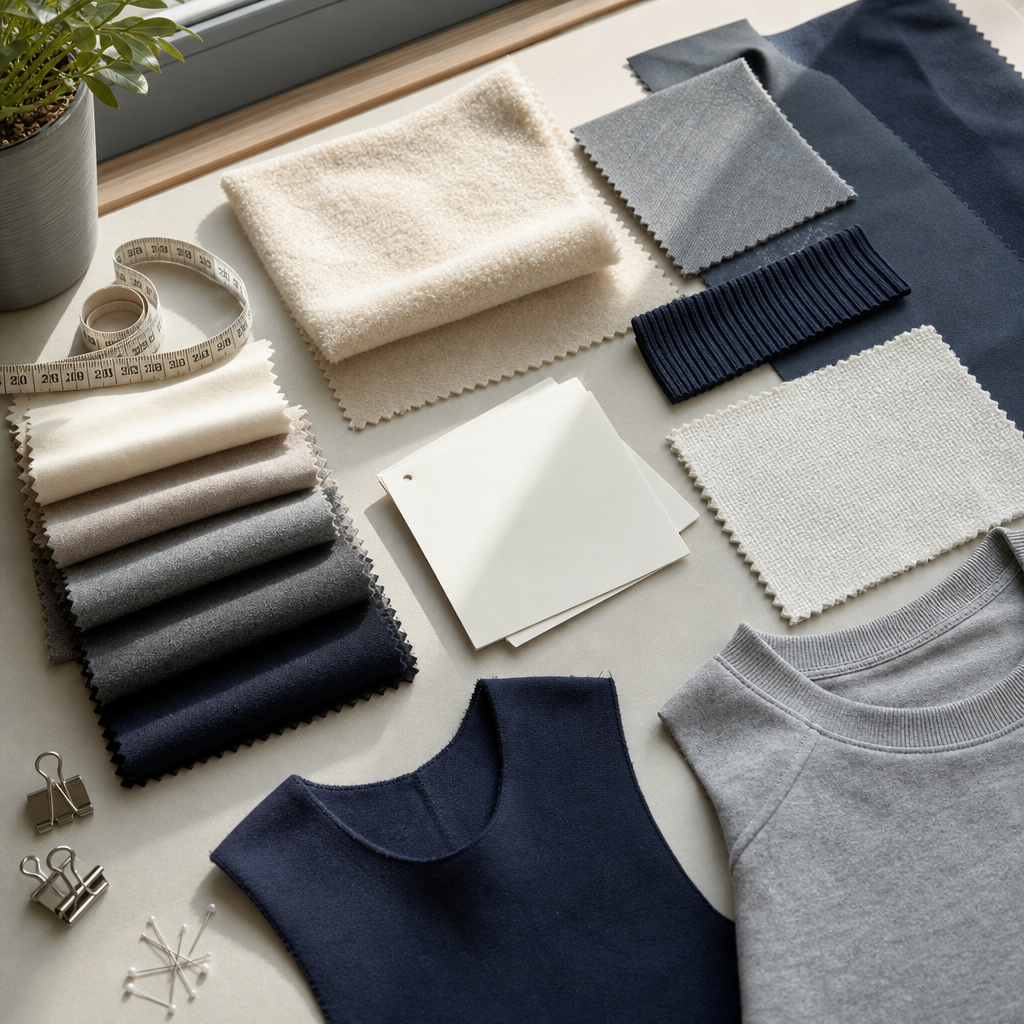
Before comparing mill data, hold the original reference and substitute fabric side by side. Check handfeel, drape, surface, thickness, opacity, stretch, recovery, and warmth. A fabric can match the target GSM but still feel cheaper, stiffer, flatter, shinier, or less structured than the buyer expected.
If the style is a T-shirt or premium basics item, compare the substitute against the T-shirt GSM decision guide. GSM is useful, but the buyer should also review yarn feel, compactness, collar behavior, shrinkage, and after-wash balance.
Check What Changes After Wash
A substitute fabric should be washed before approval when it affects body length, chest width, rib recovery, side seam movement, leg twist, shade, or surface pilling. Low MOQ buyers often skip this step because the order is small, but the first drop is when brand perception is most fragile.
Use the lab dip approval checklist when the substitute also changes dye route or shade. If the substitute is a cotton jersey, fleece, or premium basics fabric, the fabric pilling risk guide can help decide whether the surface will still match the brand position after wear and washing.
Review Construction and Decoration Compatibility
Fabric substitution can change how the garment sews. A heavier fleece may need different needle choice, seam allowance, rib tension, or pocket reinforcement. A lighter jersey may expose print handfeel, seam torque, or transparency. A stretchier fabric may make measurements less stable unless the pattern and QC method are adjusted.
Decoration also matters. Screen print, puff print, embroidery, washing, enzyme treatment, and garment dye can all behave differently on a substitute fabric. Before approval, ask the factory whether the substitute changes curing, embroidery backing, print cracking risk, wash shade, or handling during sewing.
If a substitute fabric changes lead time, reorder risk, or testing needs, map the decision against a low-MOQ route for fabric substitution decisions before approving the first drop.
Compare MOQ, Lead Time, and Reorder Risk
The cheapest substitute is not always the best low MOQ choice. A stock fabric can shorten lead time, but it may disappear before reorders. A custom fabric may match the brand better, but it can raise MOQ and cash exposure. A near-match fabric may be acceptable for a test drop, but only if the buyer records that it is a controlled first-run decision.
Connect the substitution decision to the low MOQ reorder planning guide. If the substitute cannot be repeated later, the buyer should know before approving labels, product photos, size sets, or a reorder promise.
Write a Clear Approval Rule
A useful approval note should say why the substitute was proposed, what changed from the original reference, what was tested, what is acceptable, and what requires another sample. Avoid vague notes such as use similar fabric. The factory needs a practical rule it can follow during purchasing, cutting, sewing, washing, and final inspection.
If trims are also changing, review the apparel trim sourcing guide so the fabric and trim decisions stay aligned. Fabric, rib, zipper, label, drawcord, and packaging decisions should not be approved in separate conversations when they affect the same first drop.
Questions Buyers Ask About Fabric Substitution
When is a fabric substitute acceptable for low MOQ production?
It is acceptable when the buyer has checked handfeel, fit, shrinkage, color, construction, decoration behavior, lead time, MOQ, and reorder risk, and the differences are clearly recorded before bulk production.
Should a substitute fabric always require a new sample?
Not always, but a new sample is safer when the substitute changes garment weight, stretch, wash behavior, color, decoration, or a critical fit point. For a first production drop, a small retest can prevent a much larger bulk mistake.
What should buyers reject immediately?
Reject a substitute that changes the intended product level, creates unstable measurements, fails wash or pilling checks, cannot support the decoration method, or cannot be repeated for reorders when continuity matters.
Prepare Fabric Substitution Notes for Review
Send your reference fabric, target garment, order quantity, available substitute options, decoration method, wash expectation, and launch timing through the StitchQuote inquiry form. StitchQuote can help review which fabric differences matter before a first low MOQ clothing drop moves into production.
Request a manufacturing quote
Share your product type, quantity range, and destination. We usually reply within one business day.
3 Comments
Comments are closed.
[…] and cost. If the project also has a fabric substitution discussion, compare the decision with the fabric substitution guide for low MOQ clothing so the new fabric does not quietly lower the product […]
[…] the first-choice fabric may change, write the substitute rule in the BOM. The fabric substitution guide for low MOQ clothing explains why buyers should check handfeel, shrinkage, color, decoration, lead time, and reorder […]
[…] is being considered, relaxation and cutting behavior should be part of the approval discussion. The fabric substitution guide for low MOQ clothing explains why handfeel, shrinkage, color, decoration, lead time, and reorder risk should be checked […]