Custom Streetwear, Casualwear & Denim Manufacturer•MOQ 50 pcs•Denim MOQ 100 pcs•7-Day Sample Available

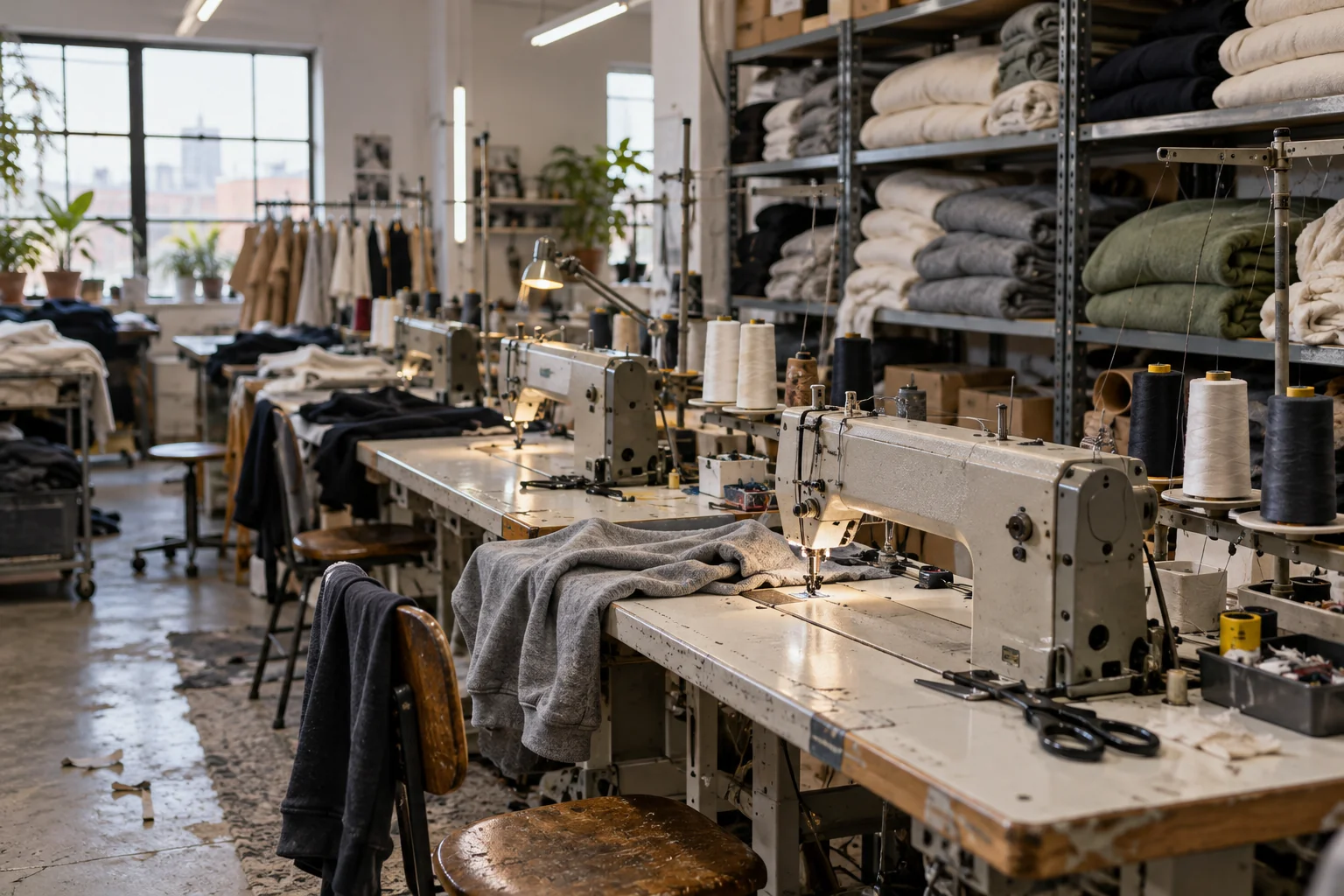
How to Find a Cut-and-Sew Streetwear Manufacturer

Finding a factory is easy compared with finding one that understands your streetwear product. An oversized tee, heavyweight hoodie, or pair of washed jeans needs more than a supplier willing to put your logo on fabric. You need agreement on fit, construction, quantities, sampling, and what counts as an approved result.
This guide explains how to find a clothing manufacturer with a practical checklist for US and European founders. Use it to build a shortlist, compare proposals, and move toward a first sample without leaving critical details to interpretation.
1. Decide Whether You Need Cut-and-Sew or Blanks
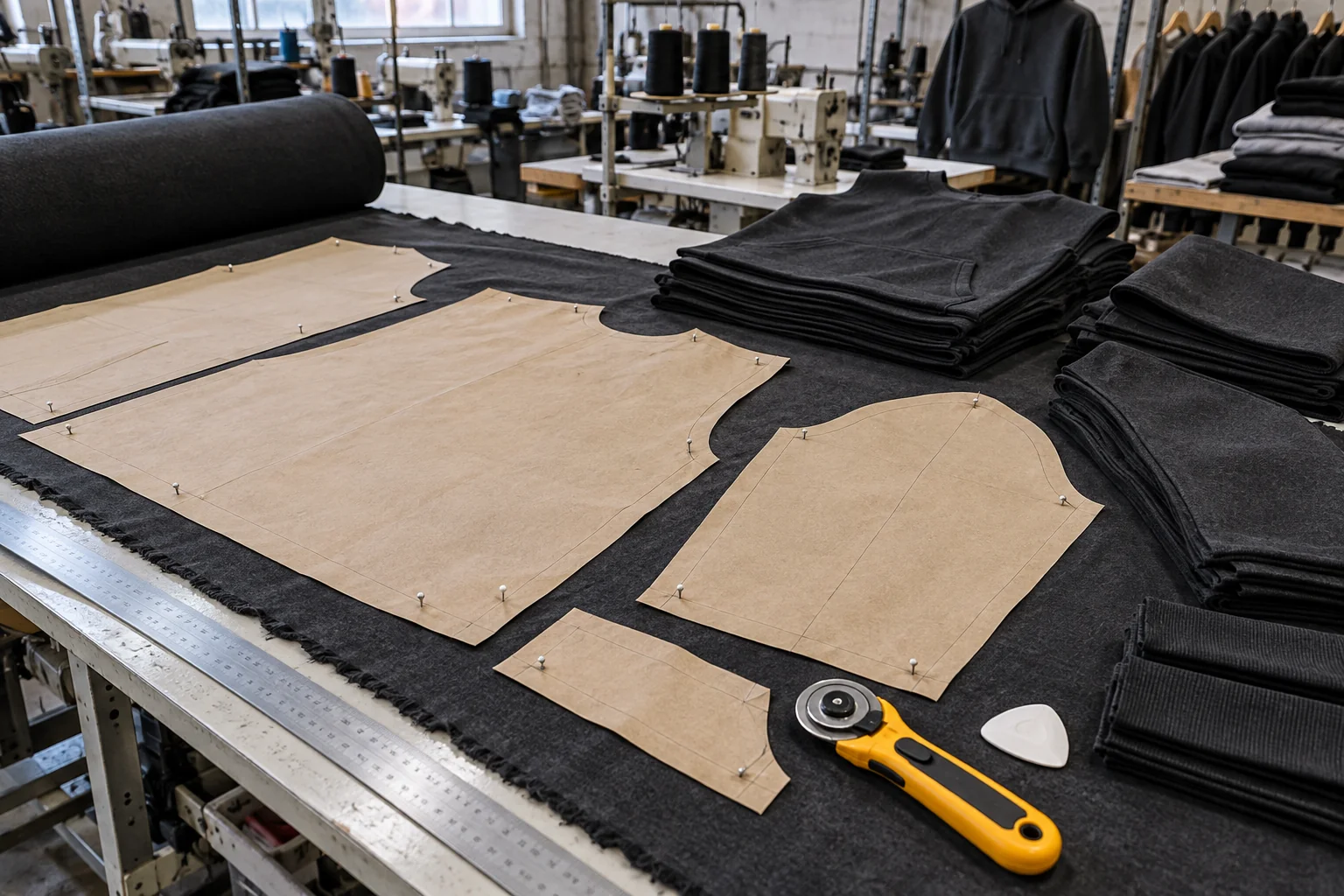
Cut-and-sew manufacturing means fabric is cut into pattern pieces and sewn into your garment. It gives you scope to specify the silhouette, measurements, panels, pockets, seams, and other construction details. The available options depend on the manufacturer’s capabilities and your order requirements.
Blanks are existing garments that you customize, typically through printing, embroidery, or labeling. They may suit a graphics-led launch when the existing fit and fabric already work. They are less suitable when your product depends on a distinctive shape or construction.
- Consider blanks if your main differentiator is artwork and you can accept an existing garment specification.
- Consider cut-and-sew if you need control over proportions, fabric, construction, or coordinated details across a collection.
- Check the actual service: Ask whether the supplier develops custom patterns or decorates existing stock garments.
For a fuller comparison, read cut and sew vs blanks for streetwear brands. If custom construction is essential, explore what to discuss with a cut-and-sew manufacturer before requesting a quote.
2. Prepare a Clear Brief Before Outreach
A factory cannot quote an idea as reliably as a defined product. You do not need every decision finalized, but you should separate confirmed requirements from details where you need guidance.
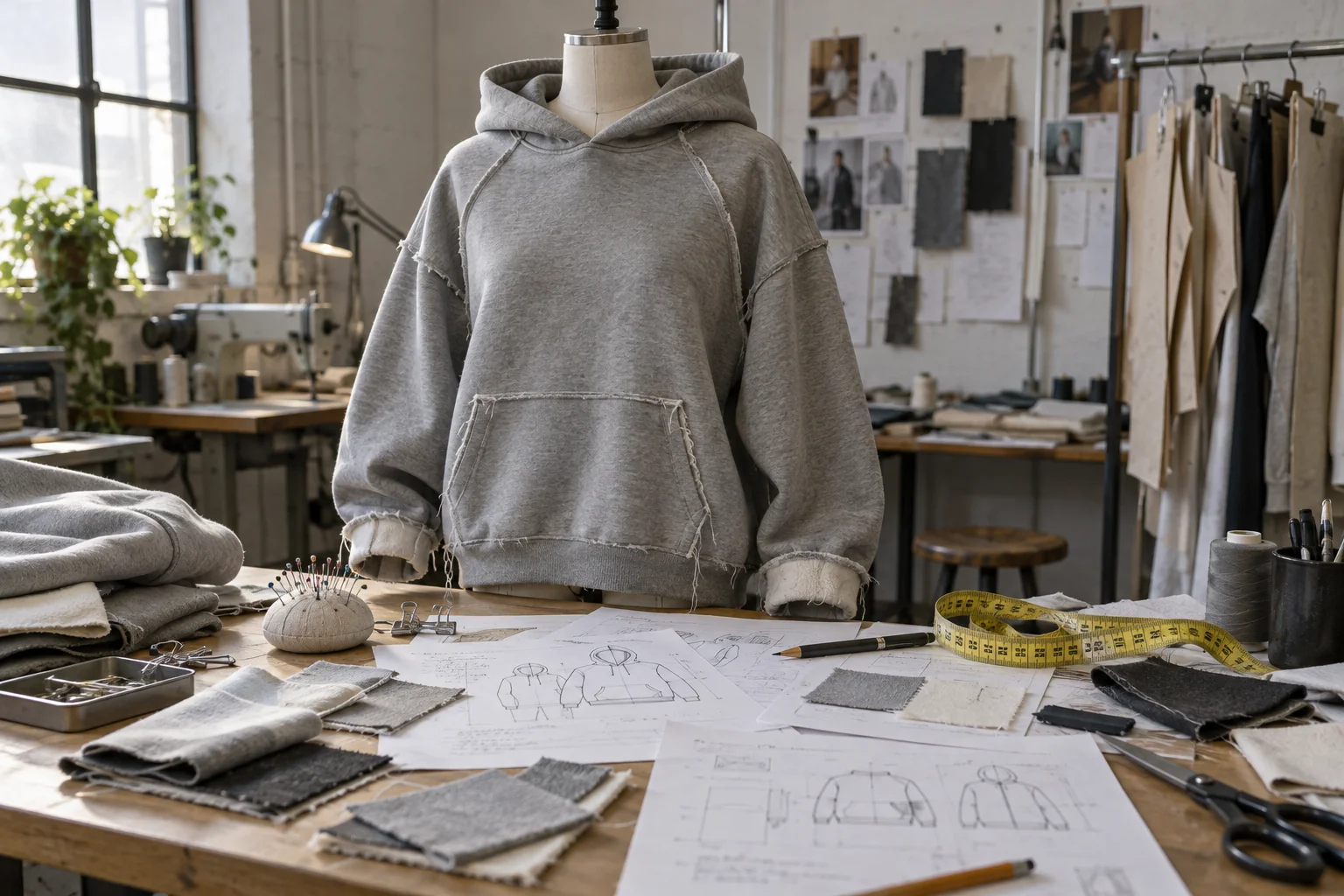
Prepare one brief per style, ideally supported by a tech pack:
- Product and fit: Garment type, intended silhouette, reference images, and front-and-back drawings.
- Measurements: Base size, key dimensions, measurement method, and intended size range.
- Fabric: Preferred composition, weight, texture, stretch, and finish. Mark anything still open.
- Construction: Seams, ribbing, pockets, closures, reinforcement, and interior details.
- Decoration: Artwork files, placement dimensions, colors, and preferred print or embroidery method.
- Order plan: Quantity per style, proposed color split, size breakdown, and delivery destination.
- Timing: Desired sample date and launch window, with any fixed deadlines identified.
- Branding: Label, hangtag, and packaging requirements.
Reference garments help communicate direction, but explain exactly what you like about them. “Use this shoulder shape, not this body length” is more actionable than “make something similar.”
3. Build a Shortlist Around Product Fit
Search by garment category and manufacturing process, not just “clothing factory.” A cut and sew streetwear manufacturer that suits jersey basics may not be the right match for a denim-heavy collection. Supplier websites, industry directories, trade shows, and referrals can provide leads; treat each lead as something to verify.
Look for relevant product examples, then ask what the supplier actually handled: pattern development, sewing, decoration, washing, or coordination with outside providers. Photos alone do not establish production responsibility.
For each candidate, record the following:
- Relevant garment categories and construction experience.
- Minimum order requirements and sample process.
- Location, business identity, and production arrangements.
- Clarity of written answers and willingness to flag limitations.
StitchQuote is a custom streetwear and men’s streetwear manufacturer in China serving US and European streetwear brand founders. As with any candidate, assess whether its offering fits your specific brief rather than choosing by location alone.
4. Evaluate Factories Using the Same Checklist
Capability: Can They Execute Your Product?
Ask for examples relevant to your silhouette, fabric, and finish. For a hoodie, that might mean hood structure, rib recovery, or pocket construction. For denim, ask about the intended wash and how it could affect measurements.
Request explanations of proposed methods and alternatives. A useful answer identifies constraints; it does not simply promise that every reference is achievable.
MOQ Fit: Does the Minimum Match Your Launch?
A low MOQ clothing manufacturer is helpful only if the minimum applies in a way your assortment can support. Ask whether it is counted per style, color, fabric, or another unit. Confirm any separate minimums for custom materials and trims.
StitchQuote’s MOQ is 50 pieces per style, or 100 for denim. Confirm how your proposed colors, sizes, and materials fit those requirements. Review the low-MOQ manufacturing information alongside the sampling and MOQ details before planning your assortment.
Sampling: What Will You Receive and When?
Ask what the sample includes, what information starts the timeline, and how revisions are handled. Distinguish sample development time from shipping time and bulk production lead time.
StitchQuote offers 7-day samples for standard styles. Check whether your design qualifies and confirm the starting conditions and shipping arrangements through the 7-day sample information. Do not assume that timeline covers complex development or bulk production.
Communication: Are Decisions Documented?
Send the same brief to each shortlisted supplier. Compare whether they answer specific questions, identify missing information, and confirm changes in writing. Clear version control matters more than enthusiastic replies.
If you are choosing a clothing manufacturer for startups, consider how much development support you need. This guide to choosing a manufacturer for a startup brand offers additional selection guidance.
5. Compare Quote Scope, Not Just the Headline Figure
Two quotes are not comparable if one assumes stock fabric and basic packaging while the other includes custom materials and labeling. Ask each supplier to identify inclusions, exclusions, payment stages, delivery terms, and quote validity.
For US/EU deliveries, clarify who arranges transport, who handles import responsibilities, and which charges are outside the manufacturing quote. Confirm applicable labeling and product requirements for your selling market rather than assuming the factory handles everything.
Keep garment costing separate from supplier selection. For budgeting, see the guides to hoodie manufacturing costs, T-shirt manufacturing costs, and jeans manufacturing costs. For broader launch planning, use the streetwear startup budget guide.
6. Watch for Red Flags Before Committing
- Unclear production responsibility: The supplier will not explain who makes the garment or handles outside processes.
- Vague specifications: Fabric, measurements, and construction remain undefined despite requests for clarification.
- Unqualified promises: Every design is accepted without questions about materials, artwork, or timing.
- Shifting terms: Quantities, payment details, or sample conditions change without explanation.
- Pressure to skip approval: You are encouraged to begin bulk production before resolving sample issues.
- No defect process: The supplier avoids discussing inspection, documented problems, or possible remedies.
A red flag calls for clarification, not an automatic accusation. Pause when important answers remain unclear.
7. Follow a Structured First-Sample Workflow
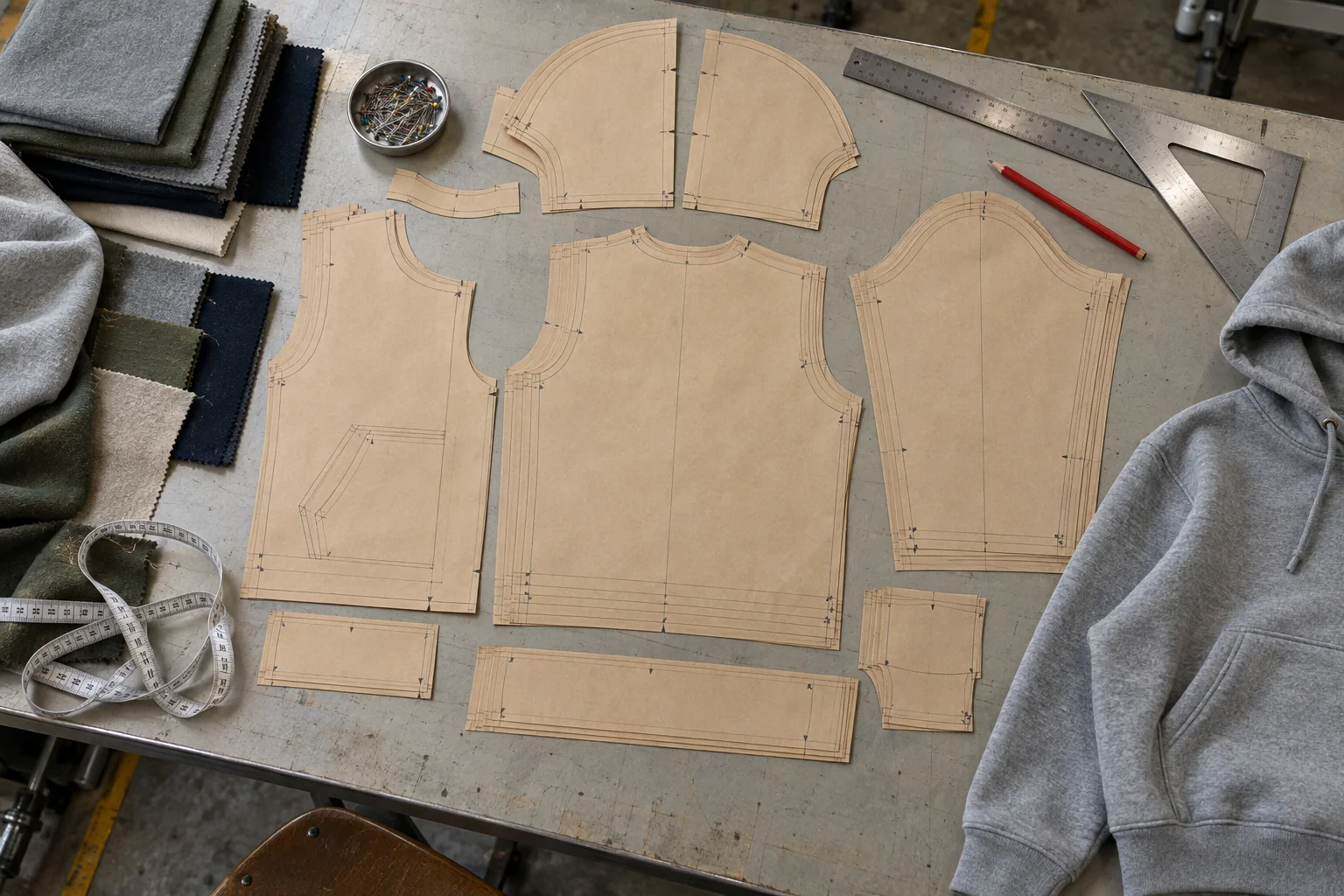
- Confirm the brief: Date the specification and identify its version. List unresolved details before development starts.
- Agree on sample scope: Confirm materials, decoration, labels, timing, and any substitutions.
- Inspect on arrival: Photograph the garment and compare its construction and measurements against the brief.
- Test fit and behavior: Review movement, proportions, and comfort. Evaluate washing according to the intended care instructions.
- Consolidate feedback: Send one numbered revision list with annotated photos and measurable corrections.
- Approve a defined reference: Record which sample and specifications are approved before authorizing bulk production.
A good-looking sample is not, by itself, a complete production agreement. Confirm measurement tolerances, inspection arrangements, and how bulk garments will be checked against the approved reference.
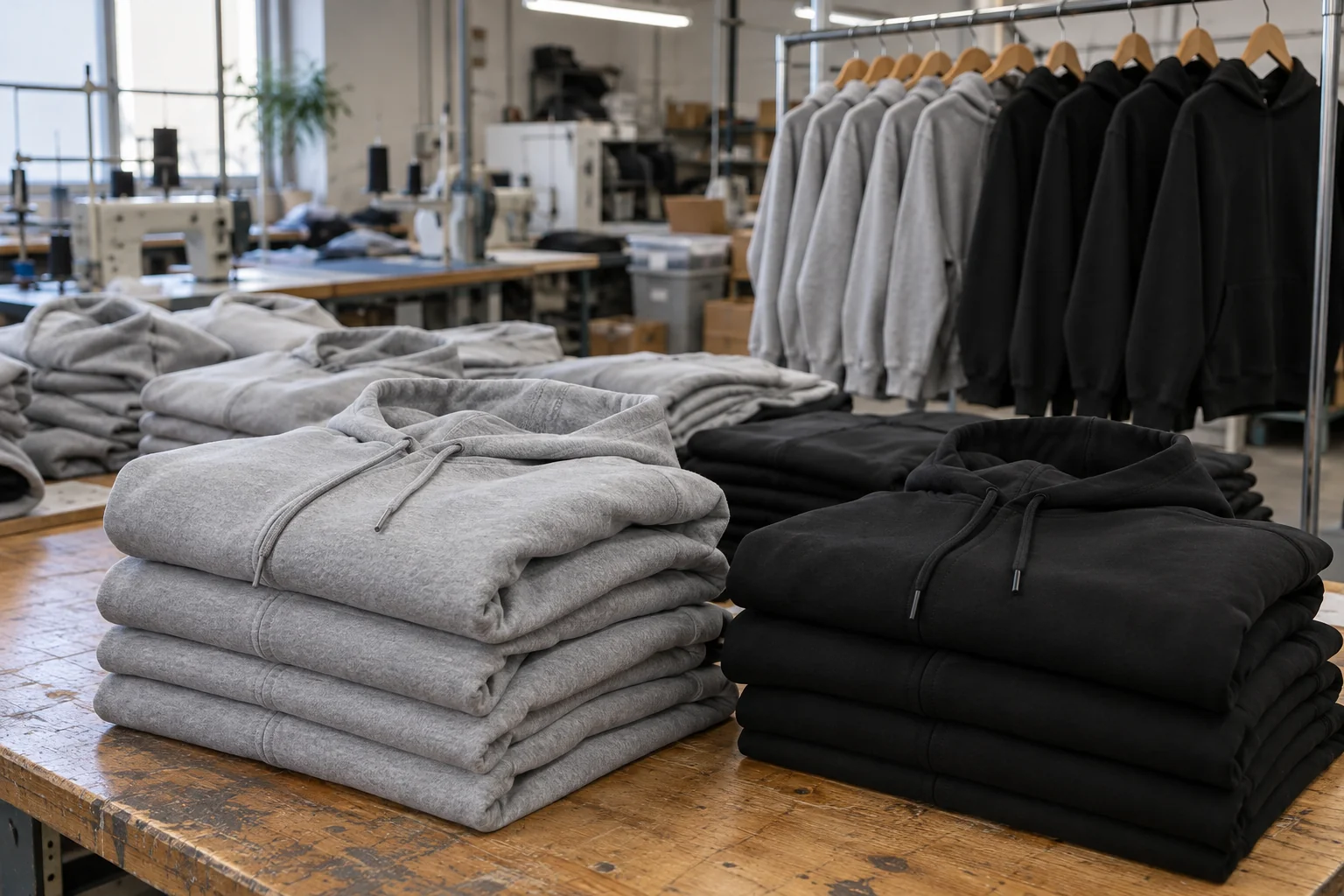
For hoodie-specific diligence, see how to choose a hoodie manufacturer checklist.
If your brief includes fleece or French terry, specify weight with the hoodie fabric weight / GSM guide.
FAQ
How do I find a clothing manufacturer for my first collection?
Define your products, quantities, and specifications first. Shortlist suppliers with relevant capabilities, send the same brief to each, and compare written responses. Use sampling to evaluate execution before committing to bulk production.
Is cut-and-sew better than using blanks?
Neither is universally better. Blanks can suit graphics-led products when the existing garment works. Cut-and-sew is more appropriate when custom fit, fabric, or construction is central to your brand.
What is StitchQuote’s minimum order quantity?
StitchQuote’s MOQ is 50 pieces per style and 100 for denim. Confirm how your color split, size range, and material choices fit the requirements before finalizing your order plan.
How long does a first sample take?
Timing varies with design complexity and material availability. StitchQuote offers 7-day samples for standard styles. Confirm eligibility, timeline starting conditions, and shipping separately; sampling time is not bulk production time.
For menswear-focused programs, start with our men’s streetwear manufacturer overview. Before you email any factory, align your brief with how to request clothing samples from a factory so sampling feedback is usable.
If your shortlist leans hoodie-first, also compare fabric and silhouette pages early: French terry hoodie manufacturer for loop-back handfeel, and boxy hoodie manufacturer when chest/length proportions drive the brief.
Turn Your Shortlist Into a Sample Plan
The best next step is a clear brief, not a large commitment. If StitchQuote looks like a potential fit, request a quote or discuss a sample with your garment references, quantities, destination, and target timing. You can also email info@stitchquote.com to clarify requirements before moving forward.
StitchQuote Production Team
Request a manufacturing quote
Share your product type, quantity range, and destination. We usually reply within one business day.