Custom Streetwear, Casualwear & Denim Manufacturer•MOQ 50 pcs•Denim MOQ 100 pcs•7-Day Sample Available
How to Approve Apparel Packaging Before Low MOQ Bulk Production
A practical packaging approval guide for checking folding, polybags, cartons, hangtags, size stickers, packing ratios, and shipment-ready QC notes.

Apparel packaging approval is easy to leave until the end of a low MOQ order, but packaging decisions affect presentation, warehouse handling, carton accuracy, color and size separation, and the buyer’s first impression when bulk goods arrive. A good garment can still create problems if folding, polybags, hangtags, size stickers, or carton packing are unclear.
For startup and private label buyers, packaging approval should happen before bulk packing starts. The goal is not to create a complicated packaging system. The goal is to give the factory a clear, repeatable packing standard that matches the buyer’s sales channel and quality expectations.
Factory buyer decision table
Updated July 23, 2026: Packaging approval is a production handoff, not only a presentation choice. A factory should be able to pack the same garment repeatedly without guessing fold method, label visibility, size separation, carton ratio, or what needs photo approval.
| Packing decision | Factory-side check | Buyer risk if vague |
|---|---|---|
| Folded sample | Fold line, visible graphic, tag position, polybag size, and wrinkle/pressure marks | A premium garment arrives looking inconsistent or repacked |
| Carton logic | Size/color ratio, carton marks, carton quantity, inner pack, and warehouse receiving method | Mixed cartons create receiving errors and extra sorting labor |
| Protection rules | Dark-fabric contact, embroidery or puff-print pressure, trim protection, and approved substitute packing | Packing damages the surface, transfers color, or changes garment shape before delivery |
Connect packaging approval to private label clothing manufacturing, startup brand manufacturing, and sampling and MOQ. When folded-sample photos, pack ratios, and label placement are ready, send them through contact.
Why Packaging Approval Matters
Packaging is the last production step before goods leave the factory, but it is often the first thing the buyer, warehouse, retailer, or customer sees. Poor packing can create mixed sizes, damaged presentation, wrong labels, carton confusion, or extra repacking work after delivery.
Packaging should be reviewed together with labels and hangtags. StitchQuote’s guide to private label clothing label and hangtag approval explains why trim artwork, placement, readability, and claims control should be approved before bulk production.
Approve a Real Folded Sample
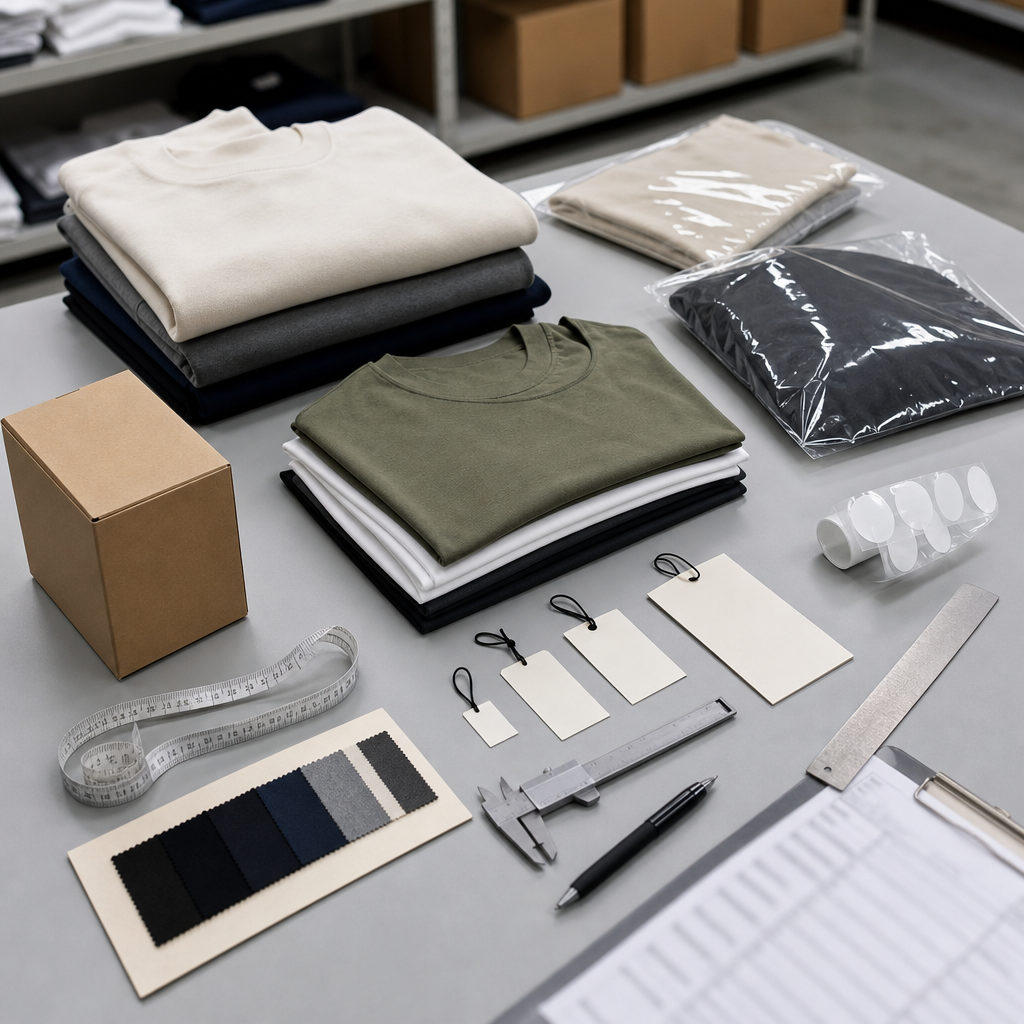
A packaging instruction is easier to follow when there is a real folded sample. The buyer should approve how the garment is folded, where the neck label or hangtag sits, whether the front graphic is visible, and whether the fold creates unwanted creases or pressure marks.
For hoodies, sweatshirts, and heavyweight T-shirts, folded thickness affects polybag size and carton count. For lightweight basics, folding must keep the garment neat without making it look too flat or inconsistent.
Choose Polybag and Carton Details
Polybags, cartons, and inner packing choices should match the product and order flow. Buyers should confirm whether garments are packed individually, grouped by size, grouped by color, or bulk folded. They should also approve bag size, carton size if available, carton quantity, and whether extra protection is needed for trims or decoration.
Low MOQ orders often have multiple colors and sizes in smaller quantities. That makes packing accuracy important because one mixed carton can create unnecessary sorting work later.
Check Hangtags, Size Stickers, and Label Position
Hangtags and size stickers should be easy to find and consistent across the order. A size sticker in the wrong place can slow receiving. A hangtag placed near a delicate print, embroidery, or dark garment surface can create pressure marks or color-transfer concerns.
If the garment uses dark fabric, review contact points carefully. StitchQuote’s article on color crocking risk in dark streetwear fabrics is relevant when dark garments touch labels, tissue, tags, light trims, or other garments inside packaging.
Define Packing Ratios Clearly
Packing ratio tells the factory how sizes and colors should be arranged in cartons. A buyer may want one size per carton, mixed sizes by color, prepacked sets, or a ratio that matches warehouse receiving. The correct method depends on the buyer’s sales channel and inventory system.
If the buyer recently decided size breaks, connect that decision to packing. StitchQuote’s guide on startup size breaks for a first low MOQ clothing order explains how size planning affects inventory depth and reorder decisions.
Protect Garment Measurements and Shape
Packaging can affect garment presentation. Tight folding, small bags, or overfilled cartons can create wrinkles, distorted rib, crushed trims, or uneven shape. This matters more for structured garments, heavyweight fleece, embroidery, puff print, and premium basics.
When packing changes the way garments are handled, compare it with the approved measurements and tolerance. StitchQuote’s guide to garment measurement tolerances for small batch clothing orders is useful when buyers need to keep sample approval and bulk checks aligned.
Create a Packing Approval Record
A useful packaging record should include folded sample photos, polybag size, carton plan, hangtag position, size sticker position, color and size packing ratio, carton mark notes, sample date, and any special handling comments. If the buyer accepts a substitute packing method, that should also be written down.
Vague notes like “pack normally” are not enough when a brand is trying to keep presentation consistent. The factory needs a specific standard that can be followed during bulk packing and checked during final inspection.
Questions to Ask Before Bulk Packing
- Has a real folded and packed sample been approved?
- Are polybag size, carton plan, and carton quantity confirmed?
- Are size stickers, hangtags, and labels placed consistently?
- Will dark garments transfer color onto tags, tissue, or lighter goods?
- Are size and color packing ratios clear for the warehouse?
- Can the packing method damage trims, prints, embroidery, or garment shape?
- Are packing photos and notes saved for reorders?
StitchQuote Note
For private label clothing production, low MOQ apparel production, and sampling and MOQ projects, StitchQuote treats packaging approval as part of production readiness. Folding, polybags, cartons, labels, hangtags, packing ratio, and shipment presentation should be approved before bulk packing.
FAQ
When should apparel packaging be approved?
Packaging should be approved before bulk packing starts. Ideally, the buyer reviews a folded and packed sample during sample or pre-production approval so the factory has a clear standard.
What should a low MOQ buyer include in packaging instructions?
Useful instructions include fold method, polybag size, hangtag and size sticker placement, carton plan, color and size packing ratio, carton notes, and photos of the approved packed sample.
Can packaging affect garment quality?
Yes. Tight bags, overfilled cartons, poor folding, or bad tag placement can create wrinkles, pressure marks, trim damage, mixed sizes, or presentation problems after delivery.
Request a manufacturing quote
Share your product type, quantity range, and destination. We usually reply within one business day.