Custom Streetwear, Casualwear & Denim Manufacturer•MOQ 50 pcs•Denim MOQ 100 pcs•7-Day Sample Available
Hem Roping and Wavy Hems in T-Shirts: How Buyers Check Low MOQ Bulk Before Release
Hem roping and wavy hems in T-shirts can appear after washing, pressing, or packing, so buyers should check fabric behavior and coverstitch setup before low MOQ bulk release.

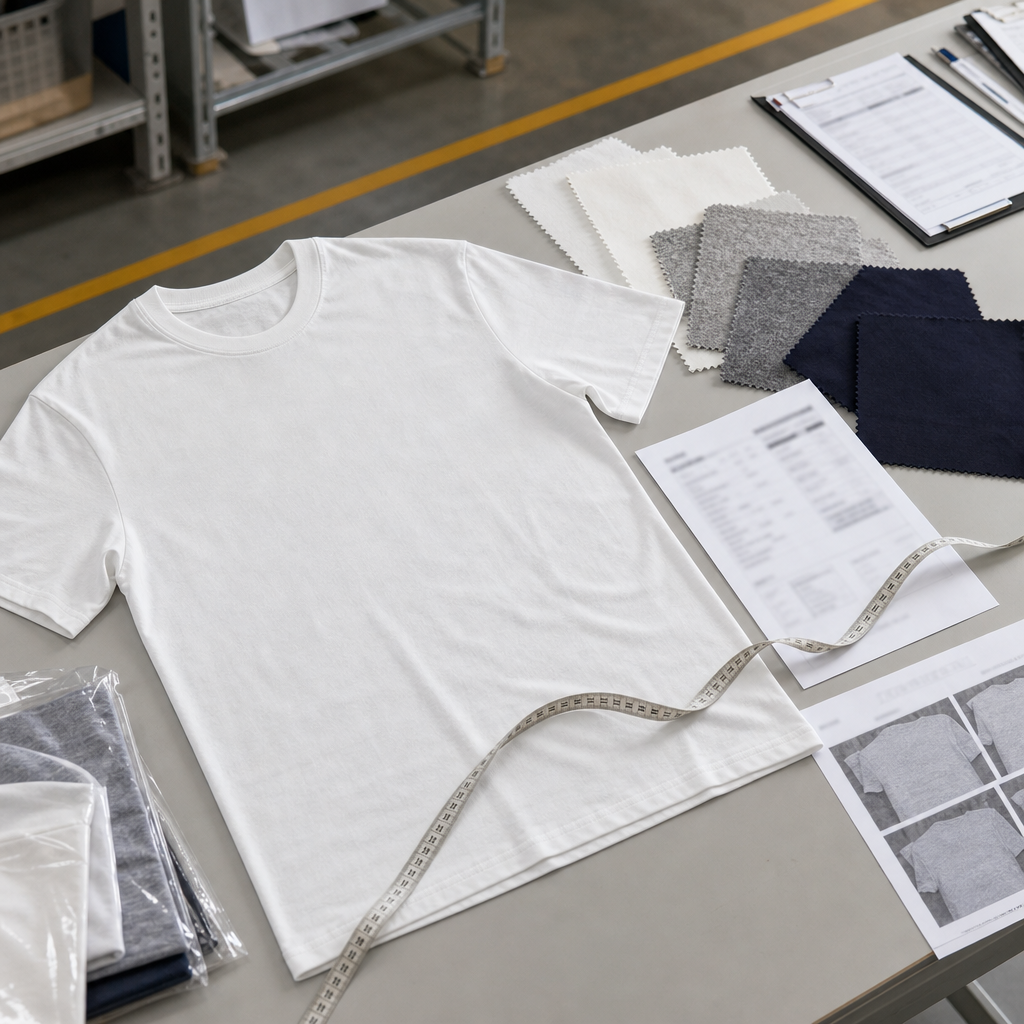
Hem roping and wavy hems in T-shirts should be checked before low MOQ bulk release because a bottom hem that twists, rolls, ripples, or pulls after wash can make an otherwise clean basic look unstable. The issue may not show clearly in flat sample photos, so buyers need to review the hem after washing, drying, pressing, and normal handling.
For a custom T-shirt manufacturer, hem quality is not only a sewing detail. It connects fabric shrinkage, cutting direction, coverstitch tension, differential feed, pressing, and the buyer’s final inspection standard.
Confirm the Hem After Wash
Start by checking the approved sample before and after the intended wash route. A hem can look flat when freshly sewn, then rope or wave after the body fabric shrinks, the stitching recovers differently, or the garment is pressed while still damp. Buyers should compare body length, hem sweep, side seam position, and bottom-edge shape after wash instead of relying only on pre-wash appearance.
The T-shirt fabric shrinkage wash test guide helps buyers connect hem shape with length change, width change, and fabric recovery. If the style also has a print, use the print wash test before bulk production so the hem and decoration are reviewed in the same finished condition.
Separate Fabric Movement From Sewing Setup
Hem roping can come from fabric torque, off-grain cutting, uneven fabric relaxation, thread tension, stitch density, needle heat, or stretching while feeding the hem through the machine. A wavy hem may also come from too much handling tension on light jersey or from trying to force a curved edge through a straight operation.
Use the stitch density and thread tension guide when the hem shows skipped stitches, tunneling, puckering, needle marks, or uneven recovery. The correction may be a machine setup change, not only a pattern change.
Review Hem Construction on the Sample
The buyer should check hem allowance, turnback width, coverstitch width, thread color, seam bulk at side seams, and whether the hem lies flat without being pulled into shape. On lightweight jersey, even a small change in turnback width or stitch tension can affect how the hem behaves after wash.
The cut and sew seam construction checklist is useful when the hem problem appears together with side seam twist, seam puckering, or weak seam ends. Hem approval should sit inside the full construction review, not as a last-minute cosmetic note.
Set a Practical Inspection Standard
Buyers should decide what level of hem movement is acceptable before bulk inspection starts. A soft jersey hem may have minor natural movement, but repeated twisting, visible roping, uneven bottom length, or a hem that flips after wash should be documented as a correction point. The standard should include sample photos, garment state, wash condition, and release decision.
For a low MOQ clothing manufacturer, this keeps QC realistic. Small runs still need a repeatable rule: approve, repress, repair, remake sample, or hold for buyer review.
Check Pressing and Packing Effects
Pressing can hide or create hem problems. Too much steam may stretch the edge, heavy pressure can flatten one section more than another, and folding while warm can lock in a ripple. Buyers should review the hem after cooling and after the garment is folded the way it will be packed.
The garment pressing defects guide helps buyers decide whether the issue comes from sewing, finishing, or final packing. A hem that only looks correct after forced pressing should be checked again before approval.
Document the Correction Before Bulk
A useful correction note should name the visible problem, garment location, wash state, suspected cause, and next sample requirement. Examples include reduce coverstitch tension, relax fabric before cutting, check hem turnback width, avoid stretching during sewing, retest after wash, or compare bottom sweep after pressing.
The apparel sample comments guide can help turn those observations into production instructions. When sending a T-shirt project through the StitchQuote inquiry page, include fabric weight, wash expectation, sample photos, hem comments, and target quantity so the production team can review the risk before bulk.
Questions Buyers Ask About Hem Roping T-Shirts
Is hem roping always a sewing defect?
No. It can come from sewing setup, but it can also come from fabric skew, shrinkage, cutting direction, handling tension, pressing, or wash behavior. The sample should be checked after the intended finish process.
Should buyers approve a T-shirt hem before or after wash?
Both stages matter, but the post-wash result is the customer-facing condition. Buyers should approve the hem after washing, drying, pressing, and normal handling when the style is wash-sensitive.
Can pressing fix a wavy hem?
Pressing can improve appearance, but it should not be used to hide repeated fabric or sewing instability. If the hem returns to a wave after cooling or folding, the construction needs review.
What should block bulk approval?
Repeated hem roping, visible twisting, uneven bottom length, flipped edges after wash, skipped coverstitch, severe puckering, or a hem that needs forced pressing to look acceptable should be corrected before release.