Custom Streetwear, Casualwear & Denim Manufacturer•MOQ 50 pcs•Denim MOQ 100 pcs•7-Day Sample Available

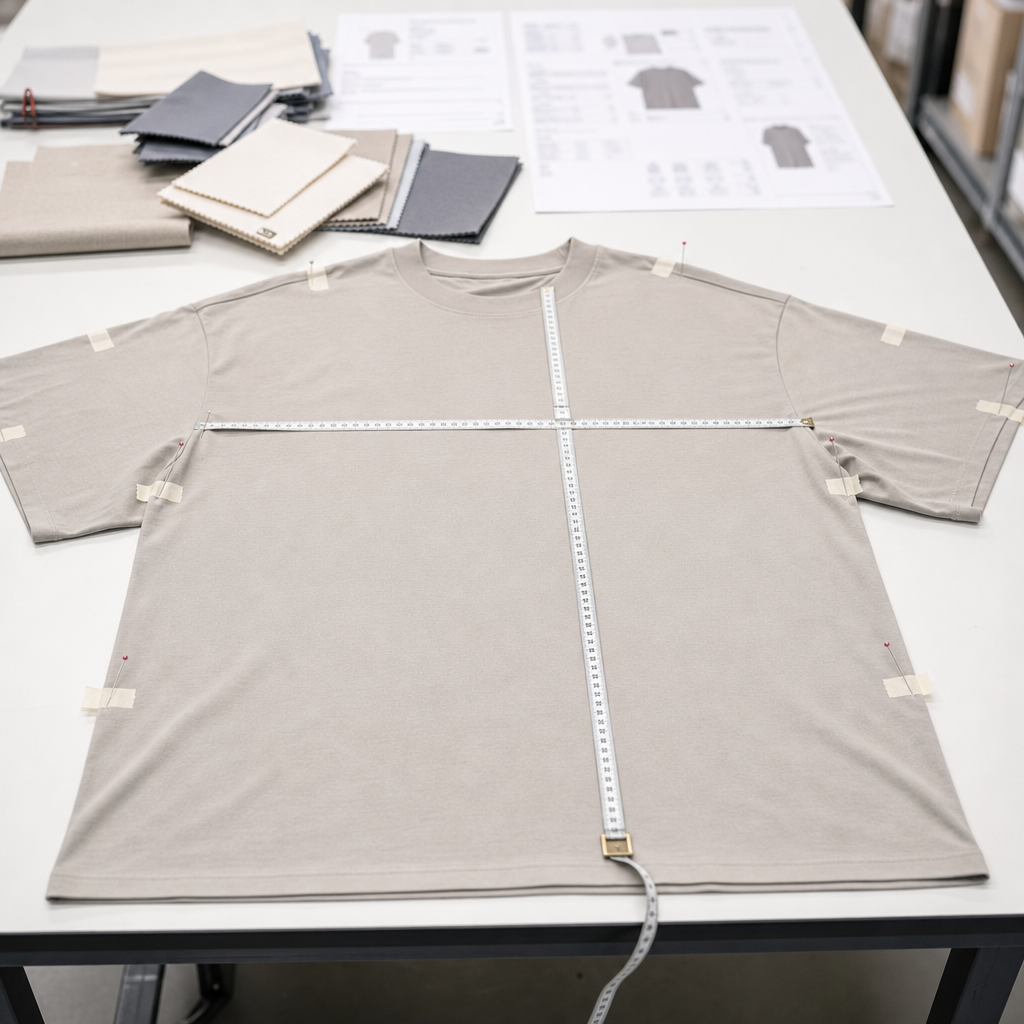
How to Review Oversized T-Shirt Fit Balance Before Bulk Production
A streetwear sample approval guide for checking oversized T-shirt fit, shoulder drop, body length, sleeves, fabric drape, graphics, and grading.

Oversized T-shirt fit balance is harder to approve than a simple loose fit. A sample can be wide but still feel wrong if the shoulder drop is off, the sleeve shape is heavy, the body length is too long, the neck opening feels small, or the graphic placement does not match the boxy silhouette.
For T-shirt-specific quoting and production planning, review our custom T-shirt manufacturer page.
For low MOQ streetwear buyers, the goal is to define the intended oversized fit before bulk production. That means reviewing measurements, fabric drape, wash behavior, size grading, and decoration placement together rather than judging the sample by width alone.
Define the Fit Intent First
“Oversized” can mean many things. It can be boxy and cropped, long and relaxed, drop-shoulder, wide-sleeve, heavyweight, soft drape, or structured streetwear. Before correcting a sample, the buyer should decide which version is intended.
If the garment is meant to carry a large front or back graphic, fit intent also affects print placement. StitchQuote’s article on why graphic placement matters more on boxy fits explains why body width, shoulder drop, and print location need to be reviewed together.
Start With Shoulder Drop
Shoulder drop is one of the clearest signals of an oversized T-shirt. If the shoulder point drops too far, the sleeve may look heavy or the armhole may collapse. If it does not drop enough, the shirt may look like a regular fit that is simply too big.
Review shoulder position on a flat sample and on body if possible. Take front, side, and back photos. The buyer should note whether the shoulder seam supports the intended silhouette and whether it changes after wash.
Balance Chest Width and Body Length
Chest width creates the oversized feeling, but body length controls proportion. A wide shirt with a long body can look sloppy. A wide shirt with a short body can look boxy and intentional, but it may expose fit risk across sizes. The right balance depends on the brand’s target customer and styling.
Use clear measurement points and tolerances. StitchQuote’s guide to garment measurement tolerances for small batch clothing orders is useful when the buyer needs to turn fit comments into factory-readable specs.
Review Sleeve Shape
Sleeves can make or break an oversized T-shirt. A sleeve may be too long, too wide, too narrow at the opening, or poorly balanced with the shoulder drop. The sleeve should look intentional when the arm is relaxed and when the garment is worn naturally.
Check sleeve length, sleeve opening, armhole shape, and how the sleeve hangs from the dropped shoulder. A small change in sleeve opening or armhole curve can improve the whole silhouette.
Connect Fabric Weight to Drape
Fabric weight affects fit balance. Heavyweight jersey can create structure and a clean boxy shape, but it can also feel bulky if the body is too wide or the sleeve is too heavy. Lighter jersey can drape better but may look less structured.
If fabric selection is still open, review StitchQuote’s guide on choosing T-shirt GSM for low MOQ premium basics. GSM should be considered together with shrinkage, sewing, drape, and target fit.
Check Shrinkage Before Approving Fit
An oversized fit can become unbalanced after washing. Body length may shrink, shoulder drop may change, sleeve opening may tighten, and the garment may lose its intended drape. Buyers should compare pre-wash and post-wash measurements before approving bulk.
StitchQuote’s article on heavyweight T-shirt shrinkage testing before bulk production is especially relevant when the style uses dense jersey or a premium basics fabric.
Review Graphic Placement on the Actual Fit
Graphic placement should not be approved on a generic flat block if the final garment is oversized. Wide bodies, dropped shoulders, and different body lengths can shift how a graphic appears when worn. A print that looks centered on a standard T-shirt may look too high, too low, or too small on a boxy fit.
Use the same discipline as screen print placement tolerance for streetwear T-shirts: approve artwork size, reference points, placement photos, and tolerance on the real sample.
Think About Size Grading
Oversized fits can grade poorly if every size simply gets wider and longer without considering proportion. Smaller sizes may become too boxy, while larger sizes may become too long or heavy. Buyers should ask how chest width, shoulder drop, sleeve length, sleeve opening, and body length will grade across the range.
For low MOQ orders, the buyer may not sample every size. In that case, the grading plan and measurement tolerance become more important, not less.
Create Clear Sample Notes
A useful oversized T-shirt approval record should include target fit description, sample size, chest width, shoulder width, shoulder drop, sleeve length, sleeve opening, body length, neck opening, fabric reference, wash status, and photos. The buyer should also note how graphics are placed on the approved sample.
Instead of writing “make it more oversized,” use a specific correction: “Keep chest width, shorten body length by 2 cm, reduce sleeve opening slightly, and keep shoulder drop close to the approved reference.” That gives the factory a measurable path.
Questions to Ask Before Bulk
- What type of oversized fit is intended: boxy, cropped, relaxed, or long?
- Does the shoulder drop look intentional on body?
- Are chest width and body length balanced?
- Does sleeve shape match the body proportion?
- Has the sample been washed and remeasured?
- Is graphic placement approved on the actual oversized fit?
- Does the grading plan preserve the fit across sizes?
StitchQuote Note
For custom streetwear manufacturing, low MOQ clothing production, and sampling and MOQ projects, StitchQuote treats oversized T-shirt approval as a fit, fabric, wash, and decoration decision. Buyers should approve the whole fit balance before bulk, not just the chest width.
FAQ
What makes an oversized T-shirt look intentional?
An intentional oversized fit balances shoulder drop, chest width, sleeve shape, body length, neck opening, fabric drape, and graphic placement. Width alone is not enough.
Should oversized T-shirts be tested after washing?
Yes. Washing can change body length, sleeve shape, shoulder balance, shrinkage, and drape. Buyers should compare pre-wash and post-wash measurements before bulk approval.
Can low MOQ buyers approve oversized fit without a full size set?
They can, but they should record the approved sample clearly and ask how key points will grade across sizes. The grading plan is important because oversized proportions can change quickly across a size range.
[…] the oversized T-shirt fit balance guide when the silhouette depends on dropped shoulders, wider body width, or a boxy […]