Custom Streetwear, Casualwear & Denim Manufacturer•MOQ 50 pcs•Denim MOQ 100 pcs•7-Day Sample Available

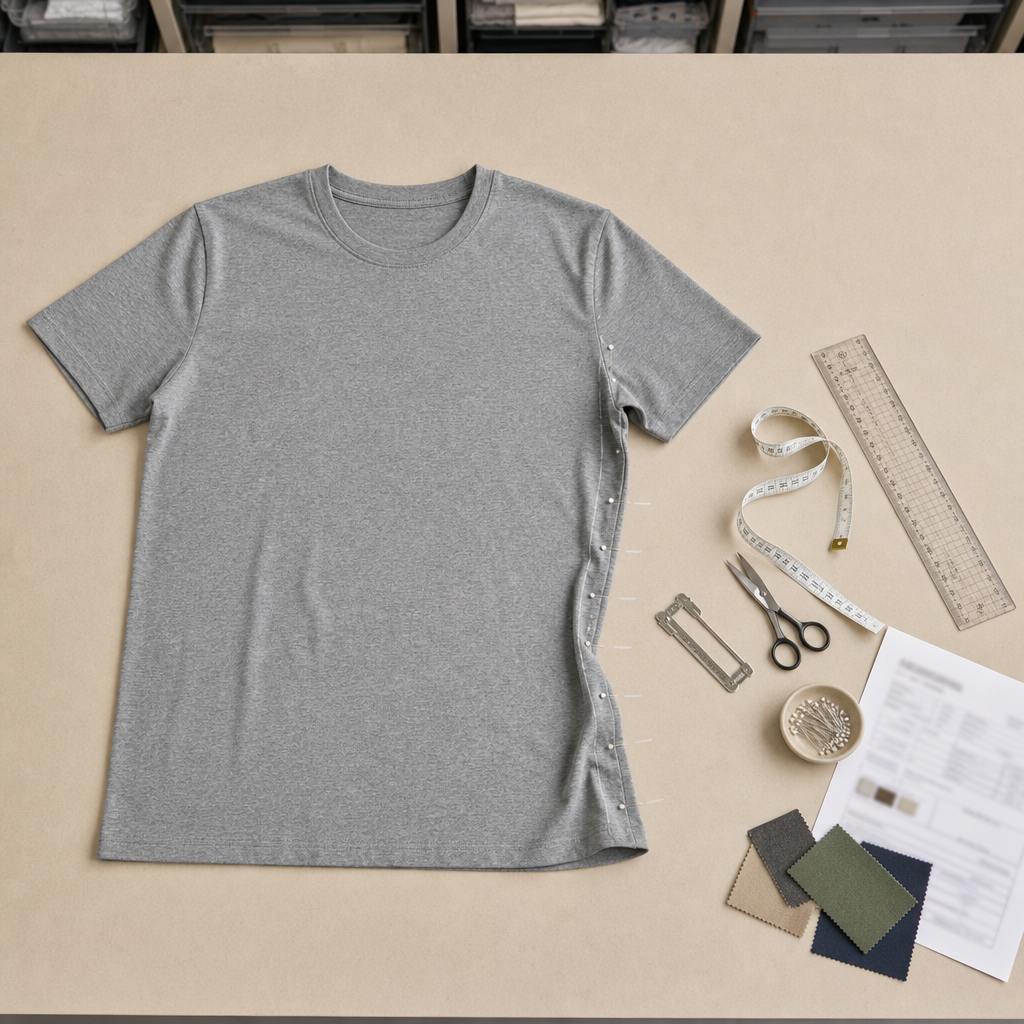
How to Diagnose Twisted Side Seams in Low MOQ T-Shirt Samples
A troubleshooting guide for apparel buyers reviewing T-shirt samples with side seam twist before low MOQ bulk production.

Twisted side seams in a T-shirt sample are easy to notice and hard to diagnose from a photo alone. The seam may lean toward the front body, drift toward the back body, or look straight when the garment is flat but twist after washing or wearing. For a low MOQ buyer, the wrong diagnosis can waste a sample round and still leave the same problem in bulk.
For T-shirt-specific quoting and production planning, review our custom T-shirt production page.
The practical goal is not to blame one cause immediately. Side seam twist can come from fabric torque, pattern balance, cutting alignment, sewing tension, shrinkage, or garment handling during wash. A buyer needs a clear way to separate these causes before approving production or requesting a revision.
This guide is written for startup clothing brands, streetwear buyers, premium basics teams, and private label buyers reviewing T-shirt samples before bulk production.
For premium basics where GSM, neck rib, or side-seam balance can shift after washing, use how to check t-shirt fabric shrinkage before premium basics production to confirm fabric shrinkage checks before bulk T-shirt production.
First Identify When the Twist Appears
Before asking for a correction, confirm when the side seam twist appears. A sample that is twisted before washing usually points to pattern, cutting, or sewing issues. A sample that looks acceptable before washing but twists after washing may point to fabric torque, shrinkage imbalance, or wash handling.
Ask for photos in three states:
- Flat before wash, with the front body smoothed naturally.
- Flat after wash, dried according to the intended care instructions.
- On body or on a form, because twisting can look different when the garment hangs.
If possible, compare more than one sample or more than one size. One twisted unit may be a sewing or handling problem. Repeated twist across several units suggests a pattern, fabric, or process issue that needs a controlled revision.
Check Fabric Torque and Shrinkage
Single jersey T-shirt fabric can twist because of yarn twist, knitting tension, finishing, or unstable shrinkage. This is often called spirality or fabric torque. It may not be obvious on a cutting table, but it can appear after wash when the fabric relaxes.
Buyers should ask whether the sample was cut from fabric that had already been relaxed and tested. If the fabric was cut too soon after opening the roll, or if shrinkage was not checked, the garment may change shape after washing.
Heavyweight tees need special attention because the fabric can feel stable while still moving after wash. StitchQuote has a separate guide on heavyweight T-shirt shrinkage testing before bulk production. Use that process together with side seam checks, because shrinkage and twisting often show up in the same sample review.
Separate Fabric Twist From Pattern Balance
A pattern issue usually repeats in a predictable way. The front and back body may not balance correctly, the armhole may pull the side seam forward, or the hem may not sit evenly when the T-shirt is worn. Fabric torque can look similar, but it often becomes stronger after washing and may vary depending on fabric direction.
To separate the two, ask for the sample to be checked against the pattern and grainline. The factory should confirm whether the front and back panels were cut on grain, whether the side seams were matched correctly, and whether the finished garment follows the approved measurement spec.
For oversized or boxy T-shirts, body width and dropped shoulder shape can make seam balance more visible. This is also why print placement can feel off on a twisted body. The guide on graphic placement on boxy fits is useful when the seam issue affects how artwork sits on the garment.
Look at Cutting and Panel Alignment
Cutting can create side seam twist even when the pattern is acceptable. If fabric layers shift during cutting, or if the front and back panels are not aligned to the same grain direction, the side seams may fight each other after sewing.
In low MOQ production, cutting may be done in smaller lays, but the same control still matters. Ask whether the fabric was relaxed before cutting, whether the marker respected grain direction, and whether any panels were recut after discovering defects. A small batch still needs consistent panel direction if the buyer expects consistent side seams.
Check Sewing Feed and Tension
Sewing can also pull one side of the garment. If the operator stretches one panel more than the other, or if machine feed is not balanced, the side seam may rotate. This is more likely when lightweight jersey, rib, or stretch fabric is handled without enough control.
Ask the factory to check whether the seam allowance is even, whether the front and back panels are being fed evenly, and whether the side seam is being pressed or handled in a way that changes the finished shape. A sewing correction is different from a pattern correction, so the revision note should be specific.
Measure Before Deciding
Side seam twist is visual, but it should still be connected to measurements. Check body width, hem width, shoulder, armhole, side length, and cross-body balance. If the garment is outside measurement tolerance, the twist may be part of a broader fit issue. If measurements are acceptable but the seam visibly twists, the buyer should request a seam-specific review.
Use a measurement table rather than a general comment like “the sample looks twisted.” StitchQuote’s guide to garment measurement tolerances for small batch clothing orders explains why realistic tolerance matters and why sample comments should be tied to points of measure.
Write a Useful Revision Request
A useful revision request names the symptom, when it appears, and what should be checked. For example: “After one wash, the right side seam twists 2.0 cm toward the front at hem level on size M. Please check fabric spirality, panel grainline, side seam sewing feed, and body balance before revising the next sample.”
This type of request gives the factory a working diagnosis instead of a vague complaint. It also protects the buyer from approving a cosmetic fix that does not solve the cause.
If the buyer has not finalized fabric, fit, shrinkage tolerance, artwork placement, and sample expectations, it is better to slow down before the next sample. The StitchQuote guide on what buyers should finalize before asking for a sample quote helps keep those decisions together.
Questions to Ask the Factory
- Did the side seam twist appear before wash, after wash, or both?
- Was the fabric relaxed and shrinkage-tested before cutting?
- Were panels cut on grain and matched consistently?
- Is the pattern balanced for the intended fit, especially on oversized sizes?
- Could sewing feed, seam tension, or pressing be pulling one panel?
- Does the issue repeat across multiple sizes or samples?
StitchQuote Note
For custom streetwear manufacturing, casualwear production, and low MOQ clothing production, StitchQuote treats side seam twist as a sample diagnosis issue, not just a sewing complaint. The practical workflow is to check fabric behavior, pattern balance, cutting, sewing, and wash results before bulk approval.
The sampling and MOQ stage is where this problem should be solved. Once bulk T-shirts are cut and sewn, correcting side seam twist usually becomes slower, more expensive, and less consistent.
FAQ
Is side seam twist always a fabric problem?
No. Fabric torque is common, especially after washing, but side seam twist can also come from pattern balance, cutting alignment, sewing feed, shrinkage, or handling. The sample should be checked before and after wash before deciding the cause.
Can twisted side seams be accepted within tolerance?
Sometimes minor visual movement may be acceptable, but the buyer should define what is acceptable before bulk production. If the twist changes fit, hem balance, artwork placement, or perceived quality, it should be reviewed before approval.
What should buyers send when reporting side seam twist?
Send flat photos before and after wash, on-body or form photos, measurement notes, wash method, size checked, and a clear description of how far the seam has moved. This gives the manufacturer enough information to diagnose the issue.
[…] loose, wavy, tight, or uneven after wash. If the side seam rotates, compare the sample with the twisted side seam diagnosis guide before approving bulk […]