Custom Streetwear, Casualwear & Denim Manufacturer•MOQ 50 pcs•Denim MOQ 100 pcs•7-Day Sample Available

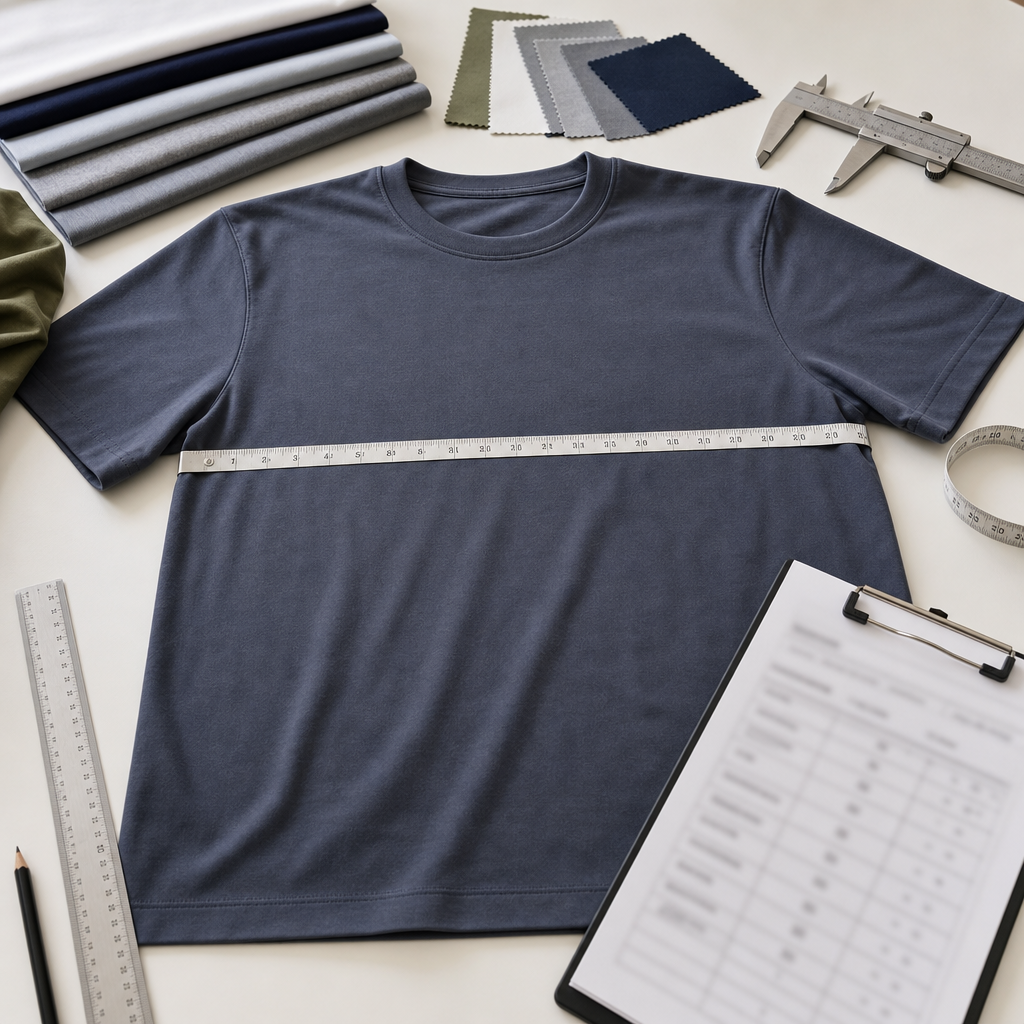
Garment Measurement Tolerances for Small Batch Clothing Orders
A practical guide to garment measurement tolerances for small batch apparel orders, including how buyers should review samples and avoid unnecessary disputes.

Garment measurement tolerances are one of the simplest ways to prevent confusion during sampling and bulk production. They define how much variation is acceptable between the approved size spec and the finished garment. Without tolerances, even a small sewing variation can feel like a quality dispute.
For small batch clothing orders, tolerances matter because every sample and every unit is easier to inspect closely. A buyer may measure five pieces and expect them to be identical, while the factory is working with fabric stretch, cutting layers, sewing tension, pressing, washing, and normal handling variation. A clear tolerance table gives both sides a practical standard.
What Measurement Tolerance Means
A tolerance is the accepted range around a target measurement. If a T-shirt chest width is specified at 58 cm with a tolerance of plus or minus 1 cm, a measured chest width from 57 cm to 59 cm may still be acceptable. The goal is not to excuse poor workmanship. The goal is to separate normal production variation from real fit or construction problems.
The tighter the tolerance, the more difficult the garment may be to produce consistently. This is especially true for stretchy knits, rib openings, washed garments, and heavy fabrics that relax after sewing.
Why Small Batch Buyers Need Tolerances
Small batch buyers often work with tighter cash flow, smaller sample budgets, and less room for rework. A clear measurement tolerance helps the buyer approve samples with confidence instead of revising every tiny difference.
It also helps the manufacturer quote and plan more realistically. A low MOQ order with very strict tolerances, special wash, multiple sizes, and custom decoration may need more checking time than a simple reorder. That affects lead time and inspection expectations.
If you are still building your first production brief, StitchQuote’s sampling and MOQ page explains why sample approval should happen before bulk production begins.
Common Points of Measure
The right points of measure depend on the garment. A hoodie, T-shirt, sweatpant, denim jacket, and jeans all need different measurement tables. Still, most apparel specs should include enough points to control the fit that customers will feel.
- T-shirts: chest, body length, shoulder, sleeve length, sleeve opening, neck width, and hem width.
- Hoodies: chest, body length, shoulder drop, sleeve length, bicep, cuff opening, hem width, hood opening, and pocket placement.
- Sweatpants: waist, hip, rise, inseam, thigh, knee, leg opening, and waistband height.
- Denim: waist, hip, rise, inseam, thigh, knee, leg opening, and key pocket placements.
Each point should be measured the same way every time. If the buyer and factory measure from different reference points, the numbers may disagree even when the garment itself has not changed.
Not Every Point Needs the Same Tolerance
A good tolerance table does not use one number for every measurement. Some areas can accept more variation without changing the product experience. Other areas need tighter control because they affect fit, comfort, or visible balance.
For example, a small difference in body length may be acceptable on an oversized T-shirt, while a large difference in neck width may change how the garment sits. On sweatpants, waist and inseam may need closer attention than a pocket placement that has more visual flexibility.
Fabric Changes the Tolerance Conversation
Fabric behavior affects measurement consistency. Cotton jersey, brushed fleece, French terry, rib, denim, and stretch blends all respond differently after cutting, sewing, steaming, and washing. A heavyweight fabric can relax under its own weight. A rib cuff can stretch during handling. A washed denim garment may shrink or twist slightly after finishing.
This is why a tolerance table should be reviewed together with fabric choice. If the garment has a wash process, shrinkage testing and the approved sample become especially important.
How Buyers Should Review a Sample
When reviewing a sample, measure it flat on a stable surface, use the same points of measure as the tech pack, and record differences clearly. Do not rely only on a tape photo without explaining where the measurement starts and ends.
A useful sample review includes:
- The target spec.
- The measured sample value.
- The agreed tolerance.
- A note on whether the difference affects fit or appearance.
- Clear comments for changes before the next sample or bulk production.
For broader sample preparation, read what buyers should finalize before asking for a sample quote.
When a Tolerance Issue Should Be Corrected
A measurement outside tolerance should be reviewed, but the response should depend on severity and location. If the chest, shoulder, waist, or inseam is outside tolerance, the fit impact may be meaningful. If a secondary point is slightly outside tolerance but does not affect appearance or comfort, the buyer and supplier may decide whether it needs correction.
The important point is to make the decision before bulk production. Once bulk production starts, unclear tolerance expectations can become expensive for both sides.
Practical StitchQuote Note
For small batch and low MOQ orders, we encourage buyers to treat tolerances as part of the product brief, not a factory-only detail. A clear tolerance table helps everyone review samples with the same standard. It also makes the production conversation more practical: what must be precise, what can vary slightly, and what needs another sample before approval.
If you are working on a first streetwear or casualwear order, this is one of the details that makes communication smoother with a low MOQ clothing manufacturer.
FAQ
What is a normal garment measurement tolerance?
There is no single universal tolerance. It depends on the garment type, fabric, construction, point of measure, and buyer requirement. Many basic measurements use a small plus-or-minus range, but the exact number should be agreed before sampling or bulk production.
Should every size have the same tolerance?
Not always. Some brands use similar tolerances across sizes for simplicity, while others adjust tolerances for larger garments or specific measurement points. The key is to make the rule clear in the spec.
Can tight tolerances increase production cost?
Yes, very tight tolerances can increase checking time, sample revisions, and rejection risk. Tight control may be necessary for some products, but it should match the garment’s real fit and quality needs.
Do tolerances replace sample approval?
No. Tolerances help measure the sample, but buyers still need to review fit, fabric, construction, decoration, labels, and finishing. The sample is the practical reference for production.
What should I do if a sample is outside tolerance?
Record the measured value, compare it with the target and tolerance, explain the fit or appearance impact, and ask the supplier to correct the pattern, sewing, finishing, or measurement method before the next approval step.
Request a manufacturing quote
Share your product type, quantity range, and destination. We usually reply within one business day.
8 Comments
Comments are closed.
[…] guidance on tolerance thinking, see garment measurement tolerances for small batch clothing orders. The same logic applies to T-shirts: decide what must be controlled tightly and what can have […]
[…] approval, connect the SKU plan to measurement notes and realistic tolerances. The guide to garment measurement tolerances for small batch clothing orders is useful when deciding how strict the first inspection should […]
[…] general measurement logic, the article on garment measurement tolerances for small batch clothing orders explains why buyers should define realistic inspection standards rather than expect every garment […]
[…] clear measurement points and tolerances. StitchQuote’s guide to garment measurement tolerances for small batch clothing orders is useful when the buyer needs to turn fit comments into factory-readable […]
[…] production, write down the pre-wash and post-wash cuff measurements. The broader article on garment measurement tolerances can help buyers set realistic pass/fail ranges instead of expecting every cuff to match the sample […]
[…] general measurement discipline, connect pocket notes to garment measurement tolerances. The goal is to give QC a repeatable standard, not to rely on memory of how one sample […]
[…] on who checks it. Use written measurement notes and simple diagrams when possible. The guide to garment measurement tolerances is useful when setting realistic pass/fail expectations for small production […]
[…] to set those tolerances clearly with your manufacturer, ideally in writing in the tech pack. See garment measurement tolerances for small-batch orders for how to set […]