Custom Streetwear, Casualwear & Denim Manufacturer•MOQ 50 pcs•Denim MOQ 100 pcs•7-Day Sample Available
Denim Hardware Approval Checklist for Custom Jeans Production
A buyer-focused denim hardware approval checklist for custom jeans production, covering buttons, rivets, zippers, trims, wash effects, placement, and sample review.

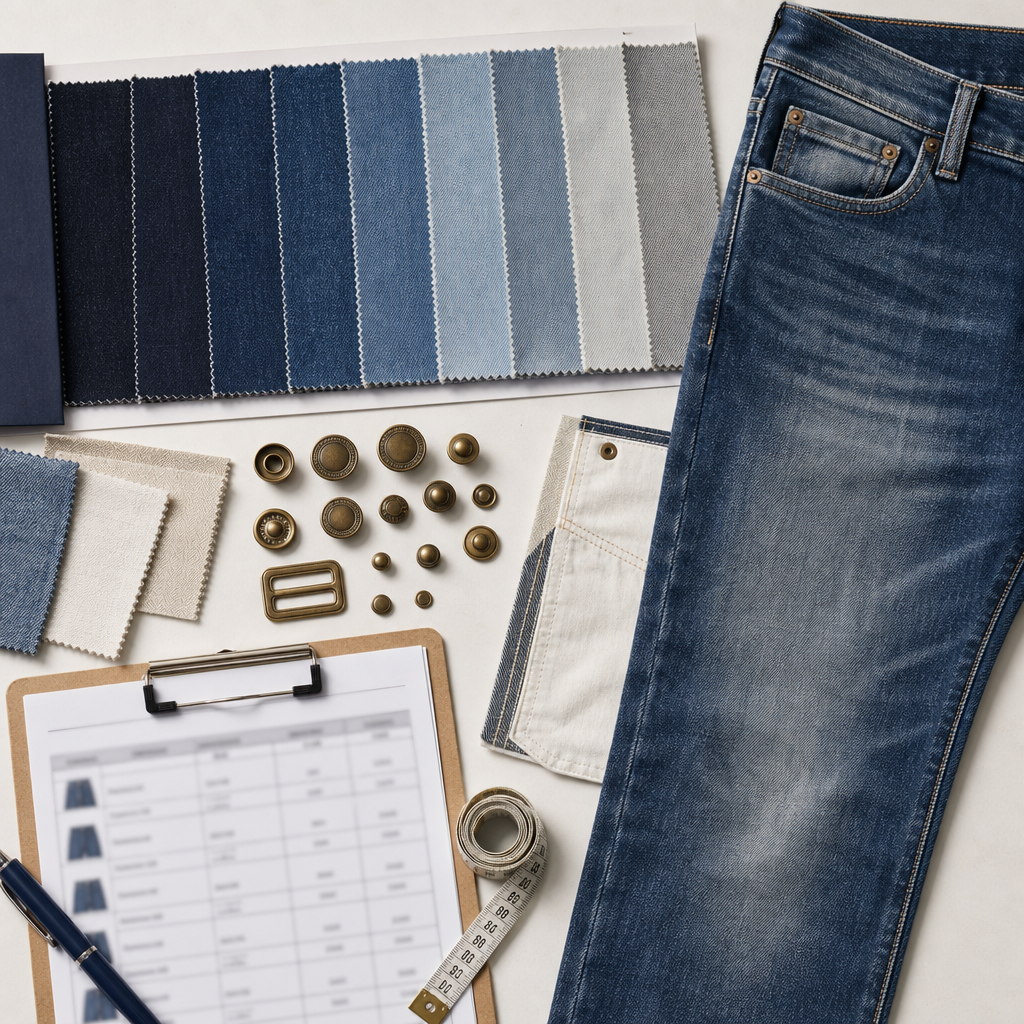
Denim hardware approval is a small part of the jeans development process, but it can create visible quality problems when it is rushed. Buttons, rivets, zipper teeth, pullers, buckles, tack buttons, and metal trims all affect how the final product looks, wears, washes, and feels. For custom jeans production, hardware should be approved before bulk production, not treated as a generic finishing detail.
For denim-specific quoting and production planning, review our custom jeans manufacturer page.
Hardware is especially important because denim often goes through wash, enzyme, stone, tint, or hand-effect processes. A trim that looks right before wash may change color, scratch, loosen, corrode, or feel too bright after finishing. The buyer should approve hardware together with the fabric, wash, fit, and sample construction.
What Counts as Denim Hardware
Denim hardware includes the functional and decorative metal or rigid parts attached to the garment. On jeans, this usually includes waistband buttons, fly buttons or zipper, rivets, zipper pullers, buckles, adjusters, eyelets, tack buttons, and sometimes decorative plates or branded trims.
Not every jeans style needs every type of hardware. A clean premium basic jean may use minimal trims, while a workwear or Y2K-inspired style may rely heavily on visible hardware. The approval checklist should match the design instead of copying a generic jeans template.
Start With the Style and Wash Direction
Hardware should be chosen after the buyer understands the jeans style and wash direction. A raw-looking dark indigo jean, vintage wash jean, black washed jean, cargo jean, and patchwork jean may need different metal tones and durability expectations.
Before approving hardware, define:
- Jean type: straight, baggy, wide leg, flare, cargo, carpenter, or jacket-style denim piece.
- Wash direction: raw, rinse, enzyme, stone, acid, vintage, black wash, or tinted.
- Metal tone: antique brass, nickel, gunmetal, black, copper, matte, or polished.
- Branding need: plain, embossed, debossed, logo button, or no visible branding.
- Risk tolerance: standard trims for low MOQ or custom molds for a larger program.
If the wash itself is still uncertain, read what buyers usually miss in denim wash approval before treating hardware as final.
Approve Buttons and Rivets as a Set
Buttons and rivets should not be approved in isolation. They need to match each other, the denim wash, pocket design, stitching color, zipper, and label package. A button that looks premium on a loose trim card may feel too shiny or too large on the actual garment.
Review these details:
- Button diameter and thickness.
- Button shank strength and attachment method.
- Rivet size, cap shape, and back-side comfort.
- Metal tone consistency across all trims.
- Logo or no-logo decision.
- Placement relative to pocket edges and stress points.
- How trims look after wash.
For low MOQ orders, standard hardware may be more practical than custom logo molds. Custom hardware can be useful for brand identity, but it may increase sampling cost, tooling requirements, lead time, and approval complexity.
Check Zippers Before Bulk Cutting
Zippers are functional components. A zipper that looks fine on the trim card may fail the garment if the tape color, teeth size, puller shape, or fly construction is wrong. On jeans, zipper approval should happen on a sewn sample, not only through loose trim photos.
Check:
- Zipper length and fly compatibility.
- Teeth material and color.
- Tape color match to denim or pocketing.
- Puller shape, size, and comfort.
- Smooth opening and closing.
- Whether washing affects zipper movement or appearance.
If the zipper feels rough on the sample, do not assume it will improve in bulk. Ask the manufacturer whether the issue is sample handling, zipper quality, wash process, fly construction, or pressing.
Wash Testing Matters for Hardware
Denim finishing can change hardware more than buyers expect. Wash can dull metal, expose scratches, stain pocketing, or create uneven aging. Sometimes that is desired. Sometimes it makes the jean look defective.
When reviewing a washed denim sample, check whether hardware:
- Matches the intended aged or clean look.
- Has sharp edges after wash.
- Shows corrosion, color transfer, or uneven plating loss.
- Feels secure after mechanical processing.
- Creates marks or pressure damage on surrounding fabric.
- Still matches the zipper and label package.
For sample-stage review, StitchQuote’s guide on what to check in a denim PP sample is a useful companion. Hardware approval should be part of that PP sample review, not a separate afterthought.
Placement and Comfort Are Part of Approval
Hardware placement affects both appearance and comfort. Rivets too close to pocket edges can stress the fabric. Back-side rivet parts can irritate the wearer if they are rough. A waistband button can look off-center if placement is not checked against the finished waistband and fly.
Review the actual garment while flat and on body or form if possible. Check symmetry, pocket balance, stress points, and whether any hardware touches the body in an uncomfortable way.
What Buyers Should Send Before Asking for Hardware Quotes
Before requesting a denim quote, send more than a picture of a button. The factory needs enough context to source or recommend hardware that fits the production route.
A useful hardware brief includes:
- Jeans style and target quantity.
- Wash direction and denim weight.
- Trim reference images with notes on what to match or avoid.
- Logo or plain hardware decision.
- Preferred metal tone.
- Whether standard trims are acceptable for the first order.
- Any durability or comfort concerns.
- Target price and timeline constraints.
If the buyer is still finalizing the full sample request, use what buyers should finalize before asking for a sample quote as a broader checklist.
When Custom Hardware Is Worth It
Custom hardware can strengthen brand identity, but it is not always the right first-order decision. A startup brand may be better served by strong fabric, fit, wash approval, and clean standard trims before investing in custom molds. A growing brand with repeat styles may benefit more from custom buttons and rivets because the tooling cost can be spread across future orders.
The decision should be commercial as well as aesthetic. Ask whether custom hardware will meaningfully improve the garment’s perceived value, or whether it will add complexity that the first order does not need.
Practical StitchQuote Note
For custom denim projects, we treat hardware as part of the wash and sample approval system. The goal is not to choose the most expensive trim. The goal is to choose hardware that fits the wash, construction, order quantity, brand position, and production timeline.
If your jeans project needs low MOQ support, the practical route may be to start with carefully selected standard hardware, then move to custom trims after the fit and wash are proven. A custom denim manufacturer should help you make that tradeoff before bulk production starts.
FAQ
Do custom jeans need custom logo hardware?
No. Custom logo hardware can help brand identity, but standard hardware is often more practical for early or low MOQ denim orders. Fit, fabric, wash, and construction usually matter more for the first production run.
Should hardware be approved before or after denim wash testing?
Hardware should be reviewed after wash on the actual sample. Loose trim approval is useful, but denim wash can change color, surface, attachment security, and how the hardware looks on the garment.
What hardware is most important on jeans?
Waistband buttons, rivets, and zippers are usually the most important because they affect function, durability, and appearance. Decorative trims should also be reviewed if they are visible or brand-specific.
Can hardware delay a denim order?
Yes. Custom molds, unusual plating, special pullers, or unavailable trim colors can add lead time. This is why hardware decisions should be made before bulk production planning.
What should buyers check on a denim hardware sample?
Check size, tone, placement, attachment strength, comfort, zipper function, wash effect, color transfer, corrosion, and whether the hardware matches the overall denim design.
[…] the denim hardware workflow in denim hardware approval together with pocket placement notes when the design includes custom buttons, rivets, zippers, or […]
[…] this page with the custom denim manufacturer workflow, the denim hardware approval checklist, and low MOQ jeans hardware checks. For a trim quote, send photos, size, finish, quantity, and wash […]