Custom Streetwear, Casualwear & Denim Manufacturer•MOQ 50 pcs•Denim MOQ 100 pcs•7-Day Sample Available
Matching Set Fabric Consistency Checklist for Hoodie and Sweatpants Production
Keep hoodie and sweatpants matching sets consistent before production by checking fabric lots, color, shrinkage, GSM, brushing, rib trims, and sample approval.

Matching set fabric consistency is one of the hardest details to control in hoodie and sweatpants production. A hoodie and jogger can each look acceptable on their own, but the set can still feel wrong if the color, handfeel, fleece brushing, rib trim, or shrinkage does not match. For streetwear and casualwear buyers, this is a production issue, not just a styling issue.
For hoodie-specific quoting and production planning, review our custom hoodie manufacturer page.
This checklist helps apparel buyers review matching sets before sample approval and low MOQ bulk production. It is especially useful for fleece capsules, hoodie-and-sweatpants drops, and private label programs where customers expect the top and bottom to feel like one coordinated product.
For pocket shape, rise, and after-wash fit approval details, review how to approve sweatpants pocket shape and rise before low moq production before locking bulk comments.
When fleece weight, rib recovery, or matching-set consistency depends on wash results, use how to test fleece hoodie shrinkage before low moq bulk production to confirm shrinkage checks before bulk hoodie production.
If your brand is moving from fit approval into supplier selection, review sweatpants manufacturing partner for fabric, fit, labeling, MOQ, and bulk planning before requesting a quote.
Why Matching Sets Drift During Production
Matching sets drift because a set is really two garments sharing one visual promise. The hoodie may use rib cuffs, a hood lining, drawcords, pocket stitching, and a larger fabric panel. The sweatpants may use waistband elastic, drawcords, rib cuffs, side seams, and different stress points. Even when both garments use the same fabric name, they may not behave the same way during cutting, sewing, washing, finishing, or packing.
If you are developing sets with a custom streetwear manufacturer or casualwear manufacturer, the set should be reviewed as a combined product. Approving a hoodie sample separately from a sweatpants sample can miss the mismatch that customers will notice when the two pieces are worn together.
Start With One Fabric Plan, Not Two Separate Styles
The first question is whether the hoodie and sweatpants are truly using the same body fabric. Buyers should confirm composition, yarn type, fabric weight, knitting structure, finish, and whether the order will be cut from the same fabric lot. If the top and bottom are produced from different lots, the risk of color and handfeel variation increases.
For fleece and french terry, small differences can be obvious. A hoodie may look slightly smoother while the pants look more brushed. One panel may feel denser, while another feels softer and looser. If the set is meant to be premium, these differences can make the product feel less intentional.
Buyers should also decide whether the matching set is meant to match exactly or coordinate intentionally. Exact matching requires tighter fabric, dye, and trim control. Coordinated matching allows slightly different textures or tones, but those differences should be deliberate and approved in the sample.
Control Color Before Cutting Bulk Fabric
Color consistency should be checked before cutting bulk fabric. A digital color reference is not enough. Review lab dips, bulk fabric swatches, rib swatches, drawcords, zipper tape if used, and any printed or embroidered decoration under normal lighting. If the set uses garment dye, pigment wash, enzyme wash, or acid wash, approve the color after the relevant finishing process.
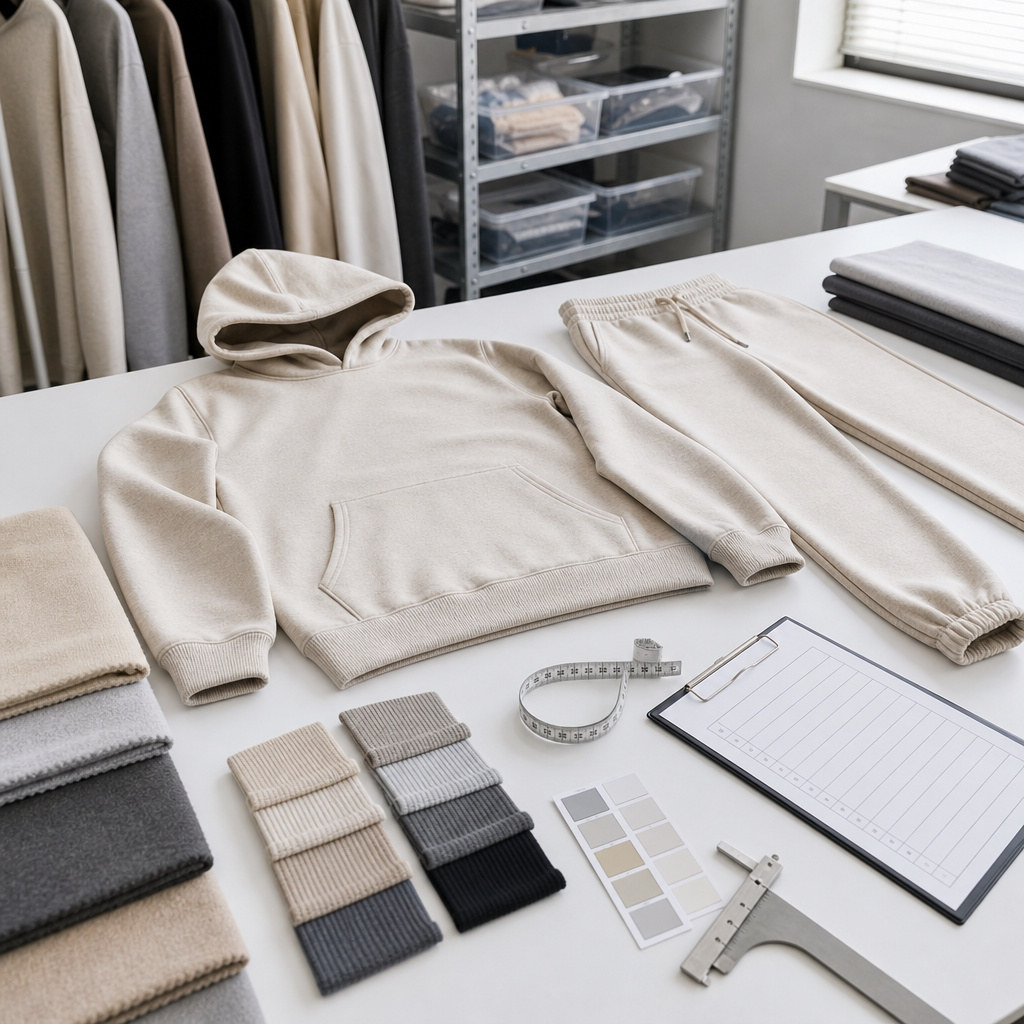
Ask the supplier to show the hoodie body fabric, sweatpants body fabric, rib, waistband, drawcord, and pocket or hood lining together. The goal is to judge the set as a customer sees it, not as separate material approvals.
Check GSM, Handfeel, and Fleece Brushing
GSM is useful, but it does not tell the whole story. Two fabrics can share a similar weight and still feel different because of yarn, brushing, compaction, or finishing. For matching sets, buyers should review body fabric weight, stretch, recovery, surface texture, inside fleece loft, and how the fabric drapes in both garments.
If the set uses french terry, the hoodie and pants should be checked for loop consistency and surface cleanliness. The article on choosing french terry for cleaner premium hoodies is useful when reviewing fabric handfeel and surface quality. If the pants use a different construction detail, such as a heavier waistband, connect that review to the sweatpants waistband construction checklist.
Review Shrinkage as a Set
Hoodies and sweatpants do not always shrink in the same way. A hoodie may change more across chest width, body length, sleeve length, or hood shape. Sweatpants may change across waist, rise, inseam, thigh, or leg opening. If the top and bottom shrink differently, the set can feel inconsistent even if both garments remain inside their own tolerances.
For sample approval, wash both pieces using the intended care method. Measure before and after washing. Then review the set on a flat table and, when possible, on body. If the hoodie gets shorter but the pants keep their length, the set proportion may change. If the pants twist or the hoodie side seam moves, the set may look less controlled after wear.
Match Rib, Drawcords, Zippers, and Trim Details
Trim mismatch can make a set look cheap even when the body fabric is correct. Review rib cuffs, rib hems, waistband rib, drawcord color, drawcord texture, eyelets, zipper tape, zipper pullers, labels, hangtags, and packaging. If the hoodie uses metal tips and the pants use plain cord ends, that may be fine, but it should be a deliberate decision.
For low MOQ orders, custom trim can create minimums or longer lead times. Buyers should decide where customization matters most. A first-order set may be stronger with reliable standard trims and excellent fabric consistency than with too many custom details that are hard to source in small quantities. This is one reason matching set planning should be part of the broader low MOQ clothing manufacturing conversation.
Approve the Set Sample Together
Do not approve the hoodie on Monday and the pants on Friday without comparing them side by side. A practical matching set approval should include:
- hoodie and sweatpants laid flat together;
- front, back, side, and detail photos of both garments;
- approved fabric swatches attached to the sample file;
- trim cards showing rib, drawcord, zipper, labels, and packaging;
- pre-wash and post-wash measurements for both pieces;
- notes explaining whether color should be exact match or coordinated match;
- approved set-level comments on proportion, handfeel, and visual balance.
This sample package gives the factory a clearer standard for bulk production and gives QC a reference point beyond individual garment measurements.
Build Bulk QC Around Set-Level Risk
Bulk QC should not only check whether each hoodie and sweatpants piece passes separately. It should also check whether randomly paired pieces still look like a set. This matters when garments are packed separately but sold as a matching capsule, or when customers may buy the top and bottom together.
Useful QC checks include shade band review, trim color comparison, rib recovery, shrinkage checks, pocket alignment, waistband behavior, and whether the handfeel stays within the approved range. For sample and bulk planning, connect this work to sampling and MOQ so the approval standard is clear before production starts.
Practical StitchQuote Note
When StitchQuote reviews hoodie and sweatpants matching sets, the set is treated as one product system. Fabric lot, dye behavior, shrinkage, rib matching, drawcords, waistband construction, and packaging are reviewed together. This helps buyers avoid a common first-order problem: two acceptable garments that do not feel like a well-controlled matching set.
FAQ
Why do hoodie and sweatpants colors sometimes look different?
Color can differ because of fabric lots, dye behavior, brushing, garment washing, rib composition, lighting, or trim materials. Matching sets should be reviewed with all fabric and trim components together before bulk production.
Should matching sets use the exact same fabric?
Often yes, especially for fleece sets that are meant to look uniform. Some designs can intentionally coordinate different textures, but that difference should be approved in the sample rather than discovered in bulk.
How should buyers check shrinkage for matching sets?
Wash the hoodie and sweatpants using the intended care method, measure both before and after washing, and review the set proportion together. The top and bottom should remain visually balanced after wash.
What details should be included in a matching set tech pack?
Include body fabric, rib, drawcords, zippers, labels, color standards, wash expectations, measurements, shrinkage notes, trim references, and photos showing the hoodie and pants approved as a set.
[…] is part of a hoodie set, review rib cuffs against the hoodie rib and body fabric. The guide on matching set fabric consistency explains why rib and body fabric should be reviewed […]
[…] garment types, fabric weights, or trim systems are dyed separately. StitchQuote’s guide on matching set fabric consistency for hoodie and sweatpants production explains why fabric lots, GSM, shrinkage, brushing, and trims should be checked […]
[…] sets, rib shade can become visible when hoodies and sweatpants sit together. The article on matching set fabric consistency is useful when rib, body fabric, and sweatpants panels must work in the same color […]
[…] If the sweatpants are part of a hoodie set, also compare fabric shade, shrinkage, and packing records with the matching set fabric consistency guide. […]