Custom Streetwear, Casualwear & Denim Manufacturer•MOQ 50 pcs•Denim MOQ 100 pcs•7-Day Sample Available
Private Label Clothing Label and Hangtag Approval Checklist Before Bulk Production
Approve private label clothing labels and hangtags before bulk production, including label type, placement, readability, artwork, care labels, packaging, and claims control.

Private label clothing labels and hangtags should be approved before bulk production, not treated as decoration added at the end. A label can affect brand perception, comfort, packaging, compliance review, and production timing. For startup and low MOQ apparel buyers, unclear label decisions can create late sample changes and avoidable cost.
This checklist focuses on practical approval. It does not replace market-specific legal or compliance review. Buyers should verify fiber content, care instructions, origin wording, safety marks, and certification claims for each target market before production. The key point is simple: do not print any claim on a label, hangtag, or package unless the buyer can support it.
When denim hardware is part of the same approval round, use how to approve jeans buttons, rivets, and zippers before low moq denim production to check button, rivet, zipper, and trim sign-off before bulk denim production.
Decide Which Labels the Garment Actually Needs
A private label product can include several label types. Common options include main woven labels, printed neck labels, size labels, care labels, content labels, origin labels, brand patches, hem labels, sleeve labels, hangtags, barcode stickers, polybag stickers, and packaging cards.
Not every first order needs every detail. A startup brand may be better served by approving the essential labels first and delaying secondary packaging until reorders. If you are still choosing between a true private label project and a lighter white-label approach, compare the implications in private label vs white label clothing.
Match Label Type to Product and Budget
The label method should match the garment and order plan. Woven labels can feel premium, but they require artwork, material, fold type, size, color, and placement approval. Printed labels can reduce bulk at the neck, but print durability and readability need checking. Patches can support streetwear identity, but they affect sewing, comfort, and minimums.
For private label clothing manufacturing, label choice should be discussed early. The manufacturer needs to know whether labels are standard, custom, buyer-supplied, or supplier-sourced. That affects quote accuracy and sample timing.
Approve Artwork Files Before Sampling
Label and hangtag artwork should be production-ready before sampling. Buyers should prepare vector files when possible, exact colors, label dimensions, fold style, font outlines, logo spacing, and any required non-brand information. A screenshot or low-resolution logo is not enough for clean label production.
When reviewing artwork, check:
- logo spacing and alignment;
- text size and readability;
- color values and contrast;
- label fold type and seam allowance;
- final size in millimeters or inches;
- front and back artwork when the label or hangtag is double-sided.
Any artwork change after sample approval can reset timing. This is why label decisions should be part of the early sample brief, not a late packaging conversation.
Check Placement and Comfort
Label placement affects comfort and perceived quality. A back neck woven label can scratch if the material is stiff or the seam is bulky. A side seam care label can irritate the wearer if it is too large or poorly finished. A hem label or patch can distort lightweight fabric if the backing is too stiff.
Review the label on the physical sample. Check whether it sits straight, whether the stitching is clean, whether it affects stretch, and whether the label feels acceptable against the body. For low MOQ programs, this type of small physical review is often more valuable than adding more packaging details. The article on what packaging details should wait until reorders is useful when deciding what to delay.
Treat Care and Content Labels Carefully
Care labels, content labels, origin wording, and safety or certification claims can carry compliance risk. Requirements vary by product and market, so the buyer should verify details before printing. If the brand cannot substantiate a certification, sustainability claim, fiber claim, or country-of-origin claim, it should not appear on the label or hangtag.
From a production workflow standpoint, buyers should provide approved wording, not ask the factory to guess. The manufacturer can help place and produce the label, but the brand owner should confirm what the label must say for the markets where the product will be sold.
Review Hangtags as Part of the Product System
Hangtags affect presentation, but they also add cost and operational steps. Buyers should approve paper stock, size, hole placement, string type, safety pin or loop method, barcode or SKU sticker placement, and whether the tag needs a price area. If the product is shipped to retailers, the hangtag may need more structured information than a direct-to-consumer drop.
A hangtag should not make unsupported claims. Avoid fake certifications, invented customer proof, exaggerated performance statements, or claims that the product cannot support. Useful hangtags explain brand identity, product care, material highlights, or SKU information in a controlled way.
Build a Label and Hangtag Approval Pack
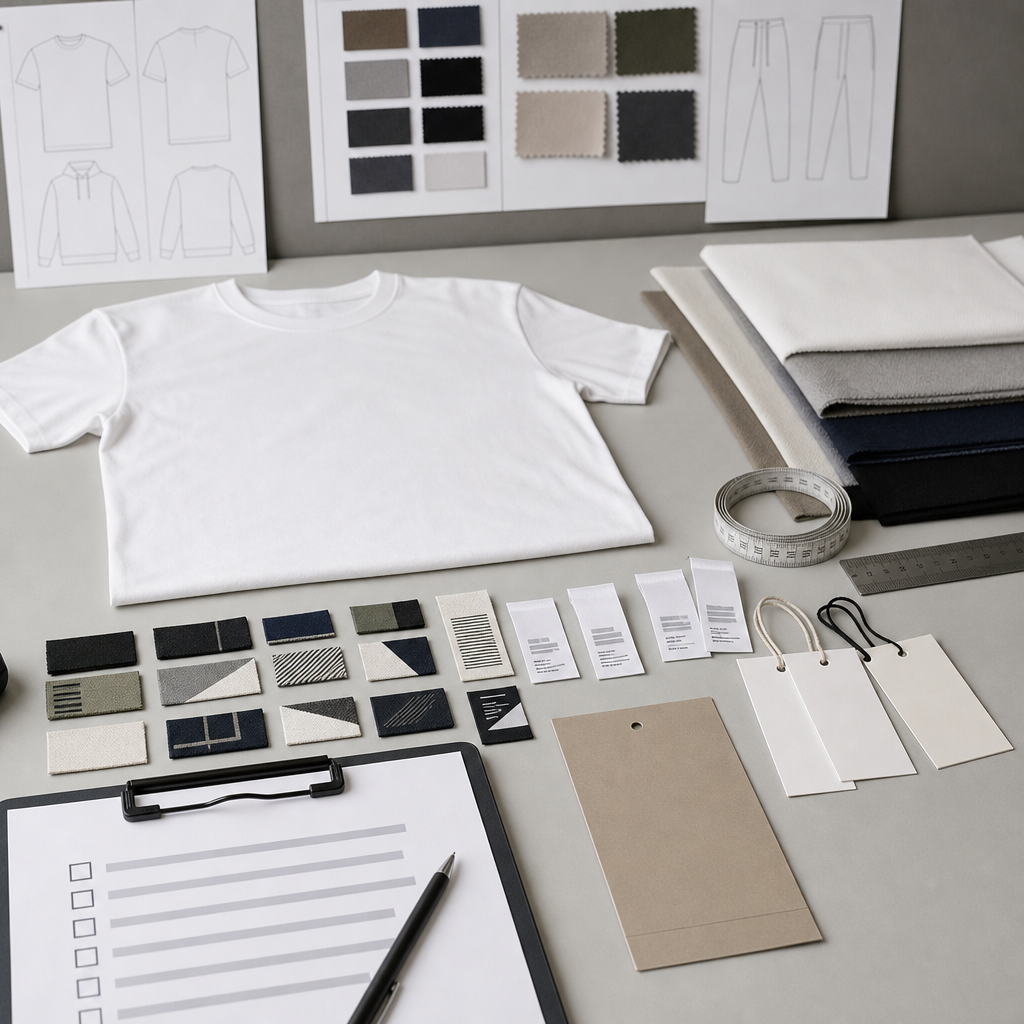
Before bulk production, prepare a simple approval pack:
- main label artwork, dimensions, material, and fold type;
- size label method and size range;
- care/content/origin wording approved for the target market;
- hangtag artwork, size, paper stock, string, and attachment method;
- placement photos or diagrams for every label;
- approved physical trim card or sample set;
- barcode or SKU requirements if needed;
- packaging notes and any details delayed until reorder.
This approval pack should be ready before the buyer asks for final production confirmation. It pairs well with what buyers should finalize before asking for a sample quote and the broader sampling and MOQ workflow.
Keep First-Order Label Decisions Practical
Low MOQ buyers should avoid making the first order too complex. Custom woven labels, printed neck labels, custom hangtags, barcode stickers, tissue paper, printed polybags, custom mailers, and branded inserts can all be useful, but they do not all need to happen at once.
For a first order, prioritize details that make the garment credible and repeatable: main label, size/care label, clean placement, accurate wording, and packaging that protects the product. Save extra presentation layers for reorders if they increase cost, lead time, or operational complexity too much. This keeps the private label plan aligned with low MOQ clothing production.
Practical StitchQuote Note
When StitchQuote reviews a private label project, labels and hangtags are treated as production details, not just branding assets. Artwork, material, placement, comfort, wording, packaging, and claim control are reviewed before bulk production. This helps buyers avoid late changes and keeps the physical product aligned with the brand without adding unsupported claims.
FAQ
What labels does a private label clothing brand need?
Most brands need a main brand label, size information, and care/content information. The exact requirements depend on product type and sales market. Hangtags, patches, stickers, and packaging cards are optional brand details unless required by the sales channel.
Should startup brands use woven labels or printed labels?
Woven labels can feel more premium, while printed labels can reduce bulk and irritation. The right choice depends on garment type, budget, comfort, and brand positioning.
Can a factory decide the care label wording?
A factory may provide production input, but the brand owner should approve final wording for target markets. Fiber content, care instructions, origin wording, and claims should be verified before printing.
Which packaging details can wait until reorders?
Custom mailers, inserts, tissue paper, specialty stickers, and complex retail packaging can often wait. First orders usually benefit from focusing on accurate labels, clean hangtags, safe packaging, and production-ready artwork.
[…] care labels are also being reviewed, keep the trim package organized. StitchQuote’s guide to private label clothing label and hangtag approval is useful for keeping trim approvals specific rather than scattered across vague sample […]
[…] the style also has a private label waistband label, patch, hangtag, or package trim, review the private label clothing label and hangtag approval guide so trim color and branding decisions stay […]