Custom Streetwear, Casualwear & Denim Manufacturer•MOQ 50 pcs•Denim MOQ 100 pcs•7-Day Sample Available

Snap Fastener Reinforcement for Overshirts and Light Jackets: Buyer QC Before Low MOQ Bulk
Snap fastener reinforcement affects how overshirts and light jackets hold up at stress points, so buyers should approve backing, placement, and setting quality before low MOQ bulk.

Snap fastener reinforcement should be approved before low MOQ overshirts, shirt jackets, and light jackets move into bulk because a snap that looks clean in photos can still pull fabric, distort the placket, loosen after handling, or damage a lightweight panel. Buyers need to check the fabric support behind the snap, not only the visible cap.
For a private label clothing manufacturer, snap approval connects trim sourcing, pattern reinforcement, sewing sequence, machine setting pressure, and final inspection. The goal is a repeatable construction that matches the garment weight and use case.
Map the Pull-Stress Points First
Start by naming where the snap takes stress: front placket, chest pocket flap, cuff, collar tab, waistband tab, sleeve opening, or storm flap. Each location has a different pull direction and fabric thickness. A snap near an edge may need different support than a snap set through several layers.
The cut and sew tech pack guide is the right place to mark snap placement, diameter, color, spacing, backing requirement, and any areas where the buyer wants a hidden reinforcement patch.
Match Backing to Fabric Weight
Light cotton twill, nylon, poplin, flannel, canvas, and coated fabrics do not react the same way when a snap is pressed into place. If the fabric is too light or unstable, the factory may need fusible, self-fabric reinforcement, a backing washer, or a wider placket construction so force is distributed beyond the snap hole.
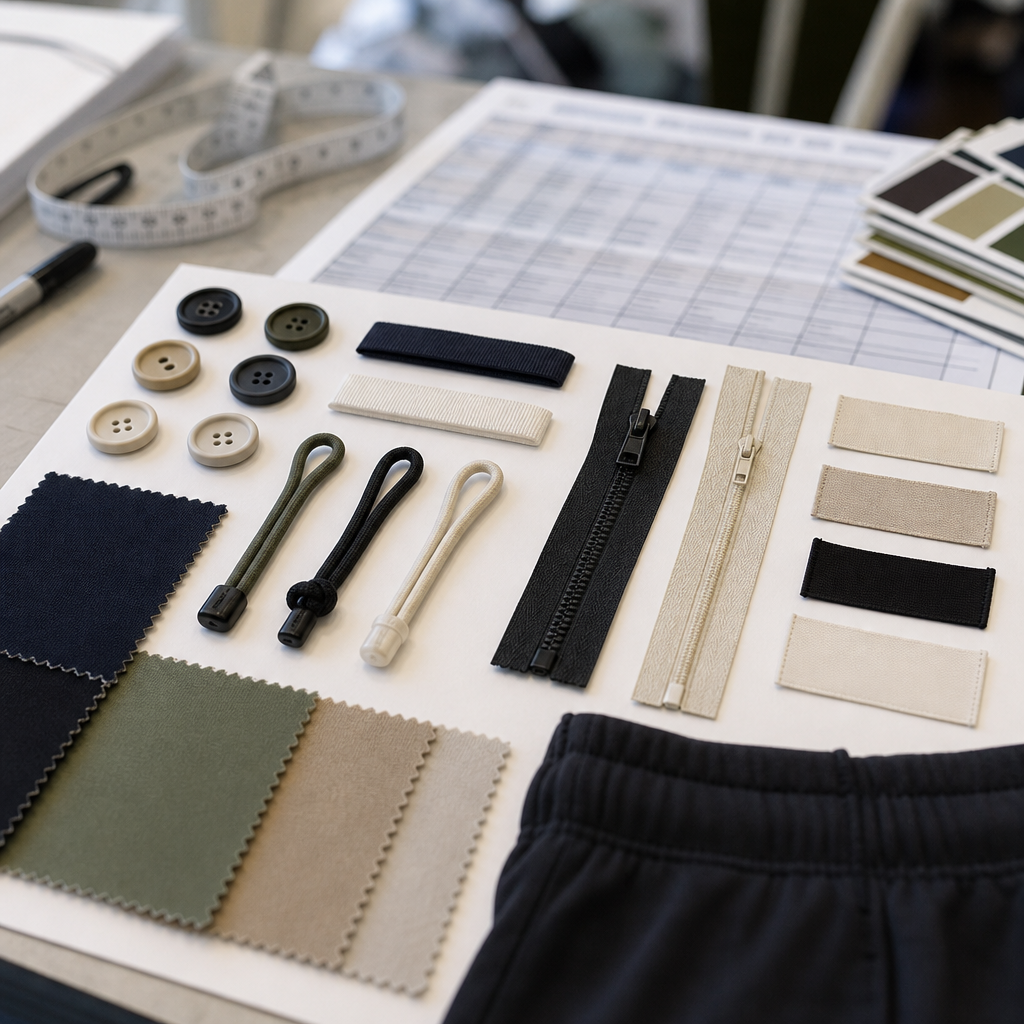
Use the apparel trim sourcing guide when deciding whether to use stock snaps, custom color caps, substitute hardware, or simplified trims for the first order. Trim decisions should stay connected to construction approval, not only to appearance.
Separate Snap Issues From Buttonhole Issues
Snap problems are different from buttonhole and button-placket problems. Buttonholes depend on cut opening, stitching, and button size, while snaps depend on hardware fit, setting pressure, panel support, and pull direction. Buyers should not copy the same QC rule from one closure type to another.
The buttonhole and placket gaping guide is useful for comparison, but a snap-fastened overshirt needs its own approval notes. Denim hardware also has different stress behavior, so compare only where relevant with the jeans hardware approval guide.
Inspect Setting Pressure and Panel Distortion
After setting, check whether the snap sits level, whether the cap is scratched, whether the fabric puckers around the hardware, and whether the placket remains flat when opened and closed. Too much pressure can crush or shine the fabric; too little pressure can leave the snap loose.
The cut and sew seam construction checklist helps buyers review snap reinforcement together with seam allowance, topstitching, placket layers, and edge stability. A snap issue may start before the hardware machine if the panel construction is not stable.
Check Function Without Making Unsupported Claims
Buyers can perform a practical sample check by opening and closing the snap several times, checking for panel distortion, and inspecting the back side for fabric damage or loose hardware. Avoid turning this into a formal strength claim unless the buyer has a defined test method and documented result from the supplier.
For a low MOQ clothing manufacturer, the practical release rule should be simple: approve, reinforce, reset, change trim, remake sample, or hold for buyer decision. The rule should be based on visible evidence from the actual fabric and trim combination.
Include Snaps in Final Inspection
Final inspection should confirm snap count, placement, alignment, color, opening and closing function, backing, clean setting, fabric distortion, and whether spare trims or repair instructions are needed. The inspector should check both face side and inside side because weak backing may hide behind a clean cap.
This fits into pre-shipment inspection for low MOQ apparel. If a snap issue repeats, use the apparel sample comments guide to document location, affected quantity, suspected cause, and the required correction before release.
Send a Clear Snap Approval Handoff
A useful handoff should include garment fabric, snap type, cap size, finish color, placement points, panel thickness, backing method, sample photos, open risks, and final approval status. If the buyer is not sure whether a snap is suitable, that uncertainty should be marked before bulk cutting and trim purchasing.
When sending an overshirt or light jacket project through the StitchQuote inquiry page, include fabric details, closure references, trim photos, placement notes, and target quantity. Clear snap reinforcement notes help the factory quote, sample, and inspect the closure against the intended construction.
Questions Buyers Ask About Snap Fastener Reinforcement
Do all snap fasteners need reinforcement?
Not always. The need depends on fabric weight, pull direction, panel layers, snap size, and garment use. Lightweight or unstable panels often need closer reinforcement review before bulk approval.
Is a loose snap a trim problem or a sewing problem?
It can be either. The cause may be hardware size, setting pressure, weak backing, unstable fabric, poor placement, or panel construction. Check the actual sample before deciding the correction.
Can buyers ask for snap strength guarantees?
Buyers should avoid broad guarantees unless a specific test method and documented result are agreed. A practical sample check can still identify visible distortion, loose setting, and unsuitable backing.
What should block bulk approval?
Loose snaps, cracked or scratched caps, fabric tearing, placket distortion, missing backing, inconsistent placement, or a snap that damages the panel during normal opening and closing should be corrected before release.
Request a manufacturing quote
Share your product type, quantity range, and destination. We usually reply within one business day.