Custom Streetwear, Casualwear & Denim Manufacturer•MOQ 50 pcs•Denim MOQ 100 pcs•7-Day Sample Available

How to Source Apparel Trims for Low MOQ Clothing Without Delaying Bulk Production
Source apparel trims for low MOQ clothing by comparing stock and custom options, lead times, garment function, substitutions, and approval records.

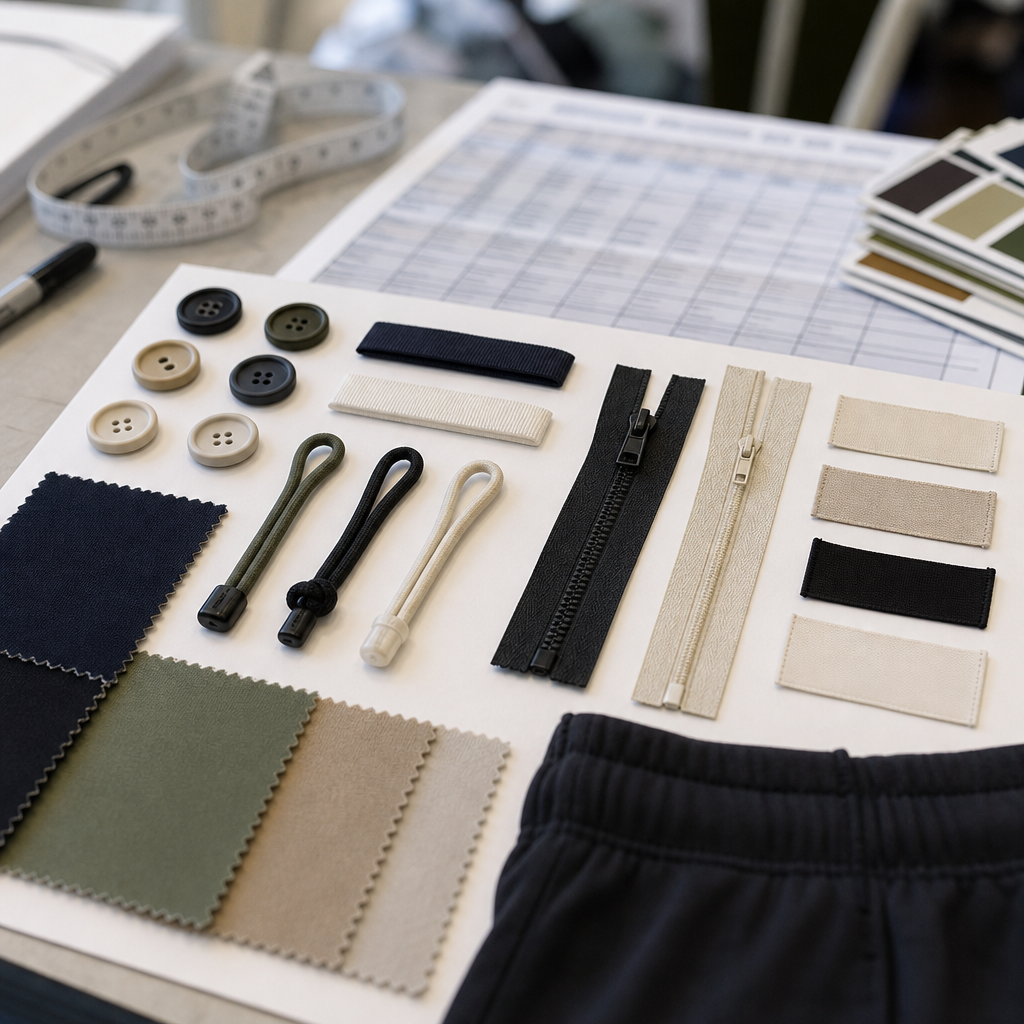
Apparel trim sourcing can slow a low MOQ order even when the garment sample is approved. Buttons, zippers, drawcords, elastics, labels, patches, eyelets, snaps, and tape may look like small details, but each one can affect lead time, MOQ pressure, garment function, color consistency, and reorder reliability.
For startup and private label buyers, the goal is not to customize every trim immediately. The goal is to choose the trims that matter, approve them clearly, and avoid late surprises before bulk production starts.
For brands turning this checklist into a broader production brief, compare it with custom apparel production partner before sending samples, trims, and order targets.
Factory buyer decision table
Updated July 23, 2026: Trim sourcing should protect the garment standard before it protects decoration ambition. A low MOQ buyer usually gets a safer first order by customising the trims that matter most and freezing substitute rules for everything else.
| Trim decision | Factory-side check | Procurement risk |
|---|---|---|
| Functional trims | Zipper gauge, button strength, elastic recovery, drawcord handfeel, and snap/eyelet setting | A visual trim choice creates comfort, durability, or wash problems in bulk |
| Branding trims | Woven label, patch, zipper pull, hangtag, cord tip, logo plate, and packaging sticker route | Custom items push the calendar or minimum higher than the garment order can support |
| Reorder controls | Trim card, supplier reference, color/finish standard, leftover stock, and approved substitute rule | The second run cannot repeat the first approved sample because trim records are incomplete |
Use this sourcing framework with private label clothing manufacturing, custom streetwear manufacturing, and low MOQ clothing manufacturing. When trim priorities and substitute rules are ready, send the trim card or reference photos through contact.
Decide Which Trims Are Necessary and Which Can Wait
Start by separating functional trims from branding trims. Functional trims help the garment work: zippers, buttons, snaps, elastics, drawcords, eyelets, and waistband components. Branding trims help the garment feel finished: woven labels, rubber patches, metal plates, hangtags, zipper pulls, packaging stickers, and special cords.
A first low MOQ order usually does not need every custom detail. A hoodie may need a reliable drawcord, rib, label, and print approval before it needs a custom metal aglet. A jogger may need a stable waistband elastic and drawcord exit before it needs a custom stopper. This decision keeps sampling focused and protects the production timeline.
Compare Stock Trims and Custom Trims Honestly
Stock trims are usually faster and easier to test because the supplier may already have available colors, sizes, and materials. Custom trims can improve brand identity, but they may bring extra development time, higher minimums, tooling, color-matching risk, or longer reorder lead time.
A good buyer decision is not simply “custom is better.” The better question is: which trim has enough visual or functional value to justify custom development for this order? If the answer is unclear, a stock trim approved carefully may be the safer first production choice.
Check MOQ and Lead Time Before Approving the Design
Trim decisions should happen before the final sample calendar is locked. A low MOQ garment can be delayed by a trim that has a higher minimum than the garment order itself. Buyers should ask whether the trim is in stock, whether the color is available, whether a custom version requires development, and whether extra trim quantity will be left over for reorders.
This is especially important for private label orders where labels, hangtags, packaging, and selected trims are approved together. The private label label and hangtag approval workflow helps keep artwork, placement, and trim records in one place.
Match Trim Function to the Garment Construction
A trim should be checked against fabric weight, garment construction, wash route, and wearer use. A zipper that works on a light jacket may feel weak on a heavy utility pant. A drawcord that looks good in a photo may be too stiff for a soft hoodie. An elastic can feel fine in a flat sample but roll or twist after wash and wear.
For trim-specific checks, compare the decision with existing approval guides such as zipper quality for jackets and pants and hoodie drawcord, eyelet, and aglet approval. Those details are useful when the trim affects comfort, durability, or customer perception.
Approve Color, Finish, and Placement With Real Samples
Trim color should be checked beside the actual garment fabric, not only in a separate photo. Black can shift warm or cool, cream can look too yellow, metal finishes can clash with garment hardware, and natural cotton cords can change tone after washing. If a garment is dyed, washed, brushed, or heavily laundered, confirm whether the trim goes through the same process or is attached later.
Placement matters too. Labels, patches, buttons, zipper tape, drawcord exits, and elastic channels should be shown on the sample garment or a clear trim card with placement notes. Without placement confirmation, the factory may follow a reasonable assumption that does not match the buyer’s brand direction.
Write Substitution Rules Before Bulk Production
Low MOQ production sometimes requires a substitution if a trim color, size, or supplier stock changes. This should not be handled casually. The buyer should decide which substitutions are acceptable, which need photo approval, and which require a new sample.
For example, a hidden inside label material may allow a close substitute after approval, while an exposed zipper, drawcord, or branded patch may need strict buyer confirmation. Clear rules protect both the buyer and the factory from last-minute arguments.
Keep a Trim Record for Reorders
Trim sourcing does not end after the first bulk order. If the style sells and the buyer reorders, the next run needs the same label material, drawcord size, zipper type, button finish, elastic width, patch position, and approved substitution rules. Keep a trim card, supplier reference, sample photo, and approval date with the production record.
StitchQuote’s guide to low MOQ clothing reorder planning explains why these records matter after the first order. Reorder consistency is easier when the trim approval pack is complete from the beginning.
What to Include in a Trim Sourcing Approval Pack
- Trim list by garment style and colorway.
- Stock versus custom decision for each trim.
- Supplier or trim-card reference when available.
- MOQ, lead time, and reorder availability notes.
- Color, size, material, finish, and placement references.
- Function-test notes for zippers, drawcords, elastic, snaps, and buttons.
- Substitution rules and buyer approval requirements.
StitchQuote Note
StitchQuote supports trim sourcing as part of sample-first production planning for streetwear, casualwear, private label, and low MOQ apparel projects. Buyers can share reference photos, target price, trim priorities, and brand requirements early so the sample, costing, and bulk timeline stay realistic. Explore custom streetwear manufacturing, private label clothing manufacturing, low MOQ clothing manufacturing, and sampling and MOQ planning.
FAQ
Are custom trims worth it for a first low MOQ clothing order?
Sometimes, but not always. Custom trims are worth considering when they clearly improve brand identity or garment function. For a first order, many buyers should customize only the trims that matter most and use carefully approved stock trims elsewhere.
Which trims should be tested before bulk production?
Test trims that affect function, comfort, washing, or visible quality. Zippers, buttons, snaps, elastics, drawcords, eyelets, patches, and labels should be reviewed for size, placement, color, attachment, and compatibility with the garment fabric.
How can buyers prevent trim mismatch on reorders?
Keep the approved trim card, sample photos, material details, supplier references, color standards, and substitution rules with the production record. Reorders are easier when the first order has a clear trim approval history.
[…] trims are also changing, review the apparel trim sourcing guide so the fabric and trim decisions stay aligned. Fabric, rib, zipper, label, drawcord, and packaging […]