Custom Streetwear, Casualwear & Denim Manufacturer•MOQ 50 pcs•Denim MOQ 100 pcs•7-Day Sample Available
How to Approve Care Labels and Care Instructions Before Low MOQ Production
Approve clothing care labels before low MOQ production by checking wording, fabric inputs, wash tests, placement, readability, and approval records.

Care label approval is easy to treat as a small artwork task, but the label can affect customer expectations, wash performance, comfort, and the buyer’s approval record. For a low MOQ production run, a wrong care instruction can be expensive because there may not be enough order volume to absorb a reprint, relabeling job, or delayed shipment.
This guide focuses on production approval, not legal advice. Buyers should still confirm market-specific labeling requirements with the right compliance resource for each selling region. The practical factory question is different: what information should be settled before labels are printed, sewn, packed, and repeated in bulk?
Start With the Actual Garment, Not a Generic Label Template
A care label should be approved from the actual garment details. The buyer should confirm the garment category, fabric composition supplied by the fabric source, construction details, decoration method, wash route, and any trim that may react differently during washing. A heavyweight T-shirt, brushed fleece hoodie, garment-dyed sweatshirt, and washed denim jean should not all inherit the same generic care line without review.
If the care label belongs to a private label order, keep it inside the full label approval pack. StitchQuote’s guide to private label clothing label and hangtag approval explains how main labels, size labels, hangtags, barcodes, and packaging notes should be kept together so the factory does not receive scattered instructions.
Separate Compliance Review From Factory Production Approval
The buyer should decide who is responsible for compliance review before production begins. That review may include fiber content wording, country of origin wording, care symbols, safety statements, recycled-content claims, certification claims, and any required market language. A manufacturer can help produce and place the label, but the buyer should avoid asking the production team to guess legal wording for the final selling market.
A clean approval note might say: “Buyer has reviewed the care wording for the target market. Factory should produce the label exactly as attached and should not change symbols, spelling, fiber wording, or line breaks without written approval.” That simple boundary reduces accidental edits.
Use Wash Tests to Check Whether the Instruction Is Realistic
Care instructions should match what the approved sample can tolerate. Before bulk production, review wash-test notes, shrinkage results, shade movement, surface pilling, print or embroidery behavior, and trim stability. If a dark fleece fabric has color transfer risk, the care label may need a clearer buyer-approved instruction before bulk labels are printed.
Two related checks are useful here: color crocking risk in dark streetwear fabrics and fabric pilling risk for premium basics. These tests do not write the label for the buyer, but they give practical evidence for whether the planned care direction is realistic.
Approve Placement and Comfort Before Bulk Sewing
The best care label wording can still create a bad product experience if the label is scratchy, bulky, visible through the garment, or placed where it irritates the wearer. For T-shirts and hoodies, many buyers prefer a side seam or lower inside placement for a care label while using a separate main neck label or printed neck mark. For pants, joggers, and denim, care labels may sit inside the waistband or side seam depending on construction and comfort.
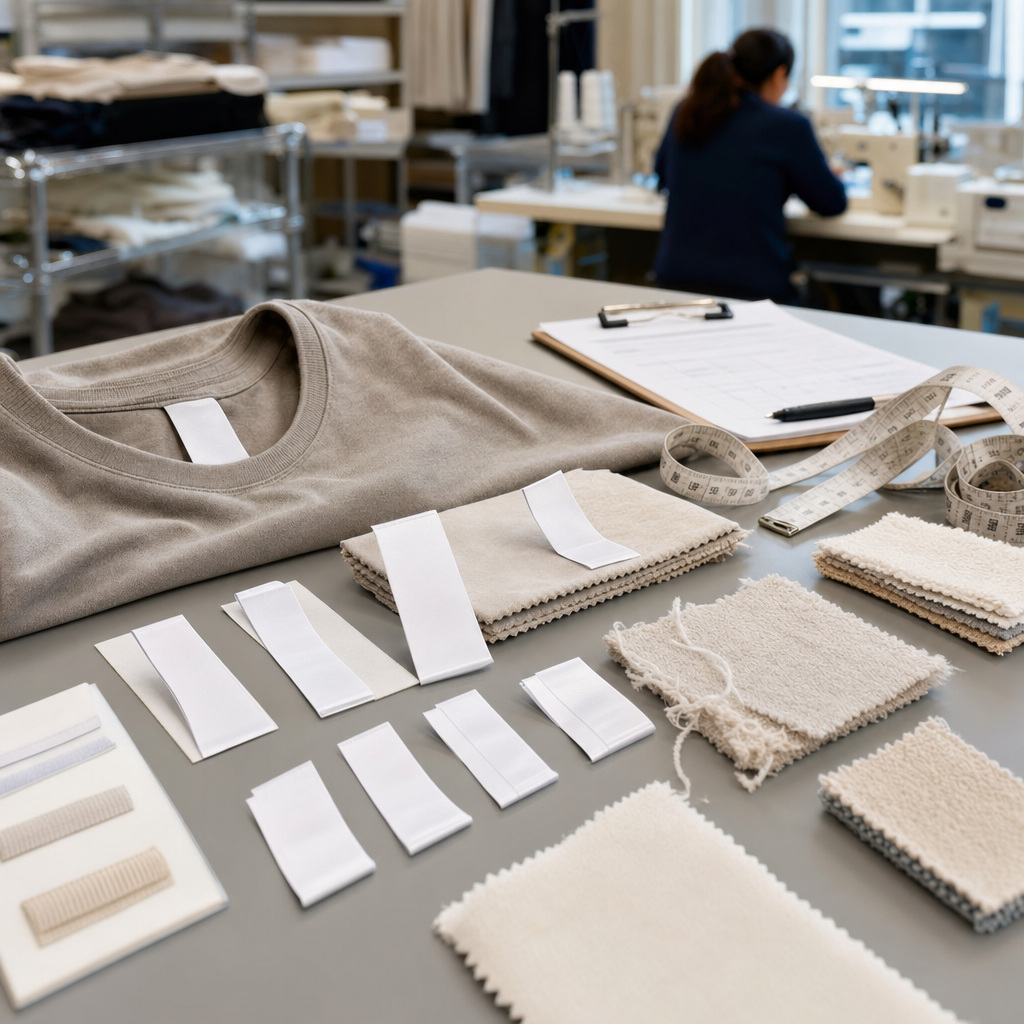
Ask for a photo of the label placement on the sample garment. The approval should show label side, seam attachment, stitch color, distance from key seam points, and how it looks after the garment is folded or packed. If packaging is already being approved, connect this detail to the final presentation process in the apparel packaging approval record.
Check Readability, Material, and Sew-In Method
A care label must be readable after sewing. Before bulk, review label size, print contrast, font size, symbol clarity, material softness, edge finish, fold type, and stitch attachment. Heat-cut label edges, stiff satin labels, or dense woven labels can feel different against the body. Printed satin, woven, cotton tape, and heat-transfer labels all have different tradeoffs.
Buyers should approve a physical or photo-based label sample rather than approving only a digital artwork file. Digital artwork can hide scale problems. A label that looks clean on screen may be too small, too crowded, or too low contrast after printing.
Control Changes After the Label Is Approved
Low MOQ orders often move quickly, and care labels can get changed late because fabric, trims, packaging, or selling-region plans changed. Late changes should be documented clearly. The buyer should record the approved label file, label sample photo, placement photo, approval date, and any revision reason.
If the order is likely to be reordered, preserve the label reference together with the sample and production notes. StitchQuote’s low MOQ clothing manufacturing process depends on clear approval records because small production runs leave less room for trial-and-error correction during bulk.
What to Include in a Care Label Approval Pack
- Final care label artwork approved by the buyer.
- Confirmed garment style, fabric, color, and decoration route.
- Wash-test or sample-test notes that support the care direction.
- Physical label sample or clear label photo at actual scale.
- Placement photo showing where the label is sewn or applied.
- Instructions for language, symbols, line breaks, and claim control.
- Record of what cannot be changed without written buyer approval.
StitchQuote Note
For private label and sample-first orders, StitchQuote treats labels as part of the production approval record, not as a loose decoration detail. Buyers can share label artwork, target market notes, garment details, and packaging requirements early so the sample and bulk plan stay aligned. Learn more about private label clothing manufacturing and sampling and MOQ planning.
FAQ
Should a manufacturer write the care label for a clothing brand?
A manufacturer can help produce, place, and review the label for production practicality, but the buyer should confirm market-specific wording and compliance requirements for the selling region. Do not rely on a generic template when the garment fabric, wash, decoration, or market changes.
When should care labels be approved in a low MOQ order?
Approve care labels before bulk label printing and before bulk sewing starts. Ideally, the label is reviewed during sample or pre-production approval so placement, readability, comfort, and wash-test feedback can be checked together.
What causes care label mistakes in bulk production?
Common causes include approving only digital artwork, changing fabric after label approval, missing wash-test feedback, unclear selling-market requirements, crowded label wording, poor placement photos, and undocumented last-minute revisions.
Request a manufacturing quote
Share your product type, quantity range, and destination. We usually reply within one business day.