Custom Streetwear, Casualwear & Denim Manufacturer•MOQ 50 pcs•Denim MOQ 100 pcs•7-Day Sample Available

How Much Does It Cost to Start a Streetwear Brand? A Budget Breakdown
Break a streetwear launch into six cost categories, see what drives each one, and plan a realistic first drop before you talk to a factory.

“How much does it cost to start a clothing brand?” is one of the first questions every streetwear founder asks, and the honest answer is: it depends on decisions you control. The same hoodie can be a modest test run or a serious cash commitment depending on fabric, fit development, decoration, order size, and how you plan to launch. This guide breaks a men’s streetwear launch into the cost categories that actually drive your budget, explains what moves each one up or down, and shows you how to build a realistic first-drop plan before you talk to a factory.
We deliberately do not quote a single “average startup cost.” Any one number hides the choices that matter. Instead, use the categories below to build your own budget, and get real quotes for your exact specs.
The six cost categories of a streetwear launch
The U.S. Small Business Administration recommends that new businesses calculate startup costs by listing one-time expenses and ongoing expenses separately. For a clothing brand, those costs fall into six buckets.
1. Product development
This is everything that happens before bulk production: design work, tech packs, patterns, grading, and samples. For streetwear, development is where fit gets decided, including boxy body width, drop-shoulder placement, hood shape, and the leg shape on denim. Founders often underestimate this category because they budget for one sample per style, when a new silhouette commonly needs a first sample, a revised fit sample, and a pre-production sample.
What moves the cost: how complete your brief is, how many new patterns you need, how many sample rounds it takes to approve fit, and whether you are sampling custom fabrics or washes. A clear tech pack and a reference garment are the cheapest way to cut sample rounds. Our guide to building a men’s streetwear size chart helps you lock measurements early.
2. Production (the biggest line for most brands)
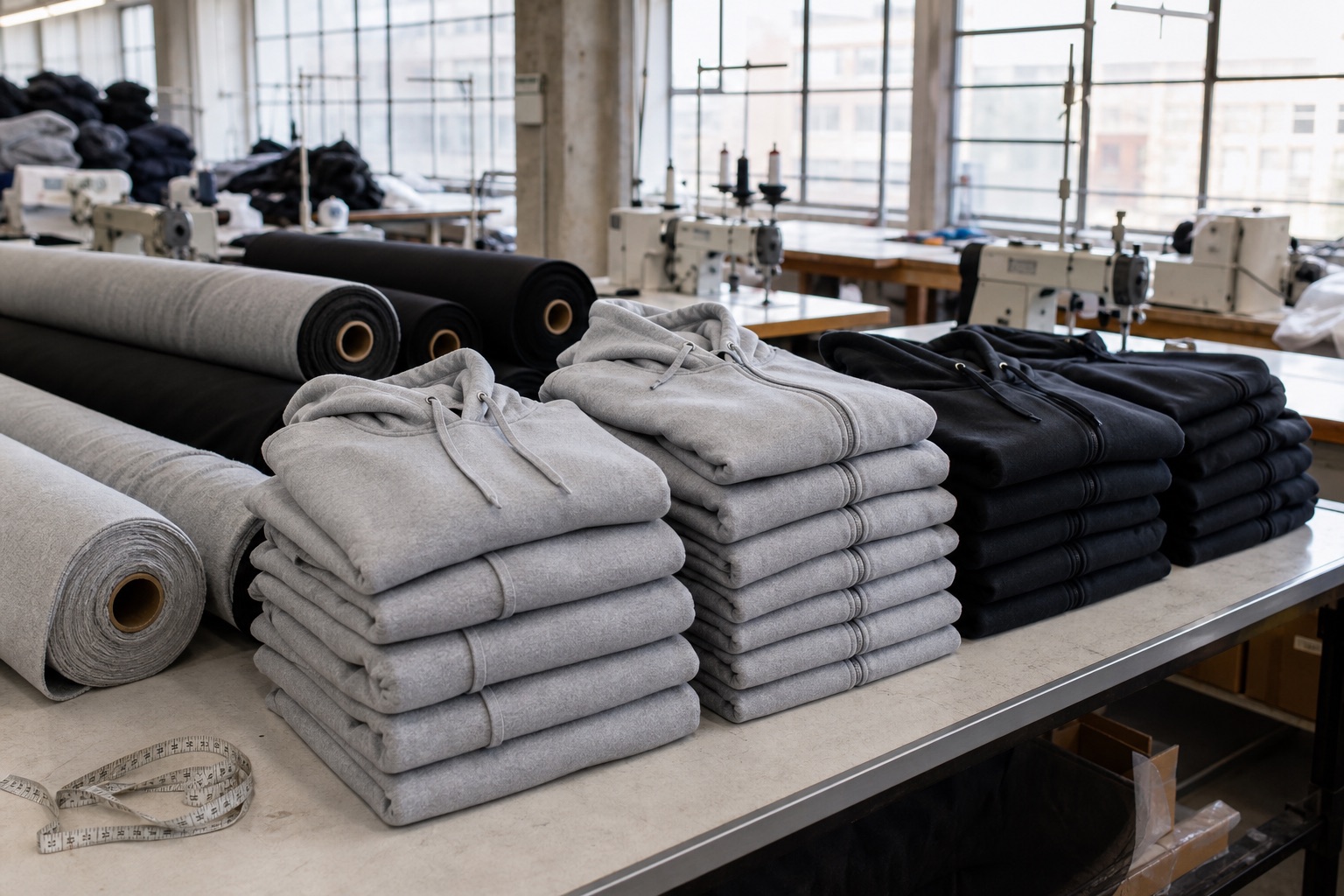
Production cost is the per-piece price multiplied by your order quantity. The per-piece price is driven by fabric (type, weight, and how much each garment consumes), cut-and-sew labor, trims such as zippers, drawcords, and rivets, decoration such as screen print, puff print, or embroidery, and finishing such as garment washes.
Order size matters twice. Factories set a minimum order quantity (MOQ) because setup work such as cutting markers, line setup, and print screens is spread across the run, so smaller runs usually cost more per piece. And your total quantity sets how much cash you tie up in inventory. At StitchQuote, most categories start from 50 pieces per style and denim starts from 100 pieces per style; our sampling and MOQ page explains why denim is higher.
For product-specific breakdowns, see how much it costs to manufacture a hoodie and how much it costs to manufacture a T-shirt.
3. Branding and packaging
Private label details turn a garment into your product: woven neck labels, printed care labels, size labels, hang tags, poly bags, and mailers. These usually have their own minimums at the supplier level, so a brand ordering small quantities should keep the label system simple at launch. If you are deciding between building your own product and relabeling existing stock, read private label vs white label clothing.
4. Shipping, duties, and import
Freight method (air or ocean), shipping terms, import duties, and customs brokerage are frequently missing from first budgets. Duty rates depend on the garment’s classification and origin. U.S. importers can look up classifications in the Harmonized Tariff Schedule, and EU importers can use the European Commission’s TARIC database. Rates and trade measures change, so confirm them close to your shipping date. If shipping terms are new to you, compare EXW vs FOB vs DDP before you accept a quote.
5. Launch and marketing
Product photography, your online store, launch content, paid ads, and seeding product to creators all cost money, and for many direct-to-consumer brands this category rivals production. A common mistake is spending everything on inventory and having nothing left to tell anyone it exists. Plan your marketing budget at the same time as your order quantity, not after.
6. Business setup
Company registration, a business bank account, insurance, accounting, and protecting your brand name. Clearing and registering a trademark before you print it on labels is much cheaper than rebranding later; the USPTO’s trademark basics page is a good starting point for U.S. brands.
The decisions that change your budget most
- Number of styles and colors. Each style and colorway carries its own development and minimums. Three styles in two colors is a very different budget from one hero hoodie in one color.
- Custom cut-and-sew vs. decorated blanks. Decorating blanks is faster and cheaper to start; cut-and-sew gives you your own fit and fabric but needs pattern and sample work. See cut and sew vs blanks.
- Fabric weight and finish. Heavyweight fleece and washed or distressed finishes cost more in material and processing than standard fabrics.
- Decoration. Multi-color prints, puff print, and large embroidery add setup and per-piece cost.
- Denim vs. knits. Denim usually needs more development, hardware approval, and wash control, and starts at a higher MOQ.
- Speed. Rushed timelines and air freight raise costs. Planning backward from your launch date saves money.
A smarter first drop: start small, learn fast
Most successful streetwear labels do not launch with a full collection. They launch with a focused capsule of one or two hero pieces, often a heavyweight hoodie and a tee, in limited colors. That keeps development and inventory risk under control and gives you real sell-through data before you commit to more styles.
- Choose one or two hero products that represent your brand best.
- Lock the fit with a reference garment and a size chart, so sample rounds go faster.
- Order at or near the MOQ for your first run, and keep size ratios realistic for your audience.
- Hold back budget for marketing and a reorder. A sold-out drop with no money to restock is a missed opportunity.
- Reorder winners using the same approved sample, so quality stays consistent.
Sampling speed also affects cost, because every week of delay pushes back revenue. At StitchQuote, a 7-day sample is usually possible for standard styles with confirmed specifications and available materials; custom fabrics and technical denim washes take longer.
How to get an accurate quote
Factories can only price what they can see. To get a quote you can actually budget around, send: product type, target fit with a reference garment or measurements, fabric or weight preference, decoration method and size, label and packaging needs, quantity per style and color, and your target delivery date. Vague requests get vague, padded quotes. Our men’s streetwear manufacturer page lists what we develop for menswear brands and how projects run.
When your budget hinges on cut-and-sew versus blanks, use our checklist on how to find a cut-and-sew streetwear manufacturer. If the first drop is hoodie-led with a wide shoulder and short body, align pattern notes with the boxy hoodie manufacturer page before you request quotes.
FAQ
How much does it cost to start a streetwear brand?
There is no single number. Your total is the sum of development, production, branding, shipping and duties, marketing, and business setup, and it is driven mainly by how many styles you launch, your order quantities, fabric and decoration choices, and how much you spend on launch marketing. Build the budget category by category and get quotes for your exact specs.
What is the cheapest way to start a clothing brand?
Launch fewer styles, in fewer colors, at a quantity close to the factory’s minimum, and keep branding simple. Decorating blanks is the lowest-commitment route; custom cut-and-sew costs more upfront but gives you a product competitors cannot copy off a catalog.
What MOQ should I expect?
It varies by factory and product. At StitchQuote, most categories start from 50 pieces per style and denim from 100 pieces per style.
What costs do first-time founders forget?
Extra sample rounds, import duties and brokerage, packaging minimums, product photography, and money for a reorder are the most commonly missed lines.
Plan your first drop with us
Send your references, target quantities, and launch date, and we will help you price a realistic first run, confirm MOQ, and check whether your style fits the 7-day sample path.
Request a manufacturing quote
Share your product type, quantity range, and destination. We usually reply within one business day.
3 Comments
Comments are closed.
[…] Then add shipping (air is fast and pricey, sea is slow and cheap), duties and taxes for your country, and any mid-production QC. These don’t change the factory unit price, but they change your landed cost — the number that actually matters for pricing your product. For the full picture beyond the garment itself, see how much it costs to start a streetwear brand. […]
[…] as directly comparable. If you are budgeting a whole launch rather than one order, our guide to what it costs to start a streetwear brand covers development, branding, shipping, and marketing […]
[…] Keep garment costing separate from supplier selection. For budgeting, see the guides to hoodie manufacturing costs, T-shirt manufacturing costs, and jeans manufacturing costs. For broader launch planning, use the streetwear startup budget guide. […]